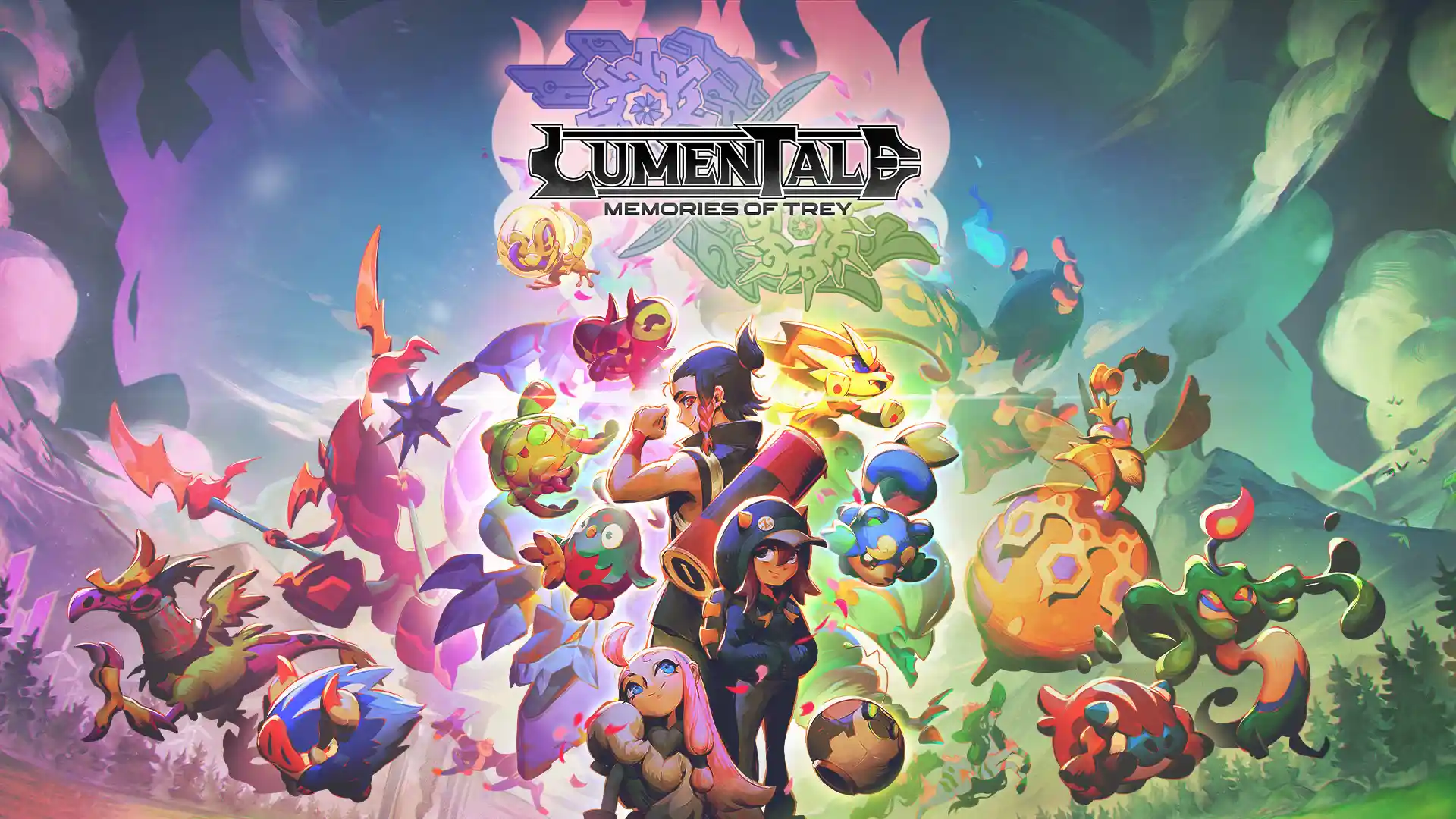

Beehive Studios' debut creature collector gets the combat right and the world beautiful. If only it trusted the player with its story sooner.
Editor's Take
LumenTale: Memories of Trey delivers one of the most tactically satisfying battle systems in the creature-collecting genre, wrapped in a gorgeous 2D-meets-3D world, but its insistence on withholding narrative payoff for 20-plus hours tests the patience of anyone playing for the story.
Pros
- Deep SP economy rewards tactical team building
- Gorgeous 2D sprite and 3D environment fusion
- Anti-grinding systems respect your time
- 140 Animon with strong late-game designs
- Catchy, location-appropriate soundtrack
Cons
- Plot withholds answers for too long
- Holoken Powers tied to active party is tedious
- Mandatory crafting quest lacks guidance
- Type matchups are unintuitive at first
Game at a Glance
| Detail | Info |
|---|---|
| Platform | PC (Steam) |
| Developer | Beehive Studios |
| Publisher | Team17 |
| Release Date | May 26, 2026 |
| Genre | Creature Collector / Turn-Based RPG |
| Playtime | 25–35 hours (main story) |
| Price | $24.99 USD (C$31.99 CAD) |
| Steam Deck | Playable |
| Multiplayer | Online PvP |
| Verdict | A tactically rich creature collector with stunning presentation, held back by a narrative that saves its best revelations for the final act. |
Introduction: What LumenTale Gets Right
The creature-collecting genre lives in the long shadow of Pokemon. Every new entry faces the same question: why play this instead of the next Nintendo release? The best answers come from studios willing to break the template. Palworld gave monsters guns. Cassette Beasts fused them together. Dragon Quest Monsters leaned on decades of RPG pedigree.
Beehive Studios' LumenTale: Memories of Trey answers with combat depth. Its shared SP economy and TP bonus-turn system create the most tactically engaging battles the genre has seen since Temtem. That the game wraps this system in a stunning fusion of 2D sprites and 3D environments, backed by a genuinely memorable soundtrack, makes it easy to recommend for mechanics-first players. The caveat is the story. LumenTale asks you to care about its central mystery while withholding any meaningful context until the final fifth of the adventure.
Story and World: A Mystery That Waits Too Long
Trey is an amnesiac cyborg with a robot arm, deposited on the continent of Talea with no memory and a vague directive: challenge the Captains of each city, collect Animon, and piece together a past that keeps flashing back in fragmented bursts. The setup is serviceable. The execution is where things get shaky.
The problem is not the premise. An amnesiac protagonist searching for identity while befriending magical creatures is a fine scaffolding. The problem is pacing. For roughly 20 hours, Trey experiences cryptic flashbacks that raise questions the main plot refuses to engage with. You move from city to city, solving self-contained mini-arcs, while the game gestures at a larger mystery it has no intention of addressing until the endgame. It is the narrative equivalent of a Pokemon game where Team Rocket waits until you have all eight badges before introducing themselves.
When the revelations do arrive, they are genuinely interesting. Trey's cyborg nature, the source of his companion's inexplicable powers, and the true history of the Lumen order all connect in ways that reward patient players. The issue is that many players will have checked out emotionally long before the payoff. Weaving even a third of these revelations into the mid-game would have given the city-hopping structure a sense of forward momentum it currently lacks.
The world itself helps compensate. Talea's cities are varied and memorable. Paradine is an archipelago built in a poisonous lagoon where residents travel by boat. Voltar is a hyper-advanced metropolis navigated by rolling Trey inside giant hamster balls up and down skyscrapers. Each location has a distinct visual identity and cultural texture that makes arriving in a new city feel like a genuine discovery, even when the plot is spinning its wheels.
Gameplay: The Best Team Combat in the Genre
Combat is where LumenTale separates itself from the pack. Battles deploy up to four Animon per side simultaneously, and every action draws from a single shared SP pool that fully recharges at the start of each turn. This creates a constant tension: do you spend half the meter on one Animon's room-clearing attack, leaving the other three with scraps? Or do you distribute resources evenly and risk losing the damage race?
The system forces genuine tactical thinking. A larger team means more bodies on the field but thinner SP distribution. A smaller team gets more SP per Animon but fewer actions per round. The trade-off is real, and the optimal answer shifts depending on the enemy composition.
The TP meter adds another layer. Exploiting enemy weaknesses or landing critical hits fills a gauge that grants a free extra turn, borrowing from Persona's Once More system. Larger teams have larger TP meters that take longer to fill, which means smaller squads can sometimes outpace bigger ones through bonus actions alone. The interplay between SP management and TP generation gives every battle a puzzle-like quality that stays engaging through the full runtime.
Animon come in 13 elemental types. Fire, Grass, and Water are present alongside more unusual entries like Data, Ancient, and Virus. The type chart is not immediately intuitive, but the battle UI helpfully indicates whether a move will be effective once you have used it against that species at least once. It is a small quality-of-life touch that reduces the need for external wikis.
The anti-grinding features deserve special mention. You can instantly defeat weak wild Animon in the field without entering combat. Pyrite stones earned in battle can be exchanged for experience. A device acquired several hours in stores overflow experience from combat and lets you apply it to reserve Animon, bringing new catches up to speed without hours of repetitive levelling. These systems signal a studio that respects the player's time.
The Holoken: Clever Tool, Clunky Execution
Outside of battle, Trey wields the Holoken, a sci-fi yo-yo used to break objects, interact with the environment, and catch wild Animon by flinging Bilias (the game's capture devices). The physical act of aiming and throwing the Holoken is oddly satisfying. There is a tactile pleasure in lining up a shot and watching the device connect.
The frustration arrives when the Holoken gains elemental infusion powers. As you progress, you unlock the ability to imbue the Holoken with your Animon's types to clear environmental obstacles: Geo breaks boulders, Fire burns bushes, Water creates floating bubbles, Data redirects lasers. The concept is sound and adds a light Metroidvania layer as old areas open up with new abilities.
The problem mirrors the HM system that Pokemon spent years phasing out. Holoken Powers are tied to the Animon currently in your active party. You can swap party members from Anispace at any time, but that transforms what should be a quick environmental interaction into a recurring menu dive. You spot a boulder, pause, scroll through your roster for a Geo-type, swap, break the boulder, pause again, swap back. Repeat for every bush, laser grid, and water gap. The friction is low-grade but constant. Letting the Holoken retain unlocked powers independently of the active party would have eliminated this annoyance entirely.
Crafting and Side Content
LumenTale includes an extensive crafting system built around Italian cuisine, a charming nod to Beehive Studios' roots. The system is mostly optional until it is not. Exactly one main-story quest requires crafting a specific item, and the game provides no guidance on where to find the necessary ingredients. I spent hours scouring the map, and the halt in momentum was jarring. If crafting is going to gate progress, the game needs to point players toward the required materials.
Minigames appear throughout the adventure and serve as pleasant diversions. They are not deep enough to carry a session on their own, but they break up the rhythm of catching and battling effectively.

Presentation: Where 2D Meets 3D
LumenTale's aesthetic is its strongest asset. The game blends 2D pixel-art sprites with fully 3D environments, and the result is consistently striking. Cities overflow with detail: market stalls, moving NPCs, animated water, layered architecture. The camera work during exploration gives each area a sense of scale that pure 2D creature collectors rarely achieve.
The roughly 140 Animon species are well designed, with the late-game evolutions standing out as particular highlights. Combat animations are not especially dynamic, but they inject enough energy to keep battles visually engaging. The soundtrack deserves its own mention. It shifts confidently between calming town themes and upbeat battle tracks, always feeling appropriate to the location and situation. I found myself lingering in certain areas just to let the music play out.
Performance is modest. The Steam Deck handles the game comfortably, and the system requirements are low enough that most PCs from the last five years should run it without issue. The install footprint is a lean 2 GB.
How LumenTale Compares to the Competition
| Feature | LumenTale: Memories of Trey | Cassette Beasts | Temtem | Coromon |
|---|---|---|---|---|
| Combat Depth | Shared SP economy, 4v4, TP bonus turns | Fusion system, debuff stacking | 2v2 stamina-based, competitive focus | Classic 1v1 with SP management |
| Team Size | Up to 4 active | 2 active (fused) | 2 active | 1 active |
| Creature Count | ~140 species, 13 types | 120+ species, 14 types | 160+ Temtem, 12 types | 120+ Coromon, 7 types |
| Art Style | 2D sprites + 3D environments | 2D pixel art | 3D cel-shaded | 2D pixel art |
| Story Focus | Amnesia mystery (slow burn) | Strange new world (strong) | Light narrative (MMO-lite) | Classic journey (competent) |
| Playtime | 25–35 hrs | 20–30 hrs | 40–60 hrs | 20–25 hrs |
| Price | $24.99 USD (C$31.99 CAD) | $19.99 USD | $44.99 USD | $19.99 USD |
| Multiplayer | Online PvP | Local co-op | Online MMO | Online PvP |
| Best For | Tactical team combat fans | Fusion mechanics and exploration | Competitive battlers | Classic Pokemon nostalgia |
LumenTale carves its niche through combat complexity. Cassette Beasts offers a stronger narrative and the inventive fusion mechanic. Temtem remains the go-to for players who want a competitive multiplayer ecosystem. Coromon is the safest bet for traditionalists. LumenTale wins on tactical depth per turn and aesthetic ambition.
FAQ: Your Questions Answered
Is LumenTale: Memories of Trey worth buying at full price?
Yes, if you prioritize combat depth in your creature collectors. At $24.99 USD (C$31.99 CAD on Steam), the 25 to 35 hours of content represent strong value. Players who need a compelling story to stay engaged may want to wait for a sale.
How long does it take to beat LumenTale: Memories of Trey?
The main story takes roughly 25 to 35 hours depending on how much side content you pursue. Completing the Animon collection and engaging with online PvP extends playtime significantly.
Does LumenTale have multiplayer or co-op?
LumenTale includes online PvP battles. There is no co-op campaign mode. Animon trading is supported through an in-game trade station, direct friend trades, and community trading.
How does LumenTale run on Steam Deck?
The game is rated Playable on Steam Deck. Performance is smooth given the modest system requirements. The 2 GB install size makes it a practical choice for Deck owners with limited storage.
Is LumenTale better than Cassette Beasts?
LumenTale has deeper tactical combat thanks to its 4v4 format and shared SP economy. Cassette Beasts offers a stronger, more immediately engaging story and the inventive fusion system. Choose LumenTale for combat complexity, Cassette Beasts for narrative and exploration.
When will LumenTale be available in Canada?
LumenTale: Memories of Trey launched on Steam worldwide on May 26, 2026, including Canada. It is priced at C$31.99 for the standard edition, with a Deluxe Edition at C$37.99 and a Lumen Edition at C$50.99. A launch discount of 10 percent runs until June 9, 2026.
Verdict: Is LumenTale Worth Your Time?
LumenTale: Memories of Trey is the most tactically satisfying creature collector in years. Beehive Studios has built a combat system where every turn asks you to weigh resource distribution against damage output, and the answer is rarely obvious. That mechanical depth, paired with a gorgeous 2D-meets-3D art direction and a soundtrack that earns its place, makes the game easy to recommend for anyone who plays creature collectors for the battles first and the story second.
The narrative is not bad. It is just structured in a way that asks for patience the game has not yet earned by the time the revelations land. If you can tolerate a slow-burn mystery and some menu friction around the Holoken Powers, LumenTale delivers a memorable adventure that stands on its own merits rather than leaning on borrowed nostalgia.