
Realm of Ink does not hide its influences. Leap Studio's action roguelite wears its Hades-shaped silhouette openly, from the brisk room-to-room combat flow to the way each run asks you to improvise around a growing pile of synergistic upgrades. That familiarity could have made it feel derivative. Instead, it mostly works in the game's favor because Realm of Ink understands the difference between imitation and refinement. It borrows a proven combat language, then builds enough of its own identity through Ink powers, form-swapping, and a surprisingly generous progression loop to justify the comparison.
That is the central tension running through the entire experience. Realm of Ink rarely feels interested in reinventing the roguelite formula, but it is very good at sharpening the parts that matter most: readable combat, fast build expression, and a steady sense that even a failed run has moved the broader account forward. For an Early Access title, that confidence is striking. More importantly, it already feels complete in the ways that count, even if a few areas still leave room for more variety.
Visuals and presentation
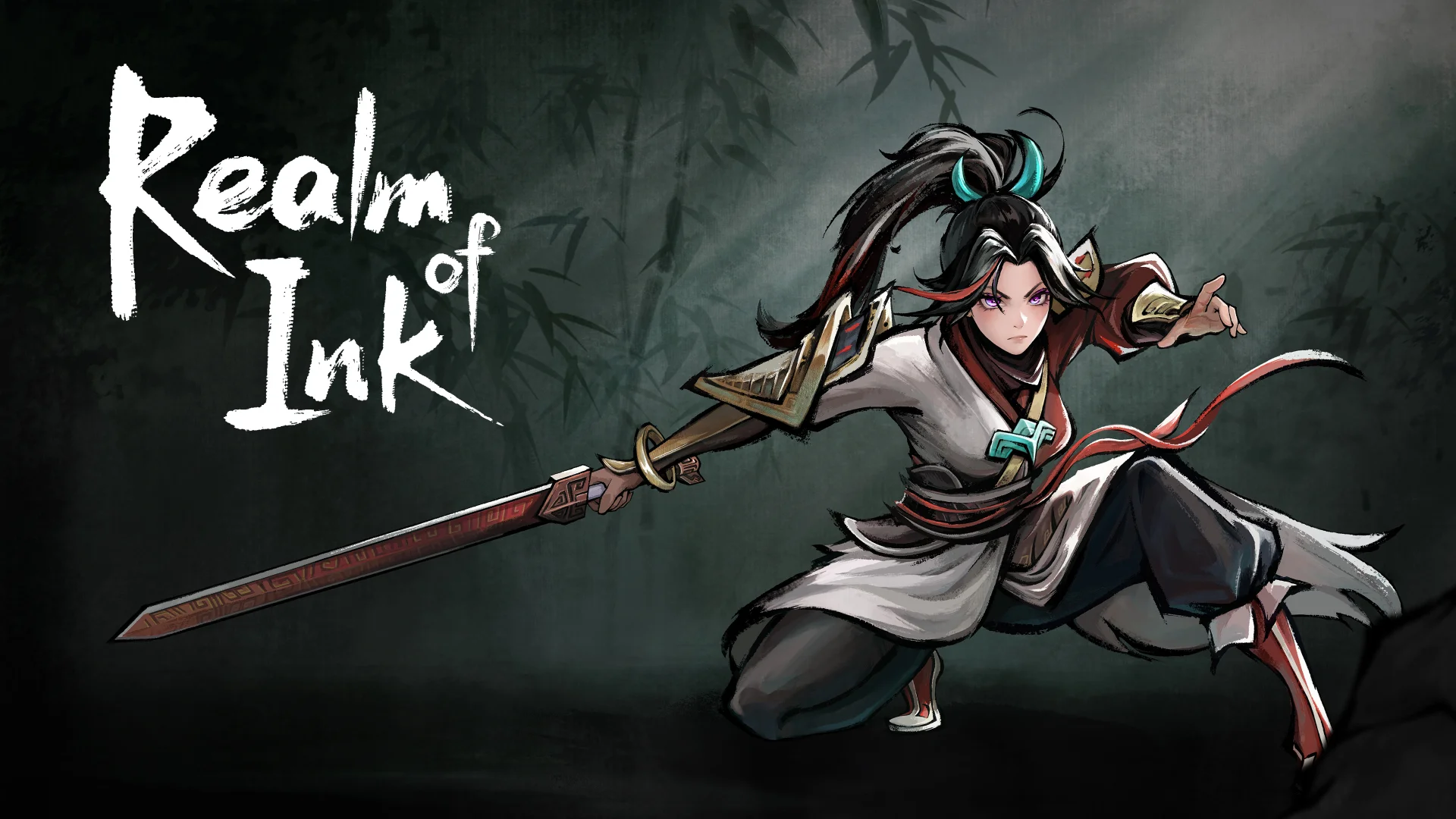
Visually, Realm of Ink lands somewhere between storybook fantasy and ink-wash myth. Its 2.5D presentation gives the battlefield enough depth to keep enemy spacing readable, while the top-down perspective preserves the genre's essential clarity. That matters more than raw spectacle in a game like this. When arenas fill with projectiles, melee threats, and overlapping skill effects, silhouette readability becomes part of the combat design. Realm of Ink generally handles that well. Red remains easy to track, enemy telegraphs stay legible, and the game's color language does useful work without drowning the screen in noise.There is also a pleasing theatricality to the whole setup. Realm of Ink frames its world as something authored, written, and contested, which gives its fantasy premise a slightly metafictional edge without turning the narrative into a gimmick. You play as Red, a swordswoman pushing back against a fate that appears to have already been scripted for her. It is a clean hook, and the game is smart enough not to overcomplicate it early. Red's role is immediately understandable: she is both protagonist and rebel, fighting through a world that wants her to stay inside the lines.
That premise is more functional than profound, at least in its current state, but it gives the action a useful thematic spine. Realm of Ink is not trying to overwhelm players with dense lore dumps or labyrinthine political intrigue. Instead, it uses its narrative frame to support the run-based structure. Each death, reset, and return to the Spirit Fox Inn feels consistent with the fiction, which is one of the quiet strengths of the game. Roguelites often live or die on how gracefully they justify repetition. Here, the loop feels natural.
Pacing follows a similarly disciplined pattern. Runs move quickly because the game does not waste much time between encounters, and the reward cadence is tuned to keep decisions coming at a steady clip. Clear a room, choose a path, weigh the next reward, and keep moving. That rhythm is familiar, but it is also effective. Realm of Ink understands that momentum is one of the genre's most valuable currencies. It rarely stalls long enough for the player to start questioning the loop.
Combat is where the game earns most of its goodwill. Red's base kit is simple on paper: dash, light attack, heavy attack, and up to two equipped Ink powers. In practice, that simplicity gives the game a strong foundation. Movement feels responsive, dashes recharge quickly enough to encourage aggressive repositioning, and the contrast between light and heavy attacks creates an immediate tactical split. Light attacks are fast, safe, and combo-friendly. Heavy attacks are slower, riskier, and more committal, but they hit with enough force to make that commitment feel worthwhile.
That basic feel matters because Realm of Ink is built around layering modifiers onto a stable core. If the baseline movement or attack cadence felt mushy, the entire buildcraft system would collapse under it. Instead, the game gives Red a combat rhythm that is easy to learn and flexible enough to support wildly different runs. The input response is snappy, the animation flow is readable, and the feedback loop is satisfying without becoming overblown. Even before a build comes online, the act of moving through a room and carving through enemies feels good.

The Ink system
The Ink system is the clearest example of how Realm of Ink separates itself from its inspirations. Ink powers function as both active abilities and passive build anchors, which means every pickup has immediate and long-term value. Tiger Ink, for example, boosts critical chance and critical damage while also rewarding critical hits with extra damage. Its active effect summons a frontal claw strike, giving it both a statistical identity and a practical combat use. That dual-purpose design is smart because it makes each Ink feel like more than a cooldown button. It becomes a thesis for the run.This is where Realm of Ink starts to show real build expression. Some Inks push elemental damage. Others lean into defense through shields or mitigation. Quality tiers from common to legendary further deepen the system by improving both passive and active traits, so upgrades feel meaningful rather than cosmetic. Momo, Red's companion, even changes form to reflect the equipped Inks, which is a small touch but an effective one. It reinforces the idea that your build is not just a spreadsheet of modifiers. It has a visual identity.
Perks, abilities, and elixirs expand that identity in different ways. Perks tend to blend stat boosts with triggered effects, which makes them useful connective tissue between your core attacks and your Ink skills. Abilities are more transformative. They can reshape how you value specific attack strings, resource pickups, or defensive windows. An ability like Glutton Blade, which boosts light attack damage for every dish consumed, changes food from a simple recovery tool into a scaling damage engine.
Swift Edge, which reduces Ink cooldowns when the final hit of a light combo connects, nudges the player toward cleaner combo routing and more deliberate positioning. Iron Lotus, which grants damage reduction during heavy attacks, can turn a normally risky move into the center of a bruiser-style build.
What makes these upgrades work is that they encourage interpretation rather than obedience. Realm of Ink does not force a single correct path through its systems. It presents a build piece, then asks what else you can do with it. A light-attack ability might make you prioritize combo extensions and cooldown reduction. A heavy-attack defensive perk might push you toward slower, more punishing trades. An Ink with elemental scaling might suddenly make previously modest elixirs far more valuable. That interplay gives the game its best moments, especially when a run starts to cohere around a clear combat identity.
There is still some roguelite friction here, and not all of it is avoidable. Because rewards are randomized, some runs naturally come together faster than others. You may find an early ability that defines the entire run within minutes, or you may spend a stretch collecting upgrades that are useful in isolation but only loosely connected. Realm of Ink handles this better than many of its peers because abilities do not feel dead on arrival when they miss your preferred build. Even off-plan upgrades usually offer some practical value. Still, the difference between a run that clicks early and one that never quite finds its center is noticeable.
Elixirs are the least glamorous part of the system, though they remain important. Most of them offer straightforward statistical improvements such as increased light attack damage or reduced cooldowns. They lack the dramatic identity of abilities and the hybrid utility of Ink powers, but they do important background work. In a weaker game, that kind of upgrade layer can feel like filler. Here, it mostly functions as connective tissue, smoothing out a build and occasionally enabling absurd outcomes when stacked aggressively. Cooldown reduction, in particular, can spiral into delightfully broken territory.
Run structure is equally well judged. Realm of Ink does not use a Slay the Spire-style macro map, but it still gives players meaningful route choices through room rewards. Silver is the most consistent incentive because it fuels so many mid-run decisions: upgrading Inks, buying food, and purchasing perks in the shop spaces that appear before minibosses and bosses. That economy creates a satisfying push and pull. Do you chase immediate power through a perk room, or do you prioritize silver so you can upgrade a key Ink before the next major fight? The answer changes depending on the run, which is exactly what you want.
Optional encounters such as Foe Forge and Trial Valley help break up the standard room cadence and add a welcome layer of risk-reward calculation. NPC encounters do something similar, especially when they offer stronger rewards at a cost to health or currency. These moments are not elaborate side stories, but they add texture to the run and keep the structure from becoming too mechanical. Realm of Ink understands that even small deviations from the core loop can do a lot to preserve momentum.
Runs and progression
Outside of runs, the Spirit Fox Inn serves as the game's social and progression hub. It is a familiar roguelite device, but a useful one. The inn gives deaths a softer landing by turning failure into a return rather than a hard stop. It also houses the game's meta progression systems, which are generous without feeling completely unrestrained. Foxblood feeds into the Talent Stele, unlocking permanent upgrades such as damage boosts, damage reduction, better silver income, improved starting conditions, and the always valuable extra life. This is standard genre material, but it is implemented cleanly.The more interesting long-term progression comes from Jade Ink, which unlocks alternate forms for Red. These forms do more than change her appearance. They alter her weapon style, attack behavior, and baseline bonuses, with some even shifting her into ranged combat. That is a substantial addition because it changes not just numbers, but the feel of the character itself. Realm of Ink is at its best when it lets a new form recontextualize familiar systems. Suddenly, the same perk or ability can carry different value because the underlying attack pattern has changed. That keeps the meta progression from becoming a simple ladder of passive upgrades.
This is also where the game's replayability becomes easier to appreciate. Even before considering difficulty increases, different forms create distinct combat priorities. Some favor mobility, others survivability, and others cooldown pressure. Because form-specific abilities can appear during runs, the game reinforces those identities rather than flattening them into cosmetic variants. That is a meaningful distinction. Too many roguelites talk about build diversity while quietly funneling players back toward the same dominant patterns. Realm of Ink does a better job than most of making its alternatives feel structurally different.
The biggest caveat, at least in its current Early Access state, is encounter variety at the top end. Realm of Ink already offers enough build diversity to support repeat runs, and its difficulty scaling helps extend that lifespan, but boss and miniboss randomization could do more to sustain long-term freshness. When the combat system is this flexible, repeated encounter scripting becomes more noticeable. The game still plays well, but the ceiling on replayability feels slightly lower than it could be if the enemy roster rotated more aggressively in later runs.
Even so, Leap Studio has already built something unusually sturdy for an unfinished release. Realm of Ink does not merely feel promising. It feels playable in the full, satisfying sense of the word. The combat loop is sharp, the progression systems are layered without becoming unreadable, and the alternate forms give the game a broader expressive range than its first impression suggests. The unlocked endless mode, which lets completed runs spill into a horde-style survival challenge using the build you just assembled, is another smart addition. It extends the life of a successful run and gives the game a welcome burst of Vampire Survivors-style excess without losing its own identity.