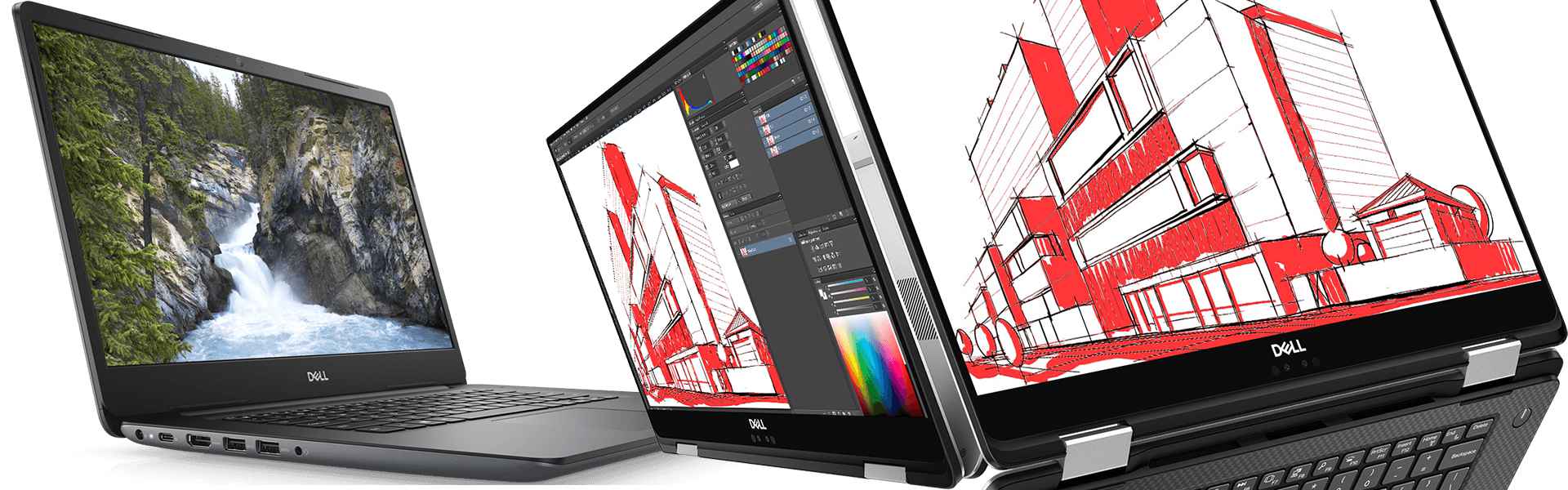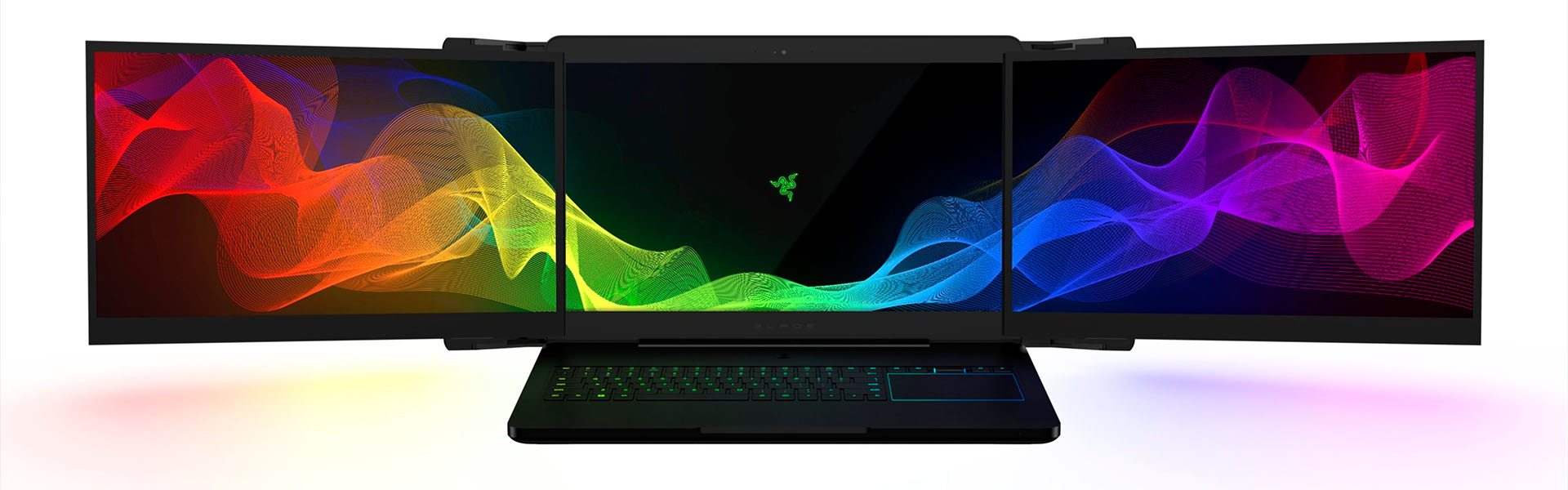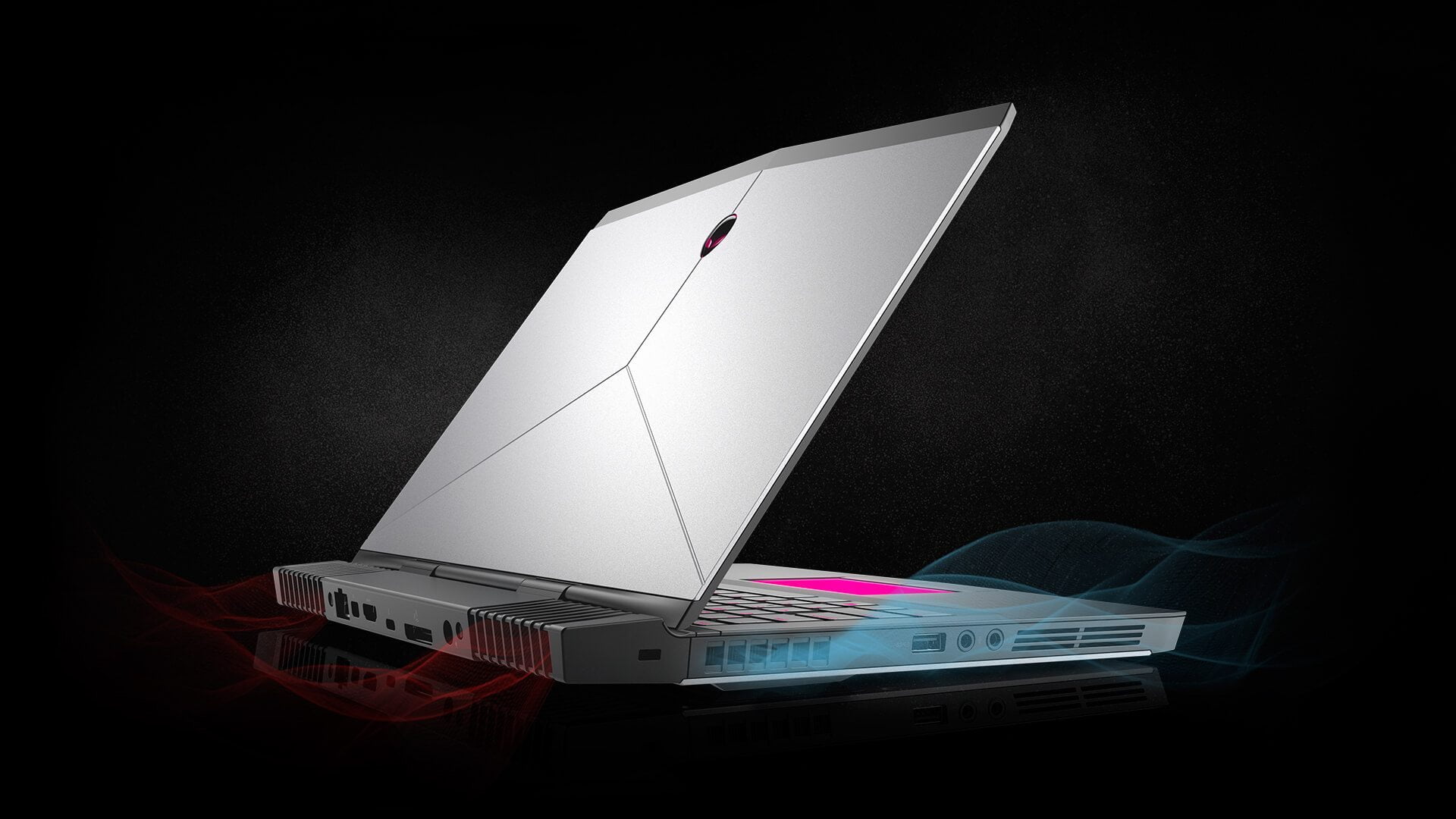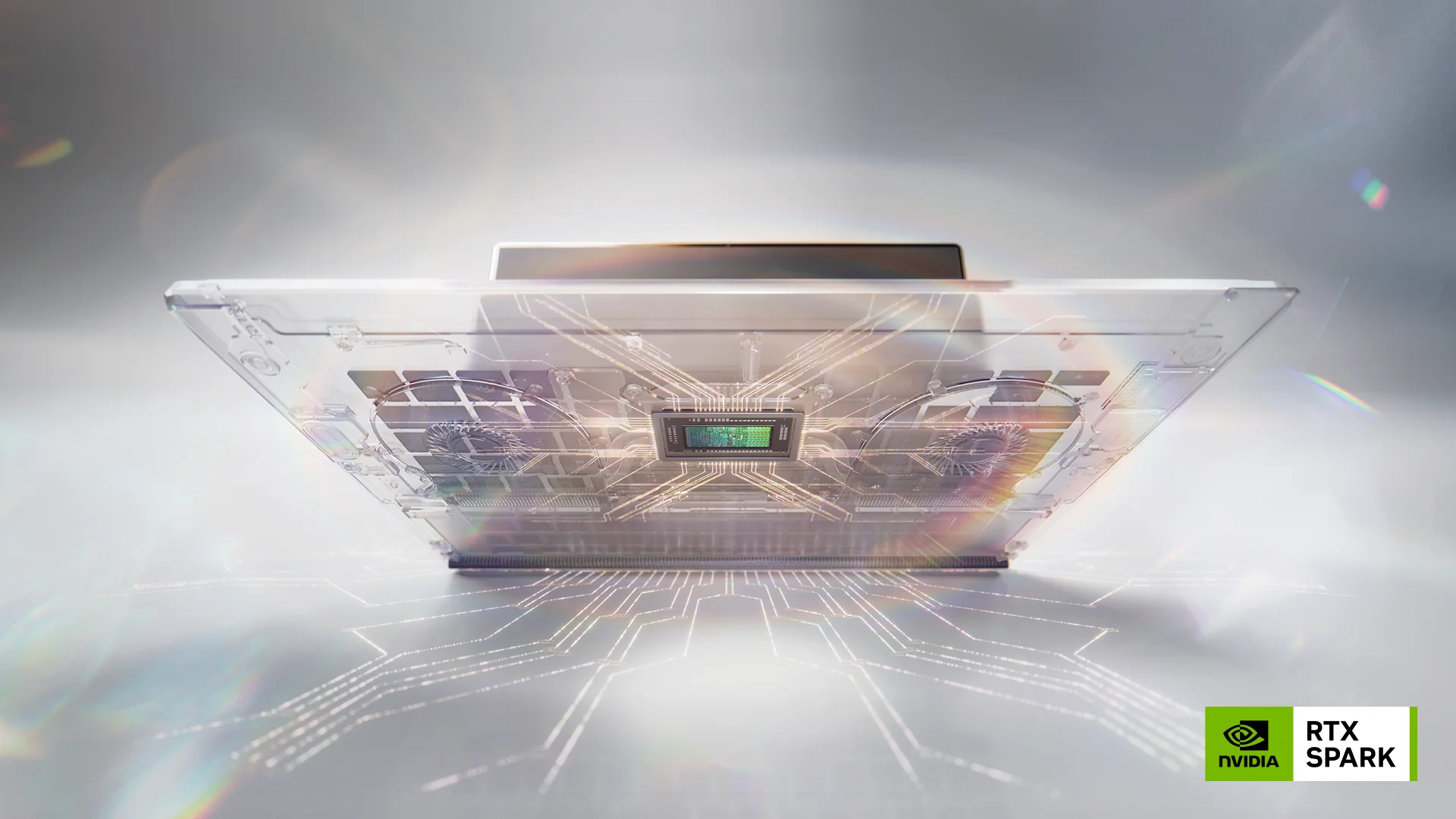

HP's RTX Spark lineup doesn't just put NVIDIA silicon in thin laptops. It bets that the next wave of software will run on your machine, not someone else's server.
At Computex 2026 in Taipei, HP pulled back the curtain on something that feels less like a product refresh and more like a directional bet. The company announced a fleet of devices built around NVIDIA's new RTX Spark platform, a full-stack AI platform that brings RTX technologies to slim laptops with what HP calls all-day battery life. The lineup spans from notebooks thin enough to forget they're in your bag to deskside supercomputers designed to run always-on AI agents against Windows applications.
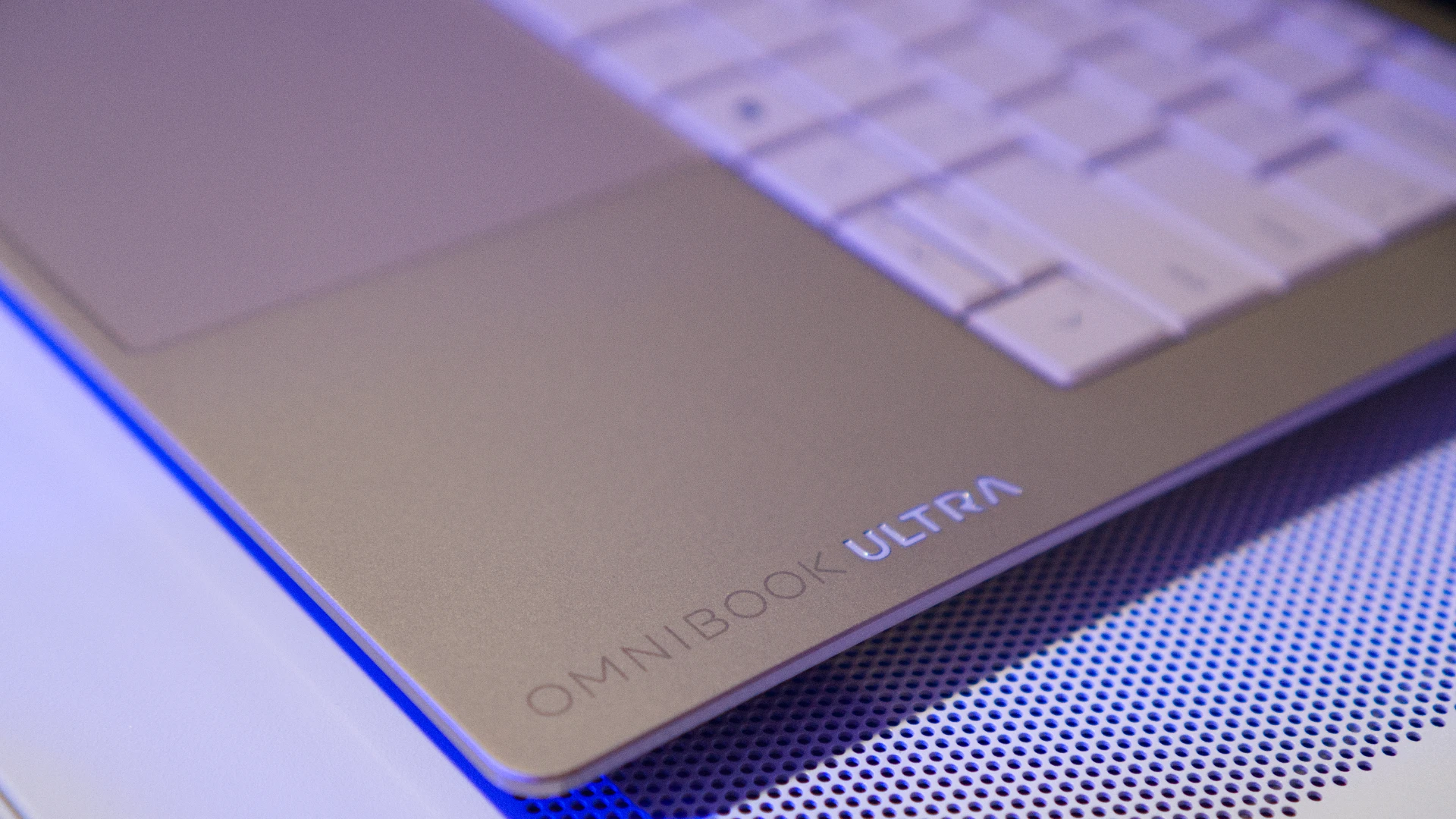
The world's thinnest RTX Spark laptop will carry an HP badge, and the company is not being shy about it. The OmniBook Ultra 16 and smaller OmniBook X 14, both expected later this year, mark HP's entry into a category that didn't really exist eighteen months ago: consumer laptops built from the ground up to run local AI workloads at speed, not just to query cloud models through a browser tab.
Samuel Chang, HP's SVP of Consumer Personal Systems, framed the shift bluntly at the Taipei announcement. “Developers are moving from experimenting with AI to shipping agentic applications, and they need PCs that are as open, fast, and flexible as their workflows.” That word, agentic, appears in the press release three times. It is not decorative. It signals where HP thinks the puck is going.
Why Local Matters More Than You'd Think
Most of the AI you use today runs somewhere else. You type a prompt, it travels to a data center, a GPU cluster chews on it for a few hundred milliseconds, and an answer comes back. The model works hard. Your device mostly waits.
That architecture is fine for casual chat. It starts to creak when you need speed, privacy, or the ability to keep working when your connection drops. It gets expensive fast if you are running something continuously, which is what agentic applications do. An agent that monitors your email, drafts replies, and updates your calendar cannot afford to round-trip to the cloud for every inference. It needs to live on your machine.
This is where RTX Spark enters. NVIDIA's platform combines the company's GPU architecture, AI software stack, and RTX graphics technologies into a single package designed for local processing. HP is one of the first to ship it at scale, and the company is doing so across a deliberately wide range of form factors.
The OmniBook Ultra 16 will be, per HP, the thinnest RTX Spark laptop available. That claim matters because it addresses the obvious objection: sure, you can run AI locally on a chunky mobile workstation. Doing it in something you would actually carry to a coffee shop is a different engineering problem. Heat, power draw, and component density all fight you. HP seems to think it has solved enough of those problems to claim the thinness crown, though we will not know if the battery life holds up under real AI workloads until review units land.
Alongside the laptops, HP is planning a compact RTX Spark desktop. Details are thin, but the intent is clear: give creators, AI enthusiasts, and developers a stationary option that does not demand a full tower. If the pricing lands somewhere reasonable, this could be the machine that lets a small studio run local fine-tuning or inference without renting GPU hours.
The Desktop Spectrum: From Mini to Monster
What makes this announcement more interesting than a standard laptop drop is how far HP is stretching the concept of an AI PC.
At the compact end sits the OmniDesk Mini Desktop PC, which HP calls the world's first Mini AI PC with Thunderbolt Share. Powered by Intel Core Ultra Series 3 processors, it supports controlling two PCs with a single keyboard and mouse, fast file transfers, and up to four 4K displays through its port array, which includes two Thunderbolt 4 connections. It ships in August 2026. Pricing is still under wraps.
That machine is aimed at the desk of someone who wants AI acceleration without a tower consuming half the floor space. It is also, in a quiet way, a statement about what counts as a desktop in 2026. If your heavy lifting happens on the NPU and GPU, the box around them can shrink.
Then the scale jumps. The ZGX Fury GB300, powered by NVIDIA's GB300 Grace Blackwell Ultra Desktop Superchip, is not a consumer product in any normal sense. It is a deskside or rackable AI supercomputer that HP plans to bring to Windows later this year. Jim Nottingham, SVP of Advanced Compute and Solutions at HP, pointed out that over 70% of enterprise PCs run Windows and that customers have been asking for AI supercomputing power that integrates into their existing environments. The Fury is HP's answer: a machine built for enterprise teams who want to run frontier AI agents against Windows applications and workflows, always on, without routing data through external servers.
Then there is the ZGX Nano, the most specialized machine in the lineup and arguably the one that tells you the most about where secure computing is heading. Built on Zero Trust principles, the Nano physically restricts wireless access and external interfaces to minimize attack surfaces. HP positions it for classified and remote environments where AI processing must stay local and verifiably contained. It is not a machine most readers will ever touch, but its existence signals that local AI processing has crossed a threshold: it is now considered reliable enough for the most regulated environments on earth.

The Developer Angle Nobody Asked For Loudly Enough
Buried in the announcement, past the hardware specs and executive quotes, is a sentence that deserves more attention than it will probably get: “By pairing compact, powerful hardware with pre-packaged developer environments, command-line workflows, OpenClaw-based starter kits, and support for agent frameworks such as Hermes, HP will make it easier for developers to move from idea to working agent without stitching the stack together from scratch.”
That last clause is doing heavy lifting. Right now, if you want to build an AI agent that runs locally, you assemble the stack yourself. You pick a model, figure out quantization, wire up an inference engine, write the orchestration layer, and debug the inevitable incompatibilities between library versions. It is tedious, fragile work that has nothing to do with whatever problem you actually set out to solve.
HP's bet, and it is a reasonable one, is that developers will gravitate toward hardware that ships with the toolchain pre-configured. OpenClaw and Hermes are not household names, but they represent the layer of the AI stack that turns raw inference into useful software. If HP can make that layer work out of the box on RTX Spark hardware, it lowers the activation energy for a whole class of applications that currently live in proof-of-concept limbo.
The Z2 Mini G1a workstation reinforces this developer story from the AMD side. Built around AMD Ryzen AI PRO 400 series processors, it ships with the validated AMD Ryzen AI Halo developer software stack, including the Ryzen AI Developer Center, AMD ROCm, pre-installed AI frameworks and models, and what HP calls “guided playbooks.” The phrase sounds like marketing, but the intent is practical: a developer should be able to unbox the machine and start running advanced AI workloads the same day. HP expects the Z2 Mini G1a in select retail channels later this year.
Taken together, the laptop, desktop, workstation, and supercomputer announcements form a coherent if sprawling message. HP is not just selling you a PC that can run AI. It is trying to sell developers, creators, and enterprises on a future where AI runs locally by default and the hardware comes ready for it.
What We Still Don't Know
Pricing is absent from the announcement. HP says both OmniBook models and RTX Spark pricing will be shared closer to availability later this year. That gap is worth flagging because local AI hardware only matters if people can afford it. A thin RTX Spark laptop priced like a gaming flagship will appeal to early adopters and professionals. A thin RTX Spark laptop priced like a midrange ultrabook could change the conversation entirely.
Battery life under AI load is another open question. HP claims all-day battery life for the RTX Spark laptops, but every manufacturer claims all-day battery life. The real test is what happens when the NPU and GPU are both engaged for sustained periods, which is exactly the workload these machines are being sold for. Until independent testing lands, treat the battery claims as aspirational.
The software ecosystem is also early. OpenClaw and Hermes are real frameworks with active development, but they do not yet have the breadth of cloud-native alternatives like LangChain or the major cloud provider toolchains. HP's ability to deliver a genuinely frictionless developer experience depends in part on factors outside its control, including framework maturity, driver stability, and the pace at which popular models are optimized for local inference on consumer hardware.
None of this is a reason to dismiss the announcement. It is a reason to watch how the pieces land over the next six to nine months.
The Real Signal
Product announcements at Computex follow a familiar rhythm: a stage, a spec sheet, a promise of availability “later this year.” Most blur together within a week. This one sticks because it is not really about the hardware, or not only about the hardware.
For the last two years, the default assumption in tech has been that serious AI workloads belong in the cloud. Startups raised billions to build inference infrastructure. Enterprise contracts with cloud providers ballooned. Consumer AI products, from ChatGPT to Copilot, were architected around server-side inference because that was the only place the compute lived.
HP's RTX Spark lineup, taken as a whole, argues that the default is about to flip. Not overnight, and not for every workload. Training frontier models will stay in data centers for the foreseeable future. But the day-to-day AI work, the inference, the agent orchestration, the creative tooling, the code generation, is moving toward the edge. HP is placing hardware bets across the full spectrum of that migration, from a laptop thin enough to be the world's thinnest RTX Spark device to a secure nano system designed for environments where the network is the threat vector.
If they are right, the machine on your desk or in your bag will do a lot more of the thinking over the next few years. If they are wrong, you will still get a capable laptop out of it. Either way, the direction of travel is worth watching.