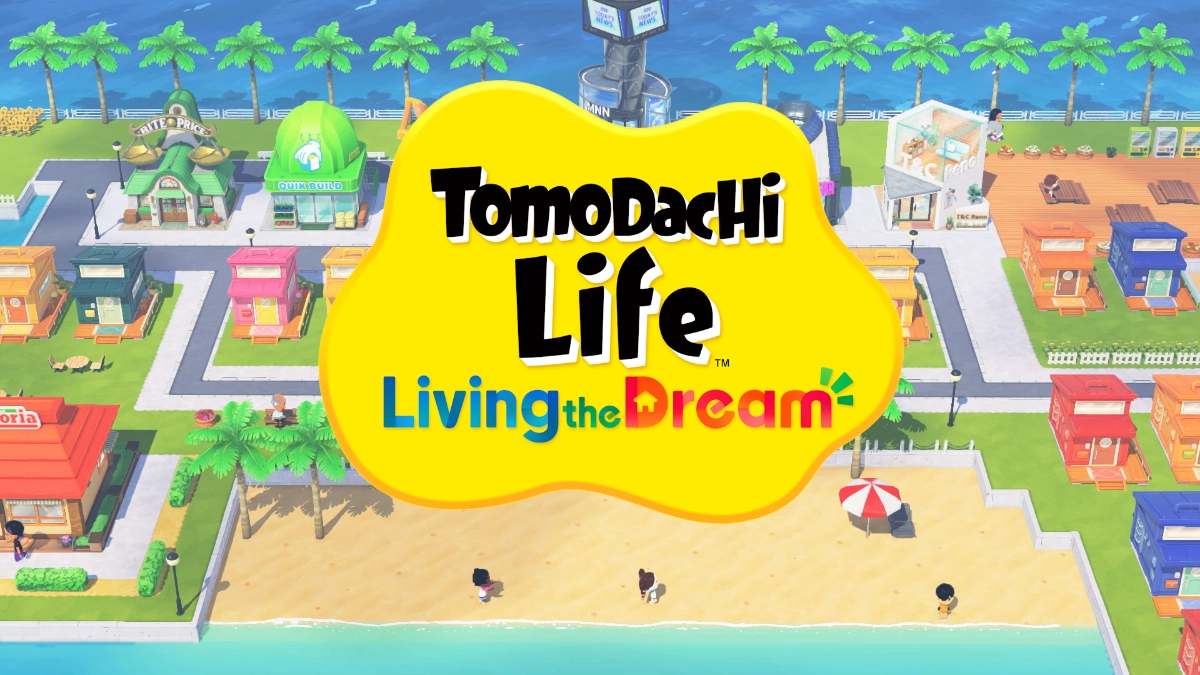

Tomodachi Life: Living the Dream does not chase the soft, low-stakes comfort that defines many modern life sims. Instead, it leans into absurdity. It is loud, awkward, funny, and often completely unhinged. That choice works because Nintendo understands the appeal of this series: you are not building a peaceful retreat so much as managing a tiny social experiment that can turn chaotic at any moment.
Rather than reinventing the formula, Living the Dream sharpens what made the original memorable. The core loop still revolves around creating Miis, dropping them onto an island, and nudging their lives along through gifts, food, relationships, and daily problem-solving. What changes is the breadth of customization, the stronger sense of routine, and a welcome effort to make the simulation feel more inclusive and expressive. It remains one of Nintendo’s strangest games, but that strangeness is exactly why it sticks.
A Daily Loop That Fits, Then Hooks
The strongest thing Living the Dream does is make itself easy to revisit. Checking in on the island, solving a few resident problems, handing out favorite foods, and watching new interactions unfold creates a rhythm that feels light at first. Then it quietly becomes habit. The game is structured around short, satisfying bursts, and that pacing gives each visit a sense of momentum without demanding a full evening.
That routine also gives the simulation its personality. One resident may spend the day keeping to themselves, while another bounces between socializing, hobbies, and late-night reading at home. Small details such as food preferences, voice settings, and behavioral quirks help Miis feel distinct even before the larger relationship systems kick in. By the second week, those differences start to matter. Personalities stop feeling like menu selections and begin shaping the island’s social texture in ways that are often funny and occasionally messy.
The early progression push toward leveling the island through the Wishing Fountain is also smart. It gives new players a clear priority, ties interaction to meaningful rewards, and steadily opens up gestures, items, and other incentives that make the island feel more alive. Progression works here because it encourages engagement with the residents rather than pulling attention away from them.

Social Simulation Remains the Main Attraction
The social systems are still the heart of Tomodachi Life, and Living the Dream understands that the best moments come from watching controlled nonsense spiral into something memorable. You can guide shy residents into conversations by physically placing them near others, push groups together, and then watch them ramble about food, fashion, exercise, or whatever else happens to dominate the moment. That hands-on meddling gives the player just enough influence without making the simulation feel scripted.
Relationships are where the game finds most of its charm. Crushes, awkward confessions, marriages, breakups, and petty grudges all emerge from a system that is simple on paper but entertaining in practice. Some Miis obsess over a crush and need your advice. Others avoid each other with theatrical disdain. The game is at its best when it lets those emotional beats play out with a straight face while everything around them remains ridiculous.
Nintendo also deserves credit for meaningful updates to representation. Same-sex couples are included, and players can select non-binary options when creating Miis. Those changes matter because they expand who gets to see themselves reflected in the game’s central fantasy. In a series built around personal expression, that is not a minor feature. It is a necessary improvement.

Customization and Building Add Real Depth
Mii creation is robust, with a wide range of hairstyles, facial features, clothing options, and personality settings that make it easier to build a cast that feels varied. The ability to define relationships from the start also adds flexibility, whether you want to create siblings, strangers, or an entire family line. That freedom supports the game’s improvisational appeal. You are not just watching a town form. You are setting the stage for the kind of drama you want to encourage.
The broader island management layer gives the game more staying power than a simple social toy. Daily stops at shops for food, clothing, room layouts, and building materials create a practical loop around the character interactions. Miis also begin asking for infrastructure such as benches, trees, storefronts, and other civic upgrades, which turns island growth into something more tangible. Rearranging homes and expanding living spaces gives the town a stronger sense of development over time.
The Palette House Workshop is especially interesting because it opens the door to more personal creativity. Players can make clothing, food, cosmetics, animals, and home designs, which gives the game a playful sandbox edge. The best part is how far it lets you push the joke. If you want a dessert house or a fence made of meat, the game seems happy to indulge that impulse. That said, the toolset could use better support. Beyond a brief tutorial, it leaves players to figure things out alone, and the lack of public community sharing makes the feature feel more isolated than it should.

Where the Dream Gets a Little Messy
For all its strengths, Living the Dream does have a few frustrations. The biggest is the removal of easy Mii sharing through QR codes. In a game built around filling an island with personalities, losing a fast way to import characters adds unnecessary friction. Creating Miis one by one is not difficult, but it is more tedious than it needs to be, especially for players who want a large and varied population quickly.
There are also moments where the social simulation feels more limited than it first appears. Shared spaces do not always support the kind of larger group interactions the game seems built to encourage. Watching several residents live together and generate chaos is entertaining, but some environments still cap that energy too tightly. When the game hints at a bigger, more dynamic communal life and then pulls back, the limitation stands out.
Still, those issues do not undercut the core appeal. The fake news broadcasts, the bizarre resident behavior, the awkward romantic advice, and the constant stream of small social fires to put out give the game a momentum that is hard to resist. Living the Dream succeeds because it treats everyday maintenance as comedy, and comedy as progression.
Verdict
Tomodachi Life: Living the Dream is an iterative sequel, but it is a smart one. It builds on the original’s bizarre social sandbox with stronger customization, better representation, and a daily loop that is easy to fold into your routine. A few missing conveniences, especially Mii sharing, and some limits in group interaction keep it from feeling fully realized. Even so, its strange humor and addictive check-in structure make it one of Nintendo’s most distinctive life sims. If you want a cozy management game, look elsewhere. If you want a weird little island full of drama, this one absolutely delivers.