

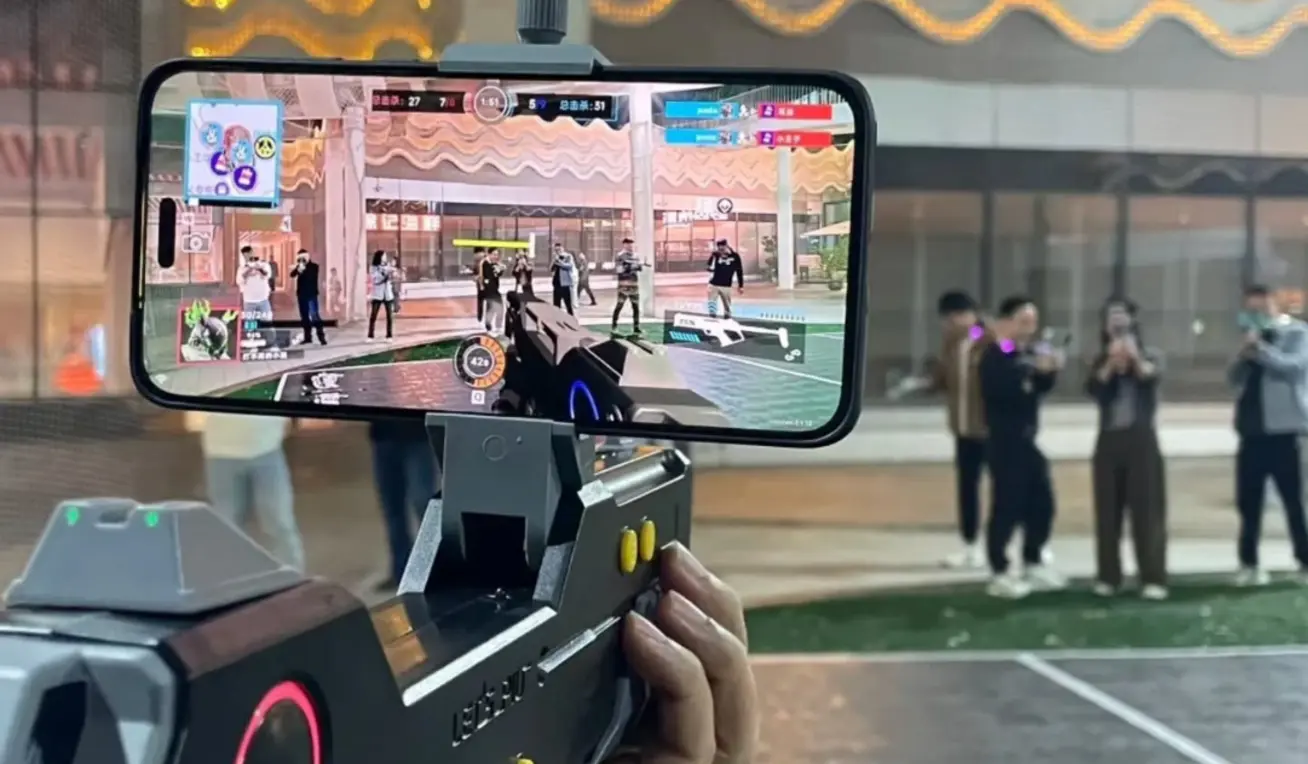

- Where: Empty or after-hours malls in Beijing, Shanghai, Qingdao, and other major cities
- Group Size: 40 to 60 players per match
- Duration: 90 minutes of active play
- Distance: Players run 5+ kilometers each session
- Gear: AR headsets, motion sensors, phone apps
- Cost: ¥128–¥198 per player ($18–$28 USD)
- Genre: Real-world battle royale inspired by PUBG and Peacekeeper Elite
Mall-Based AR Battle Royale Is Taking Over Chinese Cities
Late at night, when stores close and lights dim, Chinese shopping centers become war zones. Young adults gather to play real-world battle royale games that blend the thrill of PUBG with physical exercise. Unlike sitting on a couch with a controller, these players sprint through empty food courts and hide behind real pillars. Hosts book mall space during low-traffic hours, usually after 10 PM. They set up AR gear that maps digital items onto the physical world. Players strap on headsets that show virtual guns, health packs, and danger zones right in front of them. The tech tracks movement so when you duck behind a real wall, your game character ducks too.How AR Headsets Transform Empty Malls
The hardware makes this possible. Each player wears AR glasses and sensors that link to a central app. This setup projects game items onto the real world without blocking your view of real obstacles. You can see both the digital “poison circle” shrinking and the real stairs in front of you. Motion trackers clip to shoes or belts. They count steps, track speed, and detect when players crouch or crawl. Most sessions use the same rules as mobile hits like Peacekeeper Elite. The safe zone shrinks every few minutes, forcing players closer together until one team remains standing.The Tech Behind the Trend
The app handles matchmaking and scoring. It pairs strangers into teams of four, assigns roles like scout or medic, and tracks who gets hit by virtual shots. When a player is struck, their headset flashes red and their gun stops working for 30 seconds. This forces them to find cover and wait for a teammate to “revive” them by tapping a button on their own device.From Screen Time to Gym Time
This format turns gaming into a hard workout. Players run over 5 kilometers during each 90-minute match. They climb stairs, sprint down corridors, and drop into low stances behind kiosks. Heart rate data shows most players burn 600 to 800 calories per session. Compare this to typical mobile gaming, where players sit still for hours. Here, the game forces movement. If you stay still too long, the poison circle hurts your health score. If you want to win, you must keep moving. It's no surprise that fitness fans are mixing with hardcore gamers at these events.
Why This Beats Usual Social Apps
Young people in China face a problem: how to make friends without forced small talk. These games solve that by giving everyone a shared goal. You don't need to think of topics to discuss. You just need to warn your teammate about an enemy behind the pillar. Players have reported forming fast bonds during matches. One participant noted that saving a teammate in-game often leads to friendships that continue outside the arena. This beats swiping through dating apps or sitting in quiet cafes. The stress of the game breaks the ice in a natural way. Teams must talk to plan attacks. By the end of the night, players swap contact info and plan to meet again next week.Real-World Battle Royale vs. Mobile Gaming
Mobile battle royales like PUBG Mobile offer ease. You can play anywhere, anytime. But they lack the physical rush and face-to-face contact of mall-based AR gaming. Real-world AR gaming costs more than free mobile apps. You must pay entry fees and travel to set locations. However, you get exercise, real social ties, and a break from screen glare. The risk of stubbing a toe on a real trash can adds stakes that no phone screen can match.Please note that when you make a purchase through our links at GameHaunt, we might earn a small commission. This helps us keep bringing you the free journalism you love on our site! And don't worry, our editorial content remains totally unbiased. If you'd like to show some support, you can do so here.
Frequently Asked Questions
How much does it cost to play AR battle royale in Chinese malls?
Most venues charge between ¥128 and ¥198 per person, which equals about $18 to $28 USD. Prices vary by city and session length. Some hosts offer monthly passes for frequent players.
What cities in China offer mall-based AR battle royale?
Major hubs like Beijing, Shanghai, and Qingdao host these events often. Smaller cities including Chengdu and Hangzhou are adding spots. Most events happen in vacant retail spaces or after-hours shopping centers.
Do players need to bring their own gear?
No. Hosts supply AR headsets, motion sensors, and prop guns. Players only need to bring their phones to run the helper app and wear soft shoes for running. We suggest bringing a water bottle and a small towel.
Is this trend coming to the United States or Europe?
Similar projects have tested in Los Angeles and London, but none match the scale of China's mall-based scene. High rents in Western malls make booking after-hours space harder. However, as more retail spots sit empty, expect American and European malls to copy this model within two years.
How fit must players be to join?
You don't need to be an athlete, but you should handle light jogging and quick moves. Most games allow players to set their own pace. If you need to walk, you can play a support role that requires less running. Always check with staff if you have health issues.


