

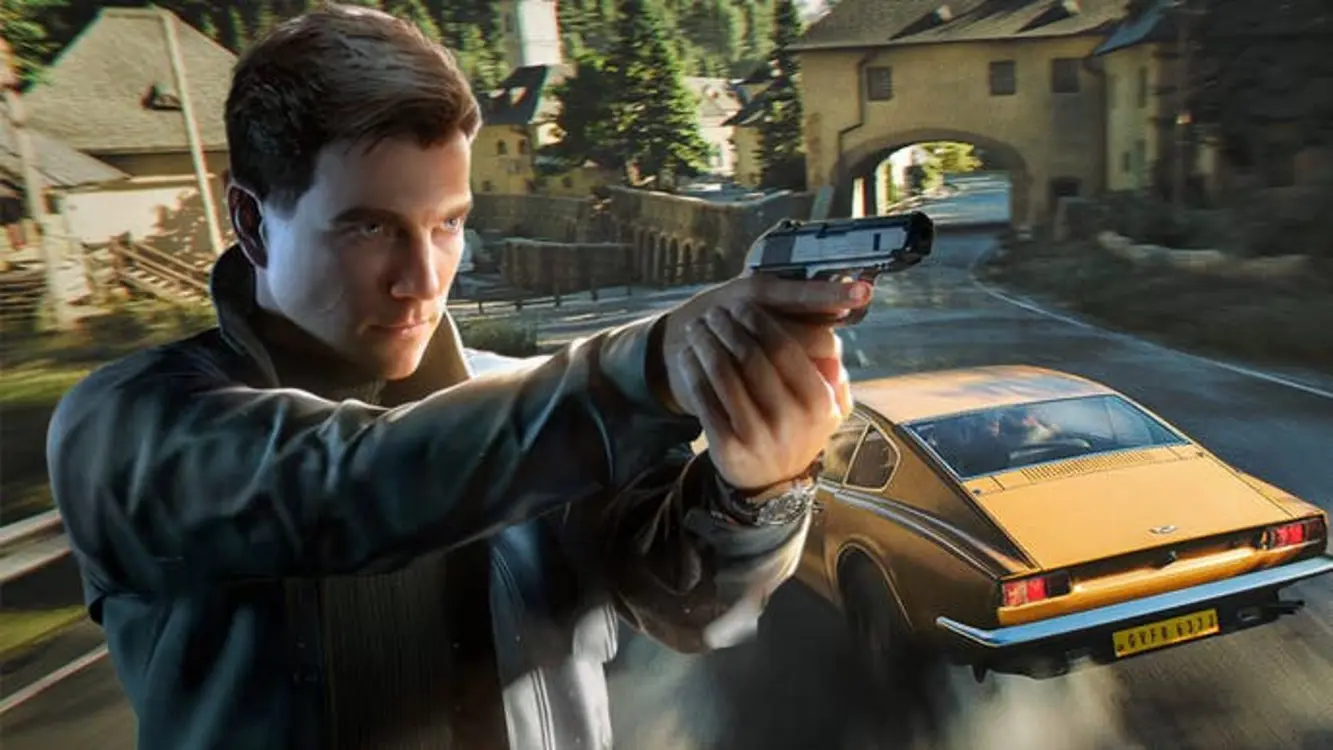

007 First Light is proof that the best licensed games do not come from brand power alone. They come from a studio whose core design instincts already understand the fantasy the license is supposed to deliver, and IO Interactive may have been the right James Bond studio long before it officially got the job.
Before release, 007 First Light reportedly crossed 3 million wishlists. On launch day, it reached 68,477 peak concurrent players on Steam, posted a 91.5% positive user rating from more than 5,000 reviews, and landed an 88 on Metacritic, currently making it IO Interactive's highest-rated game. Those numbers stand out even more for a licensed game, a category that still carries a reputation for expensive spectacle and design choices borrowed from whatever genre happened to be commercially safe at the time.
That is why 007 First Light feels more important than a normal launch success story. It landed with the sense that the developer and the property were speaking the same language. Licensed games often look right before they feel right.
IO Interactive seems to have avoided that trap because it did not need to invent a Bond fantasy from scratch. It had already spent years refining one through Hitman.
Bond Was Always Closer to Hitman Than Most Studios Wanted to Admit
When people talk about James Bond games, the conversation often collapses into surface markers. Bond means gadgets, luxury, gunfire, cars, casinos, tailored suits, and globe-trotting set pieces. All of that matters, but none of it is the real center of the fantasy. The deeper appeal is controlled infiltration. Bond enters spaces he should not be able to access, reads the people inside them, spots the weak point in the system, and turns information into leverage. He survives because he can adapt when the elegant plan stops being elegant.
That is also the core pleasure of Hitman. Agent 47 walks into high-security environments, studies routines, notices who belongs where, and uses that knowledge to move through spaces that are designed to reject him. The fantasy is not just stealth. It is social stealth, environmental awareness, timing, improvisation, and the quiet confidence that comes from understanding a system better than the people enforcing it.
Once you look at Bond through that lens, IO Interactive starts to feel less like an unexpected choice and more like the obvious one. Hitman already trained the studio to build levels around observation, disguise, access, and pressure. It already knew how to make luxury spaces feel dangerous. It already understood how much tension can come from a room full of guards, civilians, routines, and opportunities rather than from a hallway full of waist-high cover.
That overlap matters because Bond has often been misunderstood in games. Too many adaptations reduce him to the broadest possible action template. But Bond is memorable because he makes danger look composed. He turns access into power. He makes improvisation feel stylish.
IO did not need to force that fantasy into an alien structure. It already had the structure. What changed with 007 First Light was the tone, the framing, and the character fantasy layered on top of it.
The Difference Between Agent 47 and Bond Is Tone, Not Design DNA
Hitman and Bond are not identical fantasies. Agent 47 is cold, clinical, and detached. Bond is more visible, more conversational, and more willing to turn a mission into theater. But those differences sit on top of a surprisingly similar gameplay foundation.
Both fantasies depend on entering controlled spaces and bending them without losing composure. Both depend on reading people as much as reading architecture. Both become weaker when reduced to nonstop shooting, because the fantasy is not really about firepower. It is about command.
That is why IO Interactive feels so natural here. The studio did not have to learn how to build tension through patrol routes, restricted zones, layered access, or environmental storytelling. It did not have to learn how to make a room feel like a puzzle without making it feel mechanical. It did not have to learn how to reward patience, observation, and improvisation in the same mission. Those are already the muscles it has spent years developing.
The smarter move was to recognize that Bond could absorb those strengths while shifting the mood. Where Hitman often leans toward dark comedy and detached precision, Bond can push the same structural ideas toward charm, spectacle, and espionage fantasy. The player is no longer an assassin ghosting through a system. They are a spy performing inside it.
That distinction is exactly why 007 First Light feels like more than a competent adaptation. It feels like a studio understanding which parts of its own identity to preserve and which parts to transform.
Most Licensed Games Fail at the Assignment Stage
The larger lesson here has less to do with Bond specifically and more to do with how licensed games are usually made. Too often, the process starts with the wrong question. A publisher secures a major IP and asks which studio has enough prestige, enough technical capacity, or enough market visibility to make the announcement sound important. That can produce polished work. It can even produce good work. But it often misses the more important question: what does this property actually ask the player to do, minute to minute, when the logo is no longer enough?
That question is harder because it forces publishers to think in verbs instead of brand associations. Not what does the audience recognize, but what does the audience want to feel once the player has the controller?
That is where so many licensed games start to feel off. They know the costume, but not the posture. The result is a game that can look expensive and still feel generic.
Bond is a perfect example. A weak Bond adaptation can include the gun barrel intro, the tuxedo, the Aston Martin, and the one-liners, then still fail because it never captures the feeling of moving through danger with intelligence and style. If the player spends most of the game doing things that could belong to any third-person action hero, the Bond layer becomes decorative.
007 First Light appears to avoid that problem because IO Interactive seems to understand Bond as a pattern of play rather than a pile of references. That is the real difference. The game is not interesting because it contains Bond imagery. It is interesting because the studio's existing design strengths already map onto Bond's core fantasy.

The Launch Numbers Matter Because They Suggest Players Felt the Fit Too
It is easy to overstate launch metrics, and one successful release does not rewrite the entire history of licensed games. Still, the early numbers around 007 First Light are hard to ignore. Three million wishlists before release suggest strong anticipation. A 68,477 peak concurrent player count on Steam gives the launch immediate weight on PC. A 91.5% positive user score from more than 5,000 reviews points to a strong early reception from players rather than just curiosity clicks. An 88 Metacritic score, currently IO Interactive's highest, adds critical validation on top of that.
Those figures do not prove every part of the argument on their own. But they do support the broader claim that 007 First Light landed as more than a novelty. Players did not just show up because Bond is famous. They responded positively enough to suggest that the game delivered on the fantasy people hoped it would.
That matters because licensed games often benefit from a strong opening burst before the conversation turns. Recognition can drive preorders, wishlists, and launch-day curiosity. It cannot guarantee sustained goodwill once players start comparing the promise to the actual design. If 007 First Light is holding strong with both critics and users, that says something meaningful about the fit between concept and execution.
It also says something about trust. Players can tell when a developer seems to understand the property at the level of play. The reception around 007 First Light suggests IO earned that trust quickly.
What Makes This More Than a One-Off Success
The most interesting part of 007 First Light is not that it succeeded. The more interesting part is that its success feels legible. You can look at IO Interactive's history, look at what Bond is supposed to feel like, and see why the match makes sense.
That clarity is unusual. With 007 First Light, the connection feels mechanical in the best sense. You can trace it through level design, player fantasy, pacing, and mission structure.
That is why this launch should matter to publishers beyond Bond. The lesson is not that every licensed game should imitate Hitman. The lesson is that every licensed game should begin by identifying the studio whose best work already shares the same verbs, pressures, and pleasures as the property in question. If the fantasy is about mastery through movement, find the studio that already understands movement. If it is about survival through scarcity, find the studio that already understands scarcity. If it is about infiltration, improvisation, and style under pressure, IO Interactive was always going to make more sense than a studio whose strengths lived somewhere else.
That sounds obvious when stated plainly, but the industry does not behave as if it believes it. It still chases announcement heat and confuses prestige with compatibility.
007 First Light is a reminder that compatibility is the real multiplier.
The Best Licensed Games Understand Fantasy at the Verb Level
This is the point more publishers need to take seriously. A famous IP is not a design solution. It is a promise about fantasy. The studio assignment should start there.
What does the player actually do in this world? What kind of pressure defines the fantasy? What kind of intelligence does the game ask from the player? Those questions matter more than whether the developer has shipped a blockbuster before.
IO Interactive's Bond fit makes sense because Hitman already answered most of those questions in adjacent form. Enter high-security locations. Study people and routines. Use gadgets and disguises. Improvise under pressure. Move through luxury, danger, and espionage. Complete missions with style. That is not a superficial overlap. That is the fantasy itself.
Once that alignment exists, the license stops feeling like a skin and starts feeling like an amplification of what the studio already does well. That is the sweet spot licensed games almost never reach. When they do, the result feels stronger than a normal adaptation because the game is not fighting its own foundation.
007 First Light Feels Like the Standard Other Licensed Games Should Chase
There is still room for caution here. One game does not solve the licensed-game problem forever, and no studio-IP pairing is automatically guaranteed to work just because the comparison sounds elegant on paper. But 007 First Light already looks like one of the clearest examples in years of a studio meeting a property at exactly the right angle.
That is why the game feels bigger than its own review scores. It points toward a better way of thinking about adaptation. Do not start with the loudest possible partnership. Start with the deepest mechanical fit.
IO Interactive did not need to reinvent itself to make James Bond work. It needed to recognize how much of Bond had already been living inside Hitman all along. That is what makes 007 First Light feel so convincing.
And that may be the most important thing about its success. 007 First Light does not just look like a great Bond game. It looks like proof that the right studio matched with the right IP can create something much stronger than a licensed game usually is.


