


Victoria Day is the unofficial patch that pushes Canada into summer. Most long weekends disappear into a Steam backlog, a live-service event, or one more “quick” session that somehow eats the whole afternoon. The May 18 weekend offers a different kind of side quest. You can go AFK, keep the gamer brain switched on, and still spend the day building, tinkering, and competing without staring at a monitor.
That is where LEGO works surprisingly well as an analog expansion pack. The loop is familiar even if the hardware is not. You still get systems to learn, objectives to chase, and that satisfying little hit when a build clicks into place. If you are heading to the cottage, staying home, or trying to keep a mixed-age party entertained between barbecue runs and fireworks, these three sets cover very different player types.
1. The Starting Zone Quest: LEGO DUPLO Interactive Adventure Train
If your household has a toddler in it, Victoria Day can double as their first co-op onboarding session. The LEGO DUPLO Interactive Adventure Train is built for ages 2 and up, and it understands something a lot of “educational” toys miss: young kids want feedback. They want to press a thing, move a thing, and watch the world answer back.
That is the hook here. The Push&Go train uses lights and sounds, and the set includes action bricks that trigger responses as the train rolls over them. In game terms, they work like simple environmental triggers. A toddler places track, picks a destination, sends the train through, and gets an immediate result. That cause-and-effect loop is the whole tutorial, and it is a good one.

The free companion app gives the set a little extra range without turning it into screen-first play. Kids can use a device to drive the train, which makes the digital layer feel more like a bonus control scheme than the main event. For parents who want a “Player 3” activity that still feels interactive and modern, this is a clean fit for a long weekend morning.
At 57 pieces, it is not a huge build, but scale is not really the point. The value is in repeat play, rebuildable routes, and the fact that it lets very young kids experiment with choices in a way that feels active instead of passive. Think of it as early-access systems design for the 2+ crowd.
2. The Physics Simulator Mission: LEGO City Heavy-Duty Recovery Tow Truck with Crane
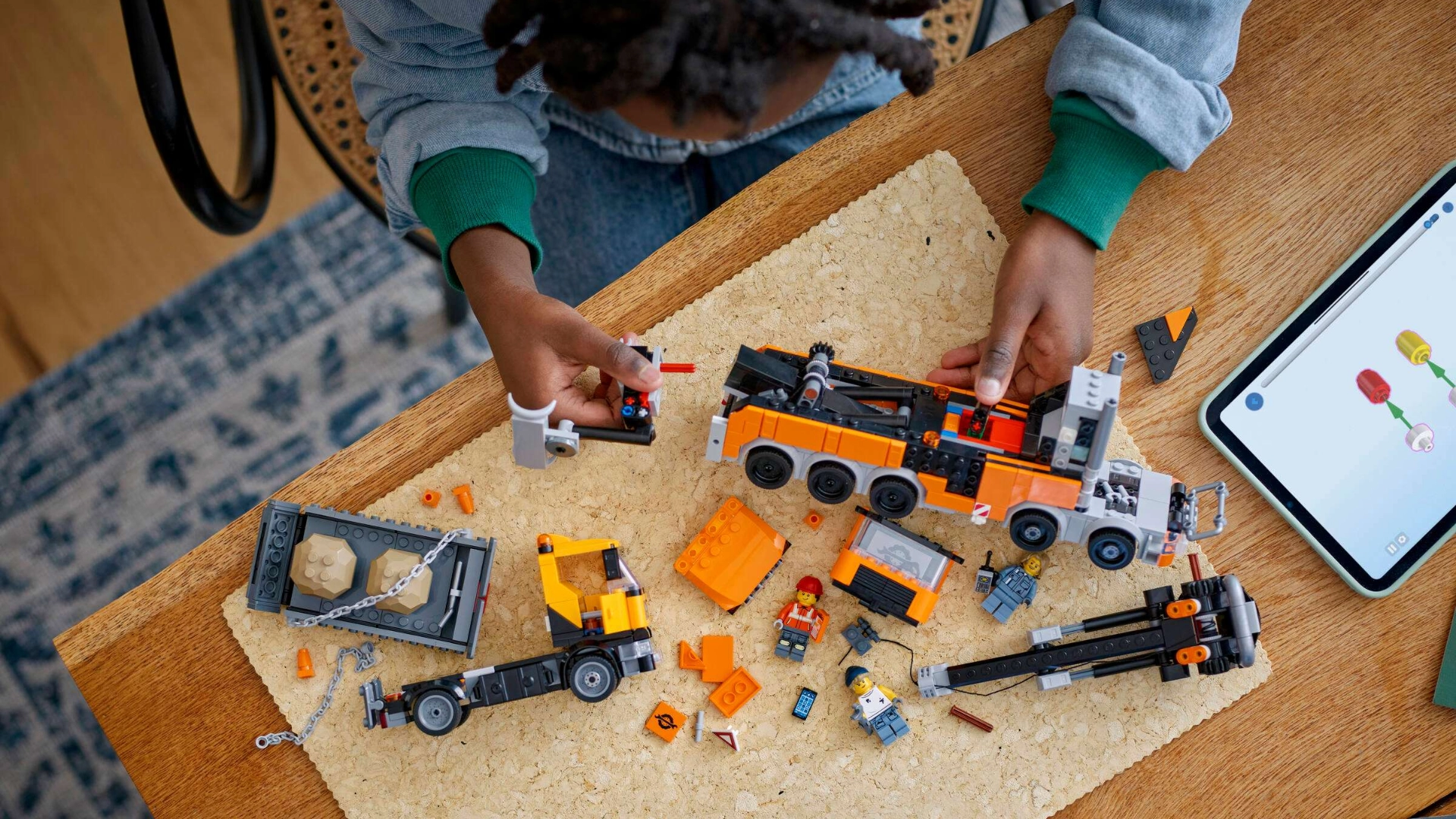
Some people relax on a long weekend by doing absolutely nothing. Others boot up games where the entire fantasy is hauling, lifting, recovering, and solving mechanical problems one awkward angle at a time. If you are wired for SnowRunner, Construction Simulator, or any sandbox where the physics engine steals the show, the LEGO City Heavy-Duty Recovery Tow Truck with Crane is the right kind of Victoria Day project.
This is the mid-game build in the lineup. The official set comes in at 793 pieces and targets builders aged 8 and up, which puts it in a sweet spot: substantial enough to feel like an afternoon objective, but not so demanding that it turns into an all-day boss fight. The truck itself leans hard into the rescue-vehicle fantasy with a crane, working hoist, outriggers, and the kind of chunky utility-vehicle silhouette that makes even a parked model look busy.

The fun is not just in assembling it. It is in what your brain starts doing once it is built. You immediately want to stage a recovery scene. Maybe a sports car has gone off the road after a fictional cottage-country traffic jam. Maybe one of your other LEGO vehicles needs extraction from a driveway “mud pit” made of couch cushions and bad decisions. The set invites that kind of improvised mission design.
That is why it fits the long weekend so well. It scratches the same problem-solving itch as a logistics game or a base-building sim. You are looking at tools, space, angles, and sequence. You are asking what has to move first and what supports what. That is still gamer thinking. It just happens to involve a brick-built tow rig instead of a GPU.

3. The End-Game Strategy: LEGO Traditional Chess Set
Not every gamer wants a vehicle, a route, or a toyetic play loop. Some want a clean board, a clear ruleset, and the chance to ruin a friend's evening with one well-timed move. The LEGO Traditional Chess Set is the most direct bridge between gaming culture and classic tabletop competition, and it lands neatly as the end-game option in this Victoria Day trio.
The set is aimed at ages 9 and up and includes 743 pieces, which gives it a satisfying build phase before the actual matches begin. That matters. Part of the appeal is that you do not just open a box and start playing. You craft the board first. You build the pieces. You get a little of that assembly-line satisfaction before the strategy layer even starts.

Once it is done, the set earns its keep in two ways. First, it is functional. You can actually sit down and play chess. Second, it works as decor in a way a lot of game-adjacent merch does not. It looks at home on a shelf, a coffee table, or in a gaming room that already has controllers, collector's editions, and a few too many display pieces competing for space.
It also fits the mood of the holiday itself. Victoria Day has that odd split-personality energy where the daytime is for errands, yard work, and trying to pretend you are outdoorsy, while the evening slows down into snacks, conversation, and waiting for fireworks. A brick-built chess board suits that second half perfectly. It is competitive multiplayer stripped down to its oldest, sharpest form, now wearing a custom LEGO skin.
The Bottom Line
Victoria Day does not have to be a full logout from gaming culture. It can just be a platform swap. The DUPLO train works as a toddler-friendly tutorial zone. The heavy-duty tow truck turns an afternoon into a hands-on physics mission. The chess set closes the weekend with pure strategy.
None of these builds need Wi-Fi, patch notes, or a graphics card, but they still tap into the same instincts that make games fun in the first place: experimentation, mastery, and a good excuse to say “one more round” before the sun goes down.
Happy Victoria Day, Haunters. See you back in the lobby on Tuesday.


