Insomniac Games made its name on motion. Swinging through New York felt joyful because movement was the fantasy. Marvel's Wolverine flips that idea. Logan does not fly above threats. He walks straight into a room of armed killers and refuses to fall down.
That change shapes the whole game. Instead of another open world superhero hunt, Insomniac delivers a linear, M-rated action brawler built around close combat and a personal story. The result is tighter than Marvel's Spider-Man 2 and more physical than anything the studio has shipped. I played around 20 hours on standard difficulty, mixing main chapters with trials and collectible detours.
Reviewed on PS5.
Editor's Take
Linear structure and brutal melee make this the definitive playable Wolverine.
Pros
- Weighty parry driven combat
- Sharp Logan focused story
- Varied Canada to Tokyo stages
- Flexible Adaptation builds
- Stable 60 fps delivery
Cons
- Tight camera in crowds
- Light optional content
- Spiky late game balance
- Simple traversal tools
Game at a Glance
| Detail | Info |
|---|---|
| Platform | PS5, PS5 Pro reviewed |
| Developer | Insomniac Games |
| Publisher | Sony Interactive Entertainment |
| Genre | Linear action brawler |
| Playtime | 15-25 hours with extras |
| Price | $69.99 (PHP 4,099 at DataBlitz) |
| Performance | 60 fps Performance mode with ray tracing |
| Multiplayer | No |
| Verdict | Brutal, focused, and the best Logan story in games. |
Story and World: One Last Mission With Real Weight
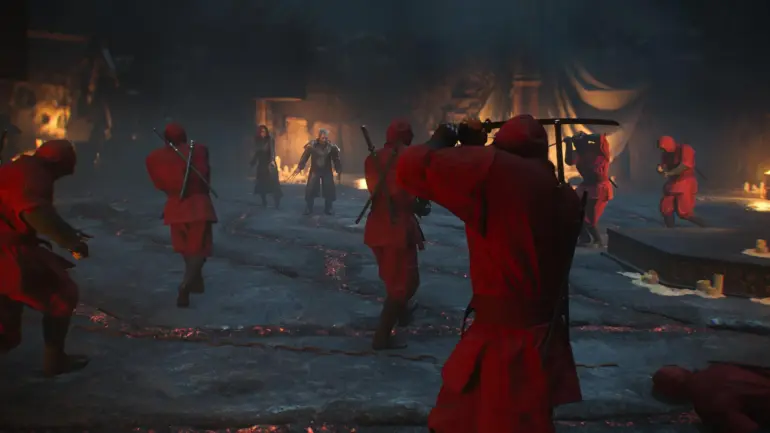
Logan starts retired. He dropped the Wolverine mantle three years ago and hides in the Canadian wilds. Bolivar Trask ends that quiet when his forces start abducting mutants for a supremacy program. Logan rejoins the mutant unit Team X for what sounds like a single rescue. That job pulls him through Tokyo and Madripoor and into a wider conspiracy tied to his own missing past.
The setup is familiar. A tired fighter takes one last job. The writing rises above it through focus. Older Insomniac finales sometimes swapped threats late and rushed the landing. This plot stays on one rail. Trask, Team X, and Logan's history drive every chapter. Turns feel earned because clues appear hours before payoffs.
Liam McIntyre plays Logan as worn down rather than loud. His quiet early scenes in Canada do the heavy lifting. He avoids help, mutters short answers, and only raises his voice when someone he cares about is threatened. The restraint makes later warmth land harder. Fans of Hugh Jackman's films will find the same gruff core, but McIntyre sounds less polished and more tired, which suits a man avoiding his past.
Allies and villains act as mirrors. Jean Grey shows Logan he can guard people without tearing himself apart. Her missions stress rescue and control. Mystique shows the danger of gripping loved ones too hard. Sabretooth shows appetite without conscience, the thing Logan fears he becomes when rage wins. None of them carry a full arc, but each one sharpens the central choice between protection and destruction.
Two chapters stand out without needing spoilers. A snowbound station forces Logan to read what was done to him. A failed rescue in Tokyo forces him to face what his choices cost civilians. Both slow combat and let files, dialogue, and quiet exploration breathe. Insomniac trusts the acting here, and it works.
Locations stay compact but distinct. Canada feels empty and cold. Tokyo feels vertical and crowded, with alleys that push fights into close range. Madripoor mixes bars, markets, and back rooms where talks turn violent fast. The game does not lecture about these places. It uses them to pressure Logan in different ways.
Gameplay: Combat, Adaptation, and Control
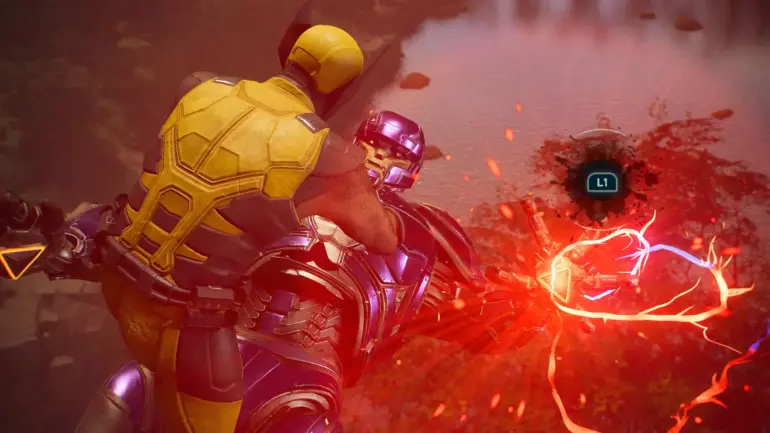
Combat drops the counter heavy Spider-Man formula for a heavier brawler. Light attacks build fast slash strings. Heavy attacks lunge across distance and crack guards. You can cancel most light strings into a dodge, then punish red flagged attacks with a parry. The loop feels direct. Jump in with a heavy, work a string, dodge the flash, answer with a parry and finisher.
Timing starts forgiving and tightens as enemy variety grows. Early grunts teach spacing. Later Hand squads mix shield carriers, ranged throwers, and fast slashers that force target priority. By Tokyo I was chaining parries across groups and converting each opening without thinking about inputs. That is the sign of a readable system.
Hits land hard. Claw strikes carry a sharp metallic bite, bodies react to direction, and finishers use brief framing without stealing control for long. The DualSense adds texture. Light hits pulse, lunges pull the triggers, and clean parries click in a way that helps you learn timing. It is the most physical Insomniac combat since Sunset Overdrive, pointed in a darker direction.
Rage and abilities
Four abilities shape fights. A spinning frenzy clears crowds. A grapple throw turns one enemy into a projectile. A focused strike deletes elites. A regeneration surge boosts healing under pressure. Cooldowns stop spam, so match the tool to the room. Throws rule tight Madripoor bars. The elite killer matters against Trask armor that shrugs off basic strings.
Rage links attack to survival. Damage and clean parries build three stages. Higher Rage improves passive healing, so pushing forward keeps you alive longer than backing off. Full Rage unlocks berserk mode, a short burst of speed and recovery that rescues bad situations. Hiding to heal fails here. Fighting well is the defense.
Healing factor forgives without removing risk. Chips melt away during strong play. Fire, poison, and heavy finishers suppress recovery until you respond. Standard difficulty punishes mashing but rarely feels cheap outside crowded arenas.
Adaptation builds
Progression runs through Adaptations in three branches. Healing and resistance, cooldown and Rage gain, and exploration rewards for whisky and suit materials. Experience buys nodes. Combat challenges and collectibles open extra DNA strands.
Strand caps force choices. My main build stacked healing and Rage gain for aggressive parry play. A cooldown build I tested made abilities the damage core and felt just as viable. Collectibles feed builds instead of sitting apart, because bottles and caches gate those strands.
Extras stay thin. Whisky bottles hide lore notes off path. Suit materials unlock comic era costumes. Nightmare Cabin trials offer wave fights, timed kills, and movement tests. Trials are the keeper because they judge defense with no story cover. The rest is flavor. Spider-Man fans waiting for rich side cases will find less here.
The camera is the real flaw. Framing hugs Logan for impact, which looks great until off screen attackers strike. Hand ranged units with exploding shuriken caused most of my unfair hits. Sound cues help, but dense fights still hide threats. Healing covers the damage without fixing the cause. A wider pullback or stronger edge indicator would help a lot.

Presentation and PS5 Performance
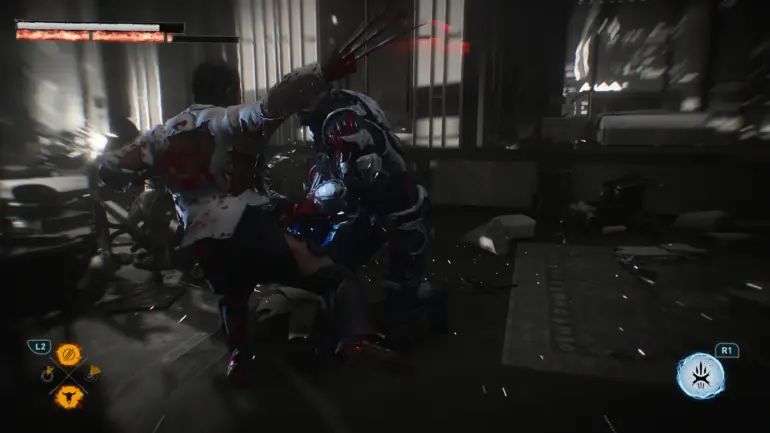
Character work carries the visuals. Logan shows cuts, blood, and torn skin mid fight, then knits closed as healing kicks in. Damage varies by source instead of repeating one overlay. Costumes wear differently. Enemy armor breaks by hit direction, so finishers stay fresh.
Stages favor density over size. Canada uses snow, low sun, and pines. Tokyo stacks signs, steam, and breakable stalls. Madripoor pairs warm bars with wet streets. Glass breaks, cover splits, and scaffolds drop during brawls. A linear plan lets lighting stay controlled, and it shows.
Performance mode held 60 fps on base PS5 through big fights, with only brief dips under heavy effects. Tokyo puddles and Madripoor glass show ray traced reflections. Chapter loads take seconds. Checkpoint restarts feel instant. My run had no crashes, no stuck quests, and only two minor clips where a body met a stall.
Sound supports the brutality. Music stays low during scouting, then adds harsh guitar as Rage climbs. Claws cut through dialogue without burying it. Jean sounds steady, Mystique amused until she turns cold, Sabretooth hungry. Access basics like subtitles and remaps are present, though colorblind tweaks only cover enemy markers. For PH players, physical discs remain the practical pick since resale and sharing through shops like Datablitz plus marketplaces like Carousell stretch value when large downloads take too long.
Content and Longevity: Fewer Icons, Better Pace
A straight run lasts near 15 hours. Full detours, trials, and collectibles push toward 25. That is shorter than Marvel's Spider-Man 2, but padding is nearly gone. Almost every chapter adds a fresh arena shape, enemy mix, or route.
Chapter select opens after credits for cleanup and favorite fights. New Game Plus keeps Adaptations and remixes enemy groups. Costumes give Marvel readers a reason to keep hunting, with short notes tying each suit to its comic era.
Narrative sides are the gap. No district stories deepen Tokyo or Madripoor the way Harlem missions deepened Miles Morales. All three activity types feed builds or looks. The pace stays strong on run one, but wanderers get less on run two unless they love trials. I prefer a dense 20 hours to a loose 35, yet value buyers should know the map holds fewer surprises.
How Marvel's Wolverine Compares
Wolverine fights for time against other prestige PS5 action games, not against giant RPGs. Its closest rivals are its Insomniac sibling and Sony style character action.
| Feature | Marvel's Wolverine | Marvel's Spider-Man 2 | God of War Ragnarok |
|---|---|---|---|
| Combat Depth | Parry brawler with Rage loop | Gadget counter combat | Axe and spear stance play |
| Level Design | Linear chapters plus arenas | Open world New York | Hub realms with paths |
| Story | Personal Logan redemption | Dual hero growth tale | Father son myth arc |
| Side Content | Trials plus collectibles | Cases plus districts | Favours plus arena |
| Playtime | 15-25 hours | 25-35 hours | 30-40 hours |
| Performance | Stable 60 fps mode | 60 fps mode | 60 fps mode |
| Price | $69.99 | $69.99 | $69.99 |
| Best For | Brutal focused melee fans | Traversal and world fans | Myth scope and puzzle fans |
Pick Wolverine for direct fights and clean pacing. Pick Spider-Man 2 for roaming and volume. Pick Ragnarok for scale and puzzle variety.
FAQ: Your Questions Answered
Is Marvel's Wolverine worth full price?
Yes if you prize combat and pacing. It gives 15-25 hours plus New Game Plus and trials. Open world hunters may prefer a sale.
How long to beat it?
About 15 hours direct, 20-25 with trials and collectibles. Chapter select extends cleanup without a full restart.
Does it have multiplayer or co-op?
No. It is single player only, tuned around solo parry timing and Rage control.
How does it run on PS5?
Performance mode holds 60 fps with ray tracing on base PS5 and PS5 Pro. My build had fast loads and no crashes.
What is the price in the Philippines and SEA?
Priced at PHP 4,099 at DataBlitz, with digital through the PlayStation Store. Check branch stock around Metro Manila at launch since physical copies move fast.
Verdict: Is Marvel's Wolverine Worth Your Time?
Marvel's Wolverine knows its hero. Logan guards a few people at high cost instead of saving a city with a smile. Combat, chapters, and upgrades all serve that smaller idea. Crowd camera and thin sides annoy, but parry flow and healing pressure feel superb once learned. This is the best playable Logan yet and a confident second pillar beside Marvel's Spider-Man.