


The strange thing about James Bond in games is that the fantasy always sounded easier to adapt than it actually was. On paper, the ingredients are obvious: espionage, gadgets, gunfights, luxury, deception, fast cars, and the constant threat of a mission collapsing at the worst possible second. In practice, most Bond games either leaned too hard on shooting or treated the license like a thin coat of paint over a generic action template. Very few captured the rhythm.
That is why 007 First Light feels so important. Rather than chasing nostalgia for GoldenEye 007 or turning Bond into a louder version of Agent 47, IO Interactive builds this game around a more useful question: what does James Bond actually do when he is not just posing for the poster? The answer, as First Light understands it, is that Bond reads rooms, manipulates people, improvises under pressure, and keeps moving when the plan inevitably breaks apart. This is not a reinvention of the spy thriller game. It is a disciplined refinement of ideas IO already understands, sharpened around a character who finally makes those systems feel complete.
A Stylish World That Knows Bond Is Performance
First Light looks expensive in the right way. Not simply because the lighting is glossy or because the environments are packed with detail, but because IO understands that Bond spaces need social texture as much as visual polish. Luxury hotels glow with controlled warmth. Markets feel crowded enough to hide in, but never so noisy that navigation becomes unreadable. Training compounds, rooftops, castles, and intelligence facilities all carry distinct silhouettes, which matters in a game built around infiltration and quick situational reads.
The art direction also sells the series' tonal elasticity. Some scenes lean into the colder, harder edge associated with the Daniel Craig era, where steel, glass, and shadow make every corridor feel like a threat. Others embrace the heightened glamour of older Bond films, where elegance and danger share the same room without apology. Bond has always lived somewhere between grounded espionage and polished pulp. First Light is smart enough not to flatten that tension.
The soundtrack helps hold those moods together. Orchestral swells arrive when the game wants scale, but quieter thriller cues do just as much work in stealth-heavy stretches, where tension depends on restraint rather than spectacle.
A Younger Bond Gives The Story Room To Breathe
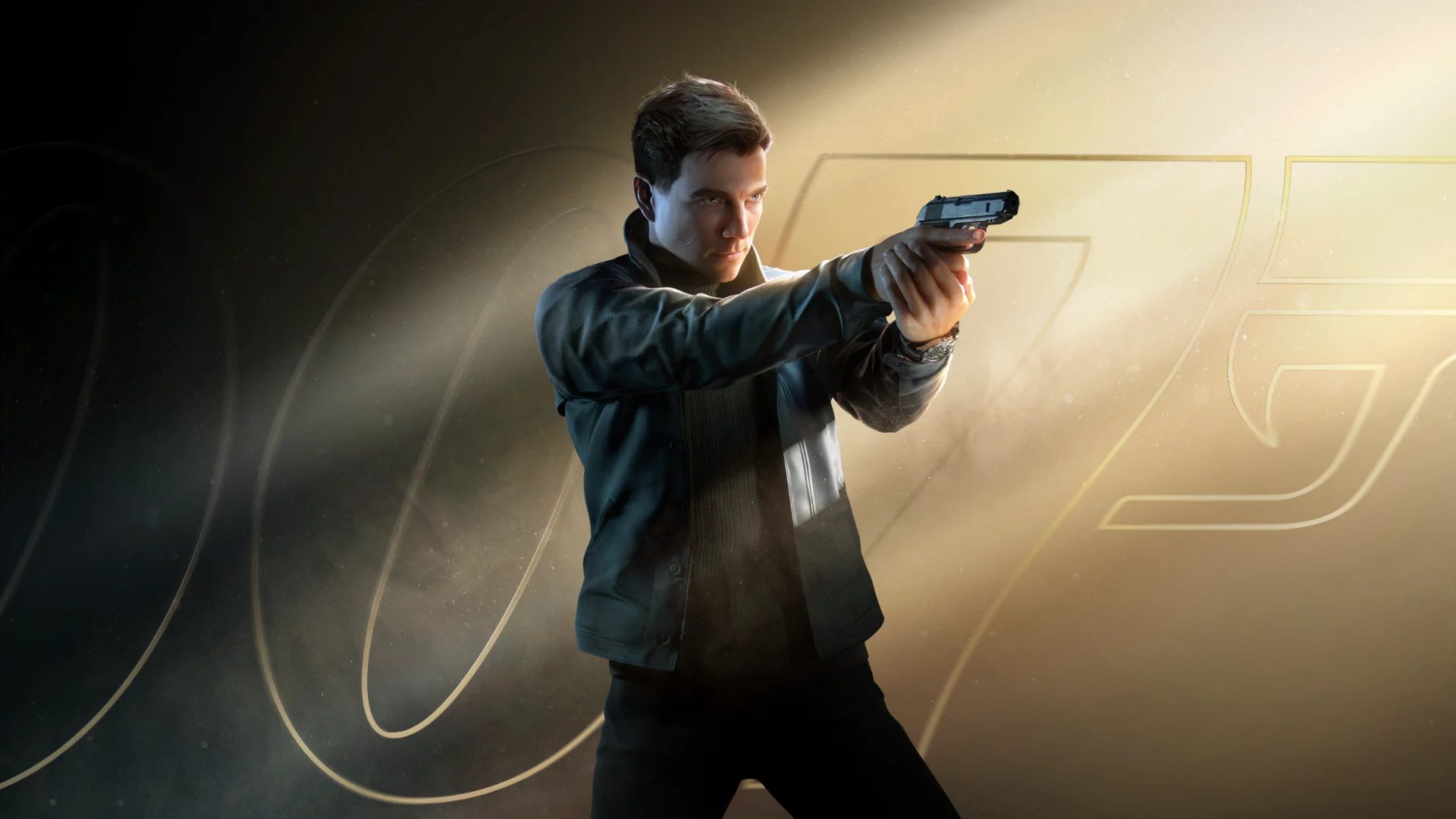
IO also makes the correct narrative choice by not adapting an existing film. Instead, First Light introduces a younger James Bond who has the talent and nerve expected of 007, but not yet the polish. He is capable, arrogant, physically imposing, and often convinced he can outrun the consequences of his own decisions. That makes him more interesting than an already perfected super-agent.
This version of Bond works because the game treats confidence as something still being shaped rather than something fully formed. He can charm his way through a conversation, improvise when a mission goes sideways, and handle himself in a fight, but he is also reckless enough to create the kind of friction that gives the story momentum. MI6 is not simply a backdrop here. It is a system pressing against him.
Patrick Gibson's performance is a major reason the character lands. There are traces of familiar Bond traits in the mix. You can hear some of Craig's blunt force, some of Roger Moore's ease, and flashes of the colder edge associated with Timothy Dalton. Still, the performance does not feel like an imitation reel.
The Plot Is Familiar, But The Pacing Keeps It Sharp
The broader story moves from training and early field work into a larger conspiracy tied to MI6 and the damaged legacy of the 00 program. That premise is not especially radical, and First Light does not pretend otherwise. The plot often relies on recognizable Bond scaffolding: compromised operations, buried institutional history, and dangerous former operatives.
What keeps the campaign engaging is the way it spaces those beats. First Light rarely sits in one mode long enough for repetition to harden into fatigue. A mission built around social infiltration gives way to a chase. A stealth-heavy stretch opens into a close-quarters brawl. That movement matters because Bond stories live or die on cadence. If every mission resolves the same way, the fantasy collapses.
The game also understands the value of smaller rituals. Bond does not just sprint from firefight to firefight. He dresses for the room, studies the people in it, flirts when it is useful, lies when it is necessary, and occasionally misjudges the cost of his own confidence.
First Light Understands That Bond Should Be Vulnerable Before He Looks Cool
One of the game's biggest strengths is how often it lets vulnerability sharpen the fantasy instead of weakening it. Bond is still highly competent, but First Light does not frame him as untouchable. Missions go wrong. Orders are ignored. Plans unravel. The game repeatedly reminds you that being Bond is not about executing a perfect route. It is about recovering faster than everyone else when perfection disappears.
That idea gives the story a useful thematic spine. Bond is learning the rituals of becoming James Bond, but he is also learning the cost of that identity. Charm can open doors, though it can also create blind spots. Aggression can solve a problem, though it can just as easily escalate one.

The Core Loop Balances Stealth, Action, And Improvisation Better Than Expected
The easiest mistake IO could have made was building Bond as a tuxedoed extension of Hitman. First Light avoids that trap. You can see the studio's stealth DNA everywhere, especially in the way levels are structured around infiltration routes, restricted spaces, overheard conversations, and environmental manipulation. But the pace is different. Hitman rewards patience and immaculate control. First Light is more comfortable with collapse.
That shift changes the feel of the entire game. Missions do not demand silent perfection. They encourage adaptation. You might start by slipping through a restricted area, disabling security, and using a disguise to stay invisible. Minutes later, the same mission can turn into a scramble through a compromised corridor or a desperate melee exchange. That elasticity is one of the game's best design decisions because it reflects how Bond stories actually work.
The stealth systems are strong because they are built around access rather than simple invisibility. Bond can infiltrate, eavesdrop, manipulate patrols, disable systems, and use disguises in context-sensitive ways. Restricted spaces feel readable, and the game usually gives you enough information to understand why a route is risky before you commit to it.
Combat Has Weight, Even When It Leans On Familiar Ideas
Combat is where First Light most clearly borrows from broader action design, but it still finds enough personality to avoid feeling generic. The melee system takes obvious cues from the Batman Arkham school of brawling, with counters, environmental attacks, and quick transitions between targets. The difference is in the tone. Bond does not fight like a comic book bruiser.
That gives hand-to-hand encounters a satisfying physicality. Enemies get slammed into walls, cracked across furniture, and thrown through environmental hazards with enough force to make each hit register. Animation transitions are generally smooth, and the feedback loop is strong. The game sells the idea that Bond is improvising with whatever is within reach.
Gunplay is less distinctive, though still effective. Shooting works best as a pressure valve rather than the main attraction. Weapons are readable, enemy reactions are clear enough, and firefights move at a brisk pace, but the game is rarely at its most interesting when it becomes a straight cover shooter.
Gadgets And Social Manipulation Give The Game Its Best Ideas
The gadget suite is where Bond's identity becomes mechanical rather than cosmetic. Hacking tools, watch-based tricks, smoke devices, and other spy gear are not just there for fan service. Used well, they let you redirect attention, disable systems, and turn a hostile space into something temporarily manageable.
That same logic extends into the game's social mechanics. Bond is not only sneaking around guards. He is performing belonging. Conversations, disguises, and controlled bluffing all feed into the fantasy that confidence itself can be a weapon. This is where IO's design background pays off most clearly.
I would have liked the authored dialogue side of that fantasy to go even further. First Light is strongest when it lets Bond weaponize charm and social pressure, and there are moments where the game hints at deeper conversational play than it fully delivers. Even so, what is here already separates it from most licensed action games.
Progression Mostly Supports The Fantasy Instead Of Smothering It
Progression is handled with more restraint than many modern action games, which suits the material. First Light generally rewards exploration and careful observation with better positioning, alternate routes, useful tools, and tactical flexibility rather than drowning the player in constant loot noise. Bond should feel better equipped because he read the mission well, not because he vacuumed up a hundred glowing resources from every corner of the map.
The broader upgrade structure is not the most radical part of the package, but it is functional because it reinforces the central loop. Better tools and expanded options make infiltration richer. They do not replace it.
Not Every Piece Is Equally Fresh
For all its strengths, First Light is not above genre convention. Some traversal beats feel inherited from the modern cinematic action playbook rather than authored specifically for Bond. Climbing, shimmying, and guided environmental movement do their job, but they are rarely the moments you will remember.
There is also a tonal risk in how freely the game moves between grounded espionage and larger spectacle. Most of the time, that contrast works because Bond as a franchise has always contained both. Occasionally, though, the shift can feel abrupt, especially when a carefully staged infiltration suddenly gives way to a louder action sequence.
IO Interactive Has Found The Right Place For Bond On The Innovation Spectrum
First Light is not revolutionary. It does not need to be. Its success comes from understanding where innovation would actually matter and where restraint is the smarter choice. Rather than reinventing stealth, it sharpens infiltration around social performance. Rather than replacing cinematic action conventions, it uses them as connective tissue between stronger espionage spaces.
That puts the game in the sweet spot between derivative and overdesigned. It borrows openly, but usually with purpose. The result is a Bond game that finally feels like it belongs in the modern market without chasing every trend that defines it.
Verdict
007 First Light succeeds because it understands that James Bond is not just an action hero. He is a performance, a pressure response, and a social weapon, and IO Interactive builds its best systems around that truth. The story is familiar in broad strokes, and some traversal and combat ideas lean on well-worn genre language, but the game's blend of stealth, improvisation, gadgets, and controlled spectacle gives it a clear identity. Most importantly, it captures the feeling of becoming Bond rather than merely steering him through set pieces.


