
HP consolidates its gaming divisions under the HyperX banner, unveiling a 300W gaming laptop, next-gen QD-OLED monitor, and an EEG headset that reads your brain
HP just made its boldest gaming move in years. At CES 2026, the company announced that OMEN and HyperX will merge under a single master brand: HyperX. The consolidation transforms HP’s fragmented gaming portfolio into a unified ecosystem spanning laptops, monitors, peripherals, and software.
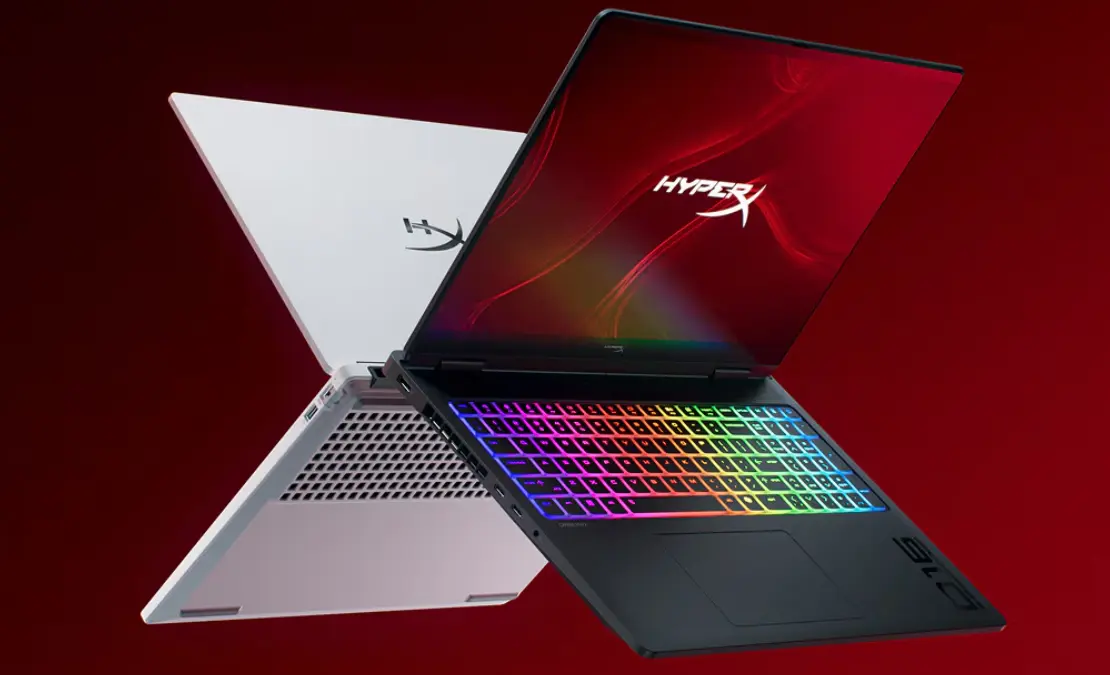
The announcement arrived alongside four new products that showcase what this unified strategy looks like in practice. The HyperX OMEN MAX 16 claims the title of world’s most powerful gaming laptop with fully internal cooling. The HyperX OMEN OLED 34 debuts next-generation V-stripe QD-OLED panel technology. The Clutch Tachi marks HP’s first Xbox-licensed arcade controller. And perhaps most intriguing, HP revealed an in-development EEG headset built with Neurable that interprets brain activity to help players improve focus.
This represents more than a rebrand. HP is positioning HyperX as a complete gaming ecosystem rather than just a peripherals company, directly challenging Razer, Corsair, and Logitech G on their home turf.
Why OMEN Disappeared (And What It Means for You)
The OMEN brand launched in 2006 and built a loyal following among PC gamers who appreciated its desktop replacement laptops and gaming desktops. HyperX, acquired by HP in 2021 for $425 million, dominated the peripherals space with keyboards, mice, and headsets trusted by esports professionals.
Running two separate gaming brands created confusion. Should you pair an OMEN laptop with HyperX peripherals? Does OMEN Hub software work with HyperX devices? The answer was often “sort of,” which frustrated users seeking seamless integration.
“Gamers deserve a seamless experience that matches their passion, from the systems that power their worlds to the gear that connects them,” said Josephine Tan, Senior Vice President and Division President of Personal Systems Gaming Solutions at HP. The statement signals HP’s intent to build an ecosystem where laptops, monitors, and peripherals communicate natively through unified software.
For existing OMEN owners, this transition should bring benefits rather than abandonment. HP confirmed that OMEN-branded products remain supported, and the underlying engineering teams continue developing hardware under the combined HyperX umbrella. The brand consolidation primarily affects marketing and software integration rather than product support.
HyperX OMEN MAX 16: 300W of Portable Power
The flagship announcement delivers exactly what the gaming laptop market has been chasing: more power without external cooling solutions. The HyperX OMEN MAX 16 packs up to 300W Total Platform Power, a 50W increase (20%) over previous OMEN Max configurations. HP claims this makes it the world’s most powerful gaming laptop with fully internal cooling.
That distinction matters because competitors like Razer’s Blade 18 and MSI’s Titan 18 HX have pushed thermal limits that sometimes require external cooling pads for sustained performance. The OMEN MAX 16 achieves its power envelope through a redesigned Tempest Cooling Pro system featuring three fans and automated Fan Cleaner technology that maintains cooling efficiency over time.
Hardware Specifications
The laptop supports next-generation silicon from both major CPU vendors:
- Processors: Intel Core Ultra 200HX series or AMD Ryzen AI processors
- Graphics: Up to NVIDIA GeForce RTX 5090 Laptop GPU
- Display: 16-inch OLED, 2560×1600 (WQXGA), 240Hz refresh rate, 500 nits peak brightness
- Total Platform Power: Up to 300W
High-Polling Rate Keyboard
HP addressed a common complaint about gaming laptops: keyboard response times lag behind dedicated mechanical keyboards. The OMEN MAX 16 features an industry-leading high-polling rate keyboard delivering up to 4x faster polling than previous generations.
For competitive players, polling rate determines how frequently your keyboard reports inputs to the system. Standard laptops poll at 125Hz (every 8ms). Gaming laptops typically reach 1000Hz (1ms). HP hasn’t confirmed the exact polling rate, but 4x previous generations suggests 4000Hz or higher, matching standalone gaming keyboards like the Razer Huntsman V3 Pro.
The keyboard also includes full-size arrow keys (a small victory for anyone who’s suffered cramped navigation clusters) and per-key RGB lighting customizable through OMEN Light Studio.
OMEN AI: One-Click FPS Optimization
Software optimization often determines whether a gaming laptop reaches its performance potential. OMEN AI attempts to automate the tweaking process that enthusiasts manually perform, adjusting operating system settings, hardware configurations, and in-game options for each title.
HP describes this as “personalized, one-click solution tailored to each game,” though specifics remain limited. The technology presumably builds on existing OMEN Gaming Hub features while incorporating machine learning to optimize based on your hardware configuration and gameplay patterns. Whether it matches the granular control of manual tuning remains to be seen when review units become available.
Availability: Spring 2026 on HP.com. Pricing not yet announced.
HyperX OMEN OLED 34: V-Stripe QD-OLED Arrives
The display market has crowned QD-OLED as the premium panel technology for gaming, but first-generation implementations carried trade-offs. Text fringing (color separation on fine details) and subpixel arrangements optimized for video content rather than productivity work limited QD-OLED’s appeal for users who game and create on the same monitor.
The HyperX OMEN OLED 34 debuts next-generation V-stripe QD-OLED panel technology, which HP claims delivers “better picture and less text fringing” compared to current QD-OLED monitors. Samsung Display developed V-stripe arrangements specifically to address text clarity concerns while maintaining the contrast and color advantages that make QD-OLED compelling for gaming.
Display Specifications
- Panel: V-stripe QD-OLED
- Size: 34 inches
- Aspect Ratio: 21:9 ultrawide
- Resolution: 3440×1440 (WQHD)
- Refresh Rate: 360Hz
- Response Time: 0.03ms (gray-to-gray)
The 360Hz refresh rate represents the current ceiling for ultrawide gaming monitors, matching the Alienware AW3423DWF and Samsung Odyssey OLED G8 while adding the V-stripe panel advantage.
Creator Features: HyperX ProLuma
HP positioned the OMEN OLED 34 for content creators alongside gamers, bundling features that justify the “professional-grade” marketing:
- Color Precision: HyperX ProLuma calibration for accurate color reproduction
- Power Delivery: 100W USB-C for single-cable laptop connectivity
- KVM Switch: Built-in switching between multiple systems
- Burn-in Protection: HyperX OLED CoreProtect with three-year warranty
The 100W USB-C power delivery particularly benefits laptop users. You can connect a MacBook Pro or gaming laptop via single cable, receiving video signal and charging simultaneously. The integrated KVM switch lets creators toggle between a gaming PC and a workstation without swapping cables.
3D-Printable Accessories
In an unexpected move, HP designed the monitor with customization in mind. The headphone hook accepts 3D-printed alternatives, letting users design their own mounting solutions or download community-created designs. This small touch signals HP’s awareness that gamers personalize their setups beyond RGB lighting.
Availability: Spring 2026 on HP.com. Pricing not yet announced.
HyperX Clutch Tachi: Arcade Controller for Xbox
Fighting game enthusiasts have long debated the merits of arcade sticks versus leverless controllers. The leverless design (popularized by the Hit Box) replaces the traditional joystick with directional buttons, offering faster inputs at the cost of traditional muscle memory. HP enters this niche with the Clutch Tachi, its first Xbox-licensed arcade controller.
Design and Features
- Input Method: Leverless (all-button)
- Switches: Magnetic switches with TMR (Tunnel Magnetoresistance) sensors
- Software: NGENUITY customization for button mapping, rapid trigger, and actuation points
- Customization: 3D-printable button shapes and top plate artwork
Magnetic switches with TMR sensors offer advantages over mechanical switches for fighting game inputs. They register keypresses at adjustable actuation depths, enable rapid trigger functionality (registering repeated inputs without fully releasing), and provide smoother analog-like precision for certain techniques.
The NGENUITY software integration means Clutch Tachi settings sync with other HyperX peripherals, and the 3D-printable components continue HP’s push toward user customization.
Availability: Spring 2026 on HP.com. Pricing not yet announced.
HyperX and Neurable: The Brain-Reading Headset
The most unconventional announcement doesn’t have a release date or price because it remains in development. HP partnered with Neurable, a neurotechnology company, to create a gaming headset equipped with EEG (electroencephalography) sensors that interpret brain activity in real time.


How It Works
EEG technology measures electrical activity in the brain through sensors placed on the scalp. Medical applications have used EEG for decades to diagnose seizures and sleep disorders. Consumer applications have emerged more recently, with Neurable previously developing EEG headbands for focus tracking in workplace environments.
The HyperX implementation aims to help players improve focus and accuracy by providing feedback on their mental state during gameplay. If you lose concentration during a tense moment, the headset could theoretically alert you or log the data for later review.
Realistic Expectations
Brain-computer interfaces remain nascent technology for consumer applications. Current EEG sensors provide broad mental state information (focused versus distracted, stressed versus calm) rather than specific thoughts or intentions. The HyperX headset won’t read your mind or provide superhuman reaction times.
What it could realistically offer: objective feedback on attention levels during practice sessions, tracking how focus degrades over long gaming sessions, and identifying patterns in concentration that correlate with performance. Professional esports organizations already employ sports psychologists and performance coaches. EEG feedback could democratize some of that analysis for individual players.
HP showed the headset in a development state at CES, signaling serious investment rather than a concept video. However, the company provided no timeline, pricing, or specific capability claims. This one deserves cautious optimism rather than immediate excitement.
The Bigger Picture: HP’s Ecosystem Play
Gaming hardware increasingly competes on ecosystem integration rather than individual product specs. Razer Synapse unifies peripherals under common lighting and macro systems. Corsair iCUE controls everything from keyboards to liquid cooling. Logitech G Hub connects mice, headsets, and streaming gear.
HP’s brand consolidation positions HyperX to deliver similar integration. OMEN Gaming Hub already exists, and merging HyperX peripherals into the same software ecosystem removes friction for users who previously juggled multiple control panels.
The Spring 2026 product launches will reveal whether HP executes on this vision. Hardware specs look competitive, but software integration determines daily experience. A 300W laptop means nothing if fan profiles constantly fight thermal management. A 360Hz monitor matters less if KVM switching introduces latency.
Early adopters should wait for independent testing before committing. HP’s CES announcements establish intent, not proven performance. The OMEN brand built trust through years of solid engineering. HyperX carries its own reputation in peripherals. Whether the combined entity delivers on both legacies remains the outstanding question.
What We’re Watching
Several unanswered questions will shape our coverage as these products approach availability:
- OMEN MAX 16 thermal performance: Can the Tempest Cooling Pro system sustain 300W under extended load without throttling?
- V-stripe QD-OLED text clarity: How much does the new panel architecture improve on current QD-OLED monitors for productivity work?
- Clutch Tachi build quality: Does HP’s first arcade controller match established competitors like Victrix and Hori?
- Software unification: Will OMEN Gaming Hub and NGENUITY merge into a single application?
- Neurable headset timeline: When will HP move from development showcase to actual product announcement?
We’ll provide hands-on coverage and full reviews as HP makes products available. The CES announcements represent HP’s most ambitious gaming push since acquiring HyperX, and the unified brand strategy suggests long-term commitment rather than incremental updates.
Frequently Asked Questions
Is OMEN being discontinued?
No. HP is consolidating OMEN and HyperX under the HyperX master brand, but OMEN products remain supported. The OMEN name continues as a sub-brand (HyperX OMEN MAX 16) rather than disappearing entirely.
When can I buy the HyperX OMEN MAX 16?
HP announced Spring 2026 availability on HP.com. Specific dates and pricing will be confirmed closer to launch.
How does the OMEN MAX 16 compare to the Razer Blade 18?
Both target the high-performance gaming laptop segment. The OMEN MAX 16 offers 300W total platform power with fully internal cooling, while the Blade 18 prioritizes thinner design. Direct performance comparisons require independent testing once review units become available.
What is V-stripe QD-OLED?
V-stripe refers to a subpixel arrangement in Samsung’s next-generation QD-OLED panels. The technology improves text clarity compared to first-generation QD-OLED while maintaining contrast and color advantages. The HyperX OMEN OLED 34 debuts this panel technology.
Does the Clutch Tachi work with PlayStation?
HP announced the Clutch Tachi as an Xbox-licensed controller. PlayStation compatibility was not confirmed in the announcement.
When will the brain-reading headset be available?
HP showed the Neurable partnership headset in development at CES 2026 without providing availability or pricing. This product remains in early stages with no confirmed release timeline.