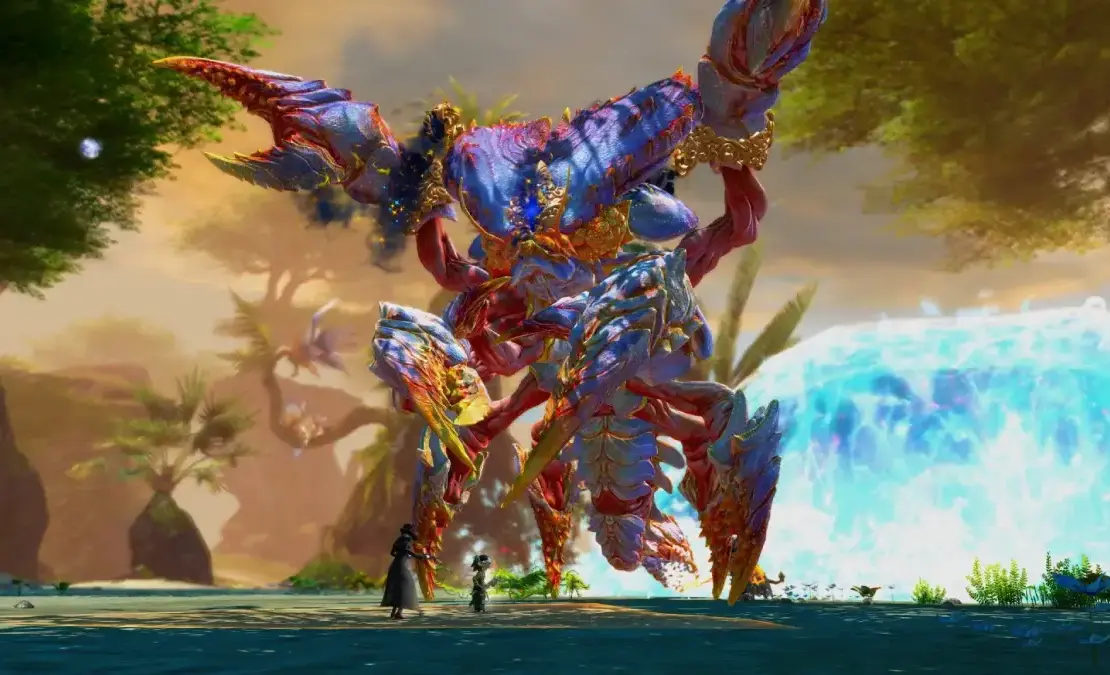

Guild Wars 2 continues breaking Steam player records daily in November 2025, benefiting from a perfect storm of timing, quality expansions, and competitors faltering. ArenaNet’s 13-year-old MMORPG reached new all-time concurrent player peaks on Steam throughout the past week, capitalizing on Amazon’s October 2025 announcement that New World would shut down permanently in 2026.
The timing couldn’t have worked better for ArenaNet. Amazon announced New World’s closure just as Guild Wars 2’s latest expansion, Janthir Wilds, entered its strongest content phase with new elite specializations breathing fresh life into combat variety. Players seeking action-oriented MMO combat with minimal pressure found Guild Wars 2 filling the exact niche that New World once occupied, particularly for those prioritizing exploration and open-world gameplay over instanced content treadmills.
Steam Numbers Tell Only Part of the Story
The Steam surge represents a fraction of Guild Wars 2’s actual player base. ArenaNet’s standalone client hosts the majority of active players, with Steam accounting for roughly 25% or less of total concurrent users based on community estimates. However, Steam’s public tracking provides the only measurable indicator of player momentum, and that momentum looks strong heading into the holiday season.
Guild Wars 2’s Reddit community celebrated the milestone with daily Steam chart posts showing consistent growth. One player noted reaching level 80 as a newcomer and questioning why the game gained attention now after years of availability. The answer combines multiple factors: New World’s closure created a displaced player base actively searching for alternatives, Janthir Wilds delivered ArenaNet’s strongest expansion content in years, and competing MMOs stumbled with unpopular updates.
The New World shutdown timing proved particularly damaging for Amazon. The game showed promising seasonal content before the announcement, making the abrupt closure feel premature to dedicated players. Guild Wars 2 positioned itself as the most direct alternative for action combat fans, alongside The Elder Scrolls Online as a secondary option for those prioritizing different gameplay styles.
ESO’s Missteps Create Additional Opportunities
The Elder Scrolls Online compounded Guild Wars 2’s growth by alienating portions of its player base with recent updates. ESO’s latest paid content received harsh criticism for quality issues, while controversial combat changes frustrated endgame players. The combination of scribing system complaints and homogenized class builds sent ESO veterans searching for alternatives, with many landing in Guild Wars 2’s more forgiving progression systems.
One former ESO player highlighted the appeal shift in Guild Wars 2’s subreddit: “ESO also recently pissed off a bunch of its players with the latest paid content which so far has been extremely crap. Hence why I am now playing GW 2 and enjoying it a whole bunch.” The sentiment reflects broader frustration with live service games that prioritize monetization over player experience, making Guild Wars 2’s buy-once expansion model feel refreshing by comparison.
Guild Wars 2 carved out a specific MMO niche that competitors increasingly abandoned. World of Warcraft shifted focus toward instanced mythic dungeons and raid progression. Final Fantasy XIV prioritized story-driven linear experiences. Both games reduced emphasis on open-world exploration and emergent gameplay, the exact areas where Guild Wars 2 excels. Players seeking relaxed MMO experiences without artificial pressure found Guild Wars 2 offering what major competitors no longer prioritized.
Regional Pricing Makes Steam Appealing for New Players
Steam’s regional pricing advantages played a crucial role in accessibility for players outside North America and Europe. Guild Wars 2’s Steam version supports localized pricing through Steam Wallet, offering significantly better currency conversions than ArenaNet’s standalone client. Players from regions with weaker currencies reported saving substantial amounts by purchasing through Steam instead of paying ArenaNet’s fixed international pricing.
The Steam Wallet functionality provides additional flexibility beyond better pricing. Players can fund expansion purchases by selling Steam Community Market items like Counter-Strike 2 skins, effectively earning Guild Wars 2 content through unrelated gaming activities. This economic flexibility matters particularly for younger players or those in regions where direct credit card purchases face barriers.
ArenaNet cannot easily migrate existing standalone client players to Steam accounts, limiting the potential Steam numbers explosion. Players who started on ArenaNet’s launcher before the 2022 Steam launch remain locked to that platform unless they create entirely new accounts, losing years of progression and purchased content. However, a workaround exists through the -provider Portal launch command that activates Steam overlay features for standalone client users, allowing limited Steam integration without full account migration.
What Guild Wars 2 Offers New World Refugees
Guild Wars 2’s design philosophy directly addresses frustrations that plagued New World throughout its lifespan. The absence of gear treadmills means players reaching level 80 can pursue endgame content immediately without months of grinding for marginal stat increases. Horizontal progression through cosmetics, masteries, and build experimentation replaces vertical power creep, making the game respectful of player time investment.
The combat feels reactive and action-oriented without New World’s animation commitment issues. Guild Wars 2’s dodge-roll mechanics, combo fields, and active skill usage create engaging moment-to-moment gameplay that translates well for action MMO fans. The lack of traditional Holy Trinity roles (tank, healer, DPS) allows solo players to experience content designed for groups, reducing the social pressure that gatekeeps endgame progression in competitor MMOs.

Janthir Wilds introduced two new elite specializations per profession, creating 18 new playstyles across Guild Wars 2’s class roster. The community rediscovered the excitement of expansion launch periods, with players collectively experimenting with builds and rotations. This collaborative discovery phase generates organic engagement that retention-focused live service updates struggle to replicate, demonstrating why expansion-based content delivery still works when executed properly.
Challenges Remain for Converting Interest into Long-Term Players
Not every displaced New World player finds Guild Wars 2 clicking immediately. One Reddit user described trying the game after New World’s announcement but struggling to identify what felt “off” about the experience. The combat lacks weight and impact feedback compared to New World’s visceral melee encounters, potentially alienating players who prioritized that specific feel. Guild Wars 2’s skill system overwhelms newcomers with options, contrasting with New World’s simpler weapon-based progression.
The game’s collection-focused content design frustrates players expecting straightforward story progression. Janthir Wilds includes multiple collection achievements that gate story advancement, creating momentum-killing busy work during what should feel like climactic narrative sequences. These pacing issues represent ongoing criticisms that ArenaNet addresses inconsistently across expansions, with some stories flowing smoothly while others stumble over mandatory side activities.


Guild Wars 2’s visual clarity problems in group content create accessibility barriers for new players. Large-scale meta events devolve into visual chaos with dozens of players spamming particle effects simultaneously, making combat feedback difficult to parse. Players with photosensitivity concerns or those preferring tactical clarity over spectacle find these encounters overwhelming rather than exciting, limiting the game’s appeal despite strong underlying mechanics.
ArenaNet’s Console Opportunity
The player surge highlights ArenaNet’s missed opportunity with console platforms. Guild Wars 2 runs well on Steam Deck through community configurations, proving the game’s technical viability on lower-powered hardware. Players successfully configured full controller support six years ago, demonstrating that proper console versions could work with modest development investment.
ArenaNet promised console ports twice during Guild Wars 2’s lifespan, at launch and again several years later, but never delivered either version. The buy-once payment model translates perfectly to console economics where subscription MMOs face resistance. Cross-platform servers between PC and console could substantially grow the player base without fragmenting the community, particularly given Guild Wars 2’s action combat translates naturally to controller inputs.
Nintendo Switch 2, PlayStation 5, and Xbox Series X all possess sufficient power to run Guild Wars 2 at acceptable performance levels. The game’s 2012 foundation means graphics scale well across hardware tiers, making last-gen console versions technically feasible. However, ArenaNet’s studio size and NCSoft’s resource allocation priorities make console development unlikely despite the potential player base growth.
What This Surge Means for Guild Wars 2’s Future
ArenaNet faces the challenge of converting temporary attention into lasting player retention. New players flooding in from New World and ESO arrive with different expectations and gameplay preferences than Guild Wars 2’s existing community. The upcoming quick play feature and strike/raid content amalgamation could prove crucial for maintaining endgame engagement as newcomers reach max level and seek structured group content.
The Steam surge provides measurable momentum that justifies continued expansion investment from NCSoft. Guild Wars 2 operated in perceived maintenance mode for periods when player counts stagnated, limiting ArenaNet’s ambitions for major content releases. Demonstrable growth creates business cases for larger budgets and feature development, potentially breaking cycles where reduced investment led to reduced player interest.
The MMO market consolidation benefits established games with proven track records and player-friendly monetization. New World’s shutdown, alongside struggles at ESO and ongoing subscription fatigue with World of Warcraft, positions buy-once MMOs like Guild Wars 2 as increasingly attractive alternatives. Players burned by games-as-service shutdowns appreciate Guild Wars 2’s 13-year operational history and commitment to expansion-based content delivery.
Guild Wars 2’s current surge demonstrates that quality game design with player-respectful monetization still finds audiences in 2025’s crowded gaming landscape. The game didn’t transform overnight to earn this attention. ArenaNet simply maintained consistent quality while competitors made unpopular decisions, positioning Guild Wars 2 as the logical destination for displaced players. Whether this momentum sustains beyond initial curiosity depends on ArenaNet’s ability to deliver compelling reasons for newcomers to stay after the honeymoon period ends.
The timing worked perfectly for Guild Wars 2, but the game earned its opportunity through years of maintaining identity rather than chasing trends. As more live service games face uncertain futures, that consistency increasingly looks like the smarter long-term strategy.