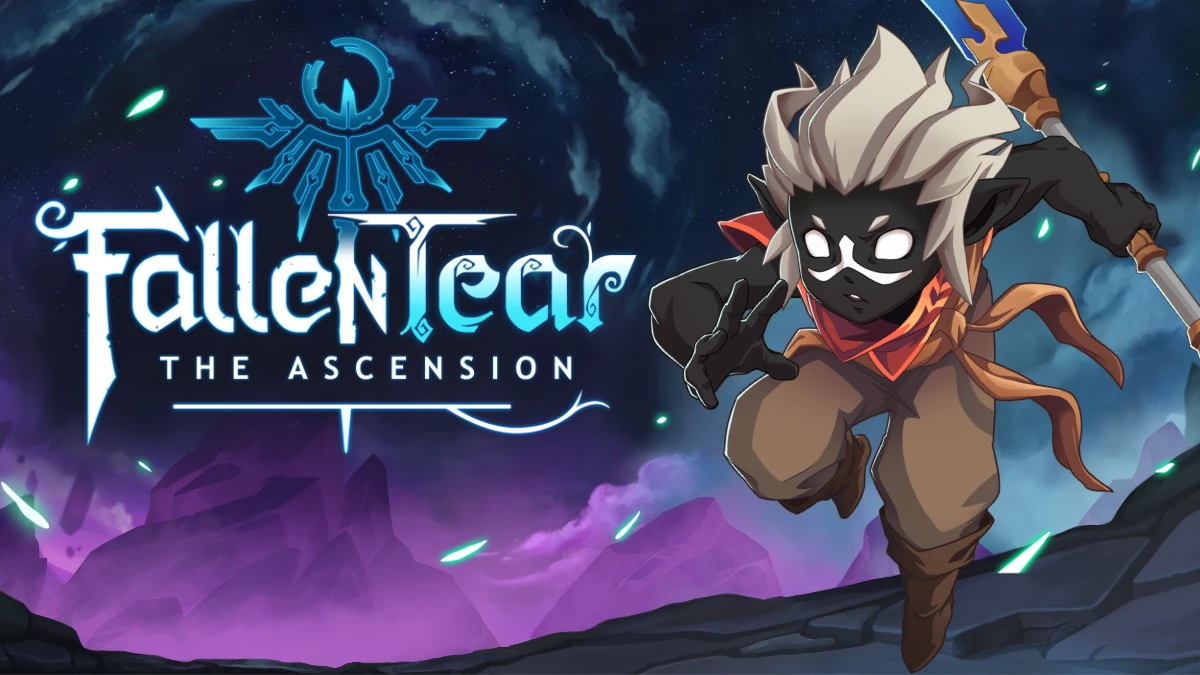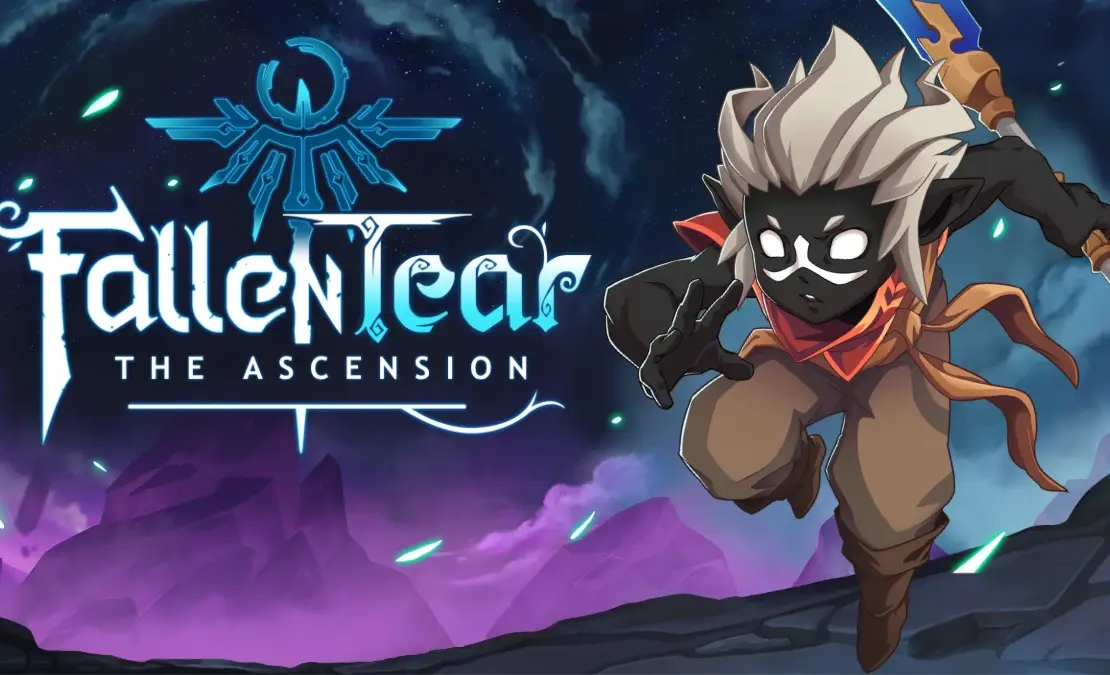

Fallen Tear: Ascension blends Metroidvania exploration with JRPG mechanics and pulls it off more often than not. The genre mashup sounds like a recipe for either something special or a confused mess. Fortunately, it leans toward the former. But “promising” and “ready” are two very different things, and right now, Fallen Tear sits firmly in the former camp while the latter still needs work.
A World Worth Exploring
The world of Raoah has character. Its hand-animated visuals bring each environment to life with an expressiveness you don’t often see in indie Metroidvanias. Hiro, the game’s protagonist, moves with personality baked into every frame. Even standard enemies carry enough visual detail in their movesets to make encounters feel deliberate rather than disposable.
The art direction leans into a fantastical aesthetic, somewhere between a classic JRPG cutscene and a hand-drawn animated film. It’s a distinct visual identity, and when everything clicks, it’s the game’s strongest selling point.
Hiro’s Journey: Strong Start, Fading Momentum
The story opens with impact. You begin as a black beast, navigating a brief platforming and combat sequence that plays like a fever dream. Then Hiro wakes up. It was just a dream. He’s a trainee hunter set to meet his brother for practice when a mysterious attack tears everything apart. He rushes home only to collapse on the way, and when he comes to, the town lies in ruins. His mother and brother are gone. The townspeople blame him for the destruction. Hiro has no memory of what happened.
That premise carries real weight. The stakes feel personal, and the mystery behind Hiro’s missing family and the corruption gripping the land of Raoah gives the story a clean, purposeful direction.
The problem is what follows. Narrative momentum tapers off as you push deeper into the game. Story beats that should land with weight tend to arrive quietly and drift away faster than they should. By the end of the demo experience, certain plot developments had already blurred together. The foundation is solid, but the storytelling needs sharper execution to sustain the emotional pull of that opening.
Fated Bonds: The JRPG Heart of the Game
Fallen Tear’s most inventive mechanic sits at the intersection of its two genres. As you explore Raoah, you meet NPCs who can join your cause as Fated Bonds. Each ally brings distinct abilities that complement and augment Hiro in combat. Bjorn, for example, hurls a heated pan in an arc that deals 20 damage and burns enemies for an additional 5 over time. Efiker, the Guild Master, locks enemies in place around Hiro, suspending their movement for three seconds.
These aren’t just cosmetic additions. Each new recruit earns you a trust point, and accumulating trust points unlocks what the game calls Ascensions: new abilities for Hiro that expand his toolkit. Crucially, you choose which Ascension to unlock, as long as you have the required points. That sense of agency in progression keeps the system from feeling like a rigid checklist.
The abilities themselves are a mixed bag. Double jump, dash, charged attack and charged jump are functional staples of the genre, but they don’t feel particularly tailored to a world built on magic, sorcery and strange creatures. For a game with this much visual and tonal personality, the traversal toolkit feels a bit vanilla. Whether the full release addresses this remains to be seen.
The Hunt Board Loop
Hiro’s identity as a trainee hunter also feeds into a secondary system built around Hunt Boards. Scattered across the world, these boards let Hiro accept contracts to kill specific creatures in exchange for Fated Points. Defeating standard enemies also earns these points, which unlock percentage-based buffs across defence, attack and health.
It’s a small thing that makes a meaningful difference. Enemies stopped feeling like obstacles to push past. Instead, clearing a room became genuinely worthwhile, since every kill nudged a buff closer to completion. That shift in mindset, from “get through this” to “let me actually engage with this,” is the mark of a well-constructed incentive loop.
Solid Bones, Rough Edges Everywhere
Beyond its systems, Fallen Tear builds an evolving map, thoughtful level design and voice acting that ranges from competent to genuinely entertaining. A journal and help directory give the world texture. The map in particular shows design confidence: blocked paths, hidden areas and item placements feel deliberate rather than arbitrary.

And yet, the game’s current state gets in the way of all of it.
Transitions feel abrupt. Some areas play music, others run in silence with no apparent reason. Sound effects drop out at odd moments. Bugs crop up with enough frequency to disrupt flow. The most persistent issue: fast-travelling between areas would occasionally respawn Hiro inside or beneath the ground, requiring a full game reload to recover. Trust point deductions sometimes registered incorrectly. Framerate drops hit without warning, ranging from brief stutters to complete crashes.
This is not the polish level of a product asking people to pay money for it, even under the Early Access banner.

Lost in Translation
The game also struggles to communicate basic information to the player. Blocked entrances to new areas don’t appear on the map. NPCs you can’t assist yet carry no visual indicator to let you know to return later. More than once, the experience devolved into aimless backtracking, retracing earlier areas to find an NPC you half-remembered meeting, now that you finally had the right ability.
One moment in particular sums up the communication problem: an item sat in inventory unacknowledged until, out of sheer frustration, a random NPC conversation triggered a scene where Hiro produced it without warning. That interaction unlocked a new section of the map. It shouldn’t have taken a lucky conversation to discover that.
The blood moon events that periodically sweep through the world compound this frustration. Enemies strengthen. Elite foes emerge from warp gates. The event simply kicks in, unannounced, with no NPC foreshadowing and no in-world warning system. It lingers for what feels like far too long, and during a first encounter, it reads as a system malfunction rather than an intentional design choice. A single line of dialogue from a passing NPC would fix this entirely.
Early Access, Early Concerns
There’s real value in Early Access as a development tool. It surfaces bugs, gathers community feedback, and lets players help shape a game before it’s finished. That’s the deal. But the expectation on both sides is that the foundation is stable enough to justify the transaction.
Fallen Tear isn’t there yet. And that matters, because negative Steam reviews have a way of sticking around long after a developer patches the underlying issues. For a game with this much genuine potential, a rough Early Access reception could do lasting damage that better launch timing would have avoided. GameHaunt, which is proud to spotlight rising talent from Southeast Asia’s growing game development scene (and yes, that includes some proud Pinoy developers making waves), wants this one to succeed. The fear is that it launches before it’s ready.
The Promise Underneath
Strip away the bugs and the communication gaps, and Fallen Tear: Ascension is genuinely compelling. The genre blend works. Exploration pulls you forward, and the world fills up with enough texture and side interactions to keep momentum alive even when the main narrative loses its grip. Combat has a satisfying physical quality to it. The Fated Bonds system rewards curiosity and turns exploration into something with mechanical weight. The Hunt Board loop keeps encounters feeling purposeful. And Hiro himself, in both movement and voice, carries enough personality to anchor the whole thing.
The hand animation deserves special mention. It’s the game’s clearest statement of creative ambition, and it delivers. Every frame communicates effort and craft.
Verdict
Fallen Tear: Ascension joins a crowded Metroidvania field with enough original ideas to stand out and enough technical friction to hold it back. The Fated Bonds mechanic and the hunt-driven reward loop add genuine depth to a genre where progression often runs on autopilot. The hand-animated world of Raoah is expressive and full of personality. But missing audio, respawn bugs, poor map communication and a blood moon system that arrives with no context make the current build feel like a pre-release candidate rather than a product ready for player investment. For now, add it to your wishlist, keep an eye on the patch notes, and revisit in six months. The potential is real. The timing just isn’t right.