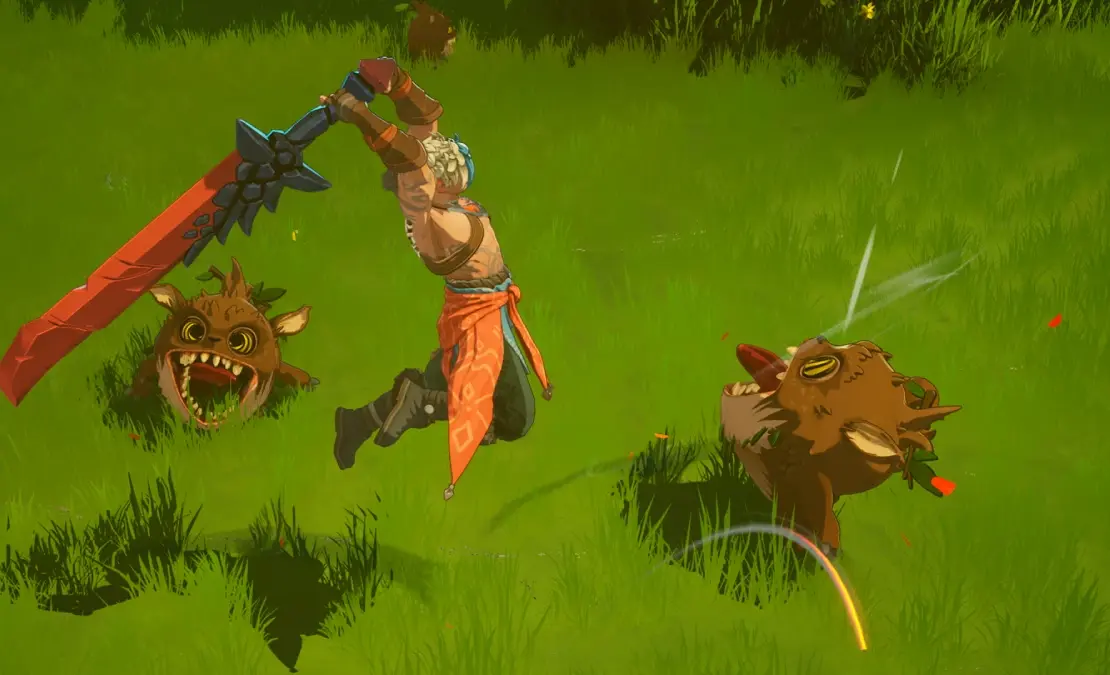

Cloudheim aims to merge physics-driven combat with co-op survival crafting, wrapping it in a post-Ragnarok Norse fantasy setting. The pitch sounds electric: four players fighting across floating islands, using environmental interactions to chain attacks, building bases on a giant flying turtle called the Odin Shell. This early beta build shows flashes of that vision, brief moments where physics create hilarious co-op synergy or explosive combat sequences. But mostly, Cloudheim feels stuck between ambitious concept and unfinished execution.
The placeholder UI screams work in progress. The hyped physics system delivers inconsistent chaos more often than strategic depth. Combat animations have weight without rhythm, and visual clutter turns crowded encounters into a pinball machine where you lose track of your own actions. Shared progression stands out as the co-op system’s strongest feature, letting entire crews access unlocks without individual grinds. Developer Nerd Monkeys has time to refine before launch, and the bones of something compelling exist here. Whether those bones get dressed properly remains the open question.
The Post-Ragnarok Pitch
Cloudheim drops players into a shattered Norse world floating in fragmented islands after Ragnarok tears reality apart. You customize gear, craft weapons from salvaged materials, and fight mythological creatures solo or with three other players in online co-op. The Odin Shell, a massive turtle that serves as mobile base and crafting hub, carries your progress between islands.
The concept leans into absurd fantasy rather than reverent mythology. You’re not recreating Eddic sagas. You’re launching enemies off cliffs with kick attacks while your co-op partner swats them midair with a hammer. The tone embraces goofy spectacle, which works when systems support that energy. But in this beta, the gap between pitch and execution keeps pulling focus back to unfinished systems rather than emergent moments.
The setup promises exploration variety through procedural island layouts and environmental hazards. Early zones mix open combat arenas with verticality that encourages platform hopping and aerial juggling. Later zones reportedly add weather effects and elemental hazards, though this build keeps those mechanics minimal.
Placeholder Everything
The UI looks functional in the way technical alpha interfaces do. Menus work. You can navigate crafting trees, inventory screens, and class customization panels without breaking anything. But the visual design remains skeletal. Fonts lack hierarchy. Button prompts use generic icons. Item descriptions sit in plain text blocks with no formatting flair.
This might sound harsh for a beta, but UI polish signals how close a game sits to launch readiness. Cloudheim’s interface reminds you constantly that you’re testing unfinished software rather than previewing a near-complete product. Fonts change size inconsistently between menus. Icon clarity drops when inventory slots fill with similar-looking crafting materials. The entire presentation layer needs a design pass before it approaches the cartoon-fantasy aesthetic the rest of the game chases.
Loading screens sit blank except for progress bars. No lore snippets, no gameplay tips, no environmental concept art. Just white bars filling slowly while you wait to respawn after dying to physics jank that launched you off a cliff.
Physics Hype vs Physics Reality
Trailers showcase elaborate physics interactions where players combo environmental objects into devastating chain reactions. Barrels explode midair. Enemies bounce between coordinated attacks. Environmental hazards trigger cascading destruction. Those moments exist in this build, but they feel accidental rather than designed.
Most physics interactions fall into two categories: excessive launch distance from environmental objects (plants that shoot you skyward with no warning, geysers that overshoot intended trajectories) or underwhelming ragdoll reactions where enemies flop limply after heavy hits. The middle ground, where physics create tactical depth and emergent problem solving, appears rarely.
I kicked an enemy toward a cliff edge, expecting my co-op partner to follow up with a hammer swing that would send it flying. Instead, the enemy stopped abruptly two feet from the ledge, stood up, and resumed attacking. Thirty seconds later, I jumped over a small rock and launched 50 feet into the air from collision geometry issues. Physics work selectively, and you can’t predict when the system will deliver spectacle versus glitches.
Environmental objects like TNT barrels and explosive plants create visual fireworks but lack readable feedback. You detonate a barrel near three enemies. One flies off the island. Another staggers briefly. The third ignores the explosion entirely. Without consistent rules, environmental tactics feel random rather than strategic. You’re not mastering systems. You’re rolling dice and hoping the physics engine cooperates.
Combat Weight Without Rhythm
Attacks carry heft. Swinging a two-handed axe feels slower and heavier than dual-wielding daggers. Animations communicate weight through wind-up frames and follow-through. But rhythm never develops. Combos string together without flow. You press buttons, animations play, damage numbers appear, and encounters resolve without memorable cadence.
Hit feedback fluctuates wildly. Sometimes a heavy attack staggers enemies with satisfying impact frames and audio crunches. Other times, identical attacks connect with muted reactions that make you question whether damage registered. Targeting compounds the problem. Locking onto enemies in crowded fights gets finicky. The camera struggles to track action when multiple players and enemies cluster together, which happens constantly given the game’s co-op focus.
Class variety exists on paper. You can spec into tank, DPS, or support archetypes with skill trees that unlock passive bonuses and active abilities. But in this build, distinctions blur. Tanks don’t feel significantly tougher. DPS doesn’t output noticeably higher damage. Support buffs apply so subtly that you forget they exist. Build customization offers breadth without depth, giving you many choices that produce similar outcomes.
Boss encounters introduce attack patterns and phase transitions but lack the mechanical clarity that makes pattern recognition satisfying. A mid-game boss telegraphs a charging attack with a subtle animation cue that gets lost in particle effects and co-op visual noise. You’re supposed to dodge or parry. Instead, you tank the hit because you didn’t see the windup. The fight continues without consequence because failure states remain forgiving.
Co-Op Bright Spots
Shared progression stands out as Cloudheim’s smartest design decision. When one player unlocks a crafting recipe, weapon blueprint, or skill tree node, the entire squad gains access. This eliminates the repetitive grind that plagues many co-op survival games where each player must independently farm identical materials to progress.
Coordinated tactics show potential when physics cooperate. One player draws enemy aggro while another sets up explosive barrels. A third player kicks enemies into the blast radius. When this sequence works, it creates satisfying co-op synergy. But these moments emerge sporadically rather than reliably. You’re celebrating lucky accidents more often than executing planned strategies.
Drop-in, drop-out multiplayer functions smoothly. Friends join mid-session without forcing host migration or progress resets. Loot distribution avoids drama with instanced drops, each player sees their own loot rather than competing for shared pickups. These quality-of-life features suggest the developers understand co-op pain points, even if combat and physics systems haven’t caught up.

Voice chat integration works without technical issues in this build, though proximity chat or spatial audio would enhance immersion. Right now, all communication blasts globally regardless of player distance, which undercuts the game’s chaotic energy. Hearing your co-op partner scream as physics launch them off a cliff loses impact when their voice stays at consistent volume no matter how far they fly.
Turtle Base and Crafting Sketch
The Odin Shell serves as mobile hub between island expeditions. You craft gear, upgrade weapons, sell items through a shop interface, and customize the turtle’s interior layout. The concept delivers on novelty. Having a giant turtle carry your base between zones beats static hub worlds for sheer creativity.
Crafting systems follow survival game templates without meaningful twists. Gather wood, stone, and ore. Combine materials at crafting stations. Unlock higher-tier recipes by progressing through skill trees. It works, but nothing here distinguishes Cloudheim’s crafting from dozens of genre peers.
Resource gathering lacks the meditative loop that makes games like Valheim or Minecraft satisfying. You chop trees or mine ore with repetitive button presses that offer no rhythm variation or technique mastery. Materials drop in predictable quantities. Rare resources don’t hide in clever locations or reward exploration curiosity. You farm nodes, fill inventory slots, and return to the Odin Shell to spend them.
The shop system lets you sell crafted items for currency that buys cosmetic unlocks and consumable buffs. But the economy feels placeholder. Prices lack balance. Some high-tier weapons cost trivial amounts. Cosmetic armor sets demand massive grinds. Nothing in this build suggests economic tuning has received attention yet.


Base customization on the Odin Shell offers furniture placement and decorative objects but no mechanical benefits. You can’t build defensive structures that matter in gameplay or craft stations that provide unique buffs. The turtle interior becomes screenshot bait rather than strategic asset.
Cartoon Chaos Aesthetic
Cloudheim leans into exaggerated proportions and bright color palettes. Characters have oversized heads and hands. Enemies range from bulbous plant creatures to angular stone golems, all rendered with bold outlines and saturated hues. The style recalls Fortnite’s playful geometry without copying its visual language directly.
Environmental art fares better than character models. Floating islands use vertical layering and natural arches to create striking silhouettes. Waterfalls tumble into void. Ruins jut from cliffs at impossible angles. The post-Ragnarok setting justifies surreal geography, and artists exploit that freedom to build memorable spaces.
Particle effects overwhelm during combat. Explosions bloom in oversized clouds. Elemental attacks trail exaggerated sparks and embers. Status effects coat enemies in glowing auras. Individual effects look fine in isolation. When four players trigger abilities simultaneously while environmental hazards detonate nearby, the screen becomes unreadable. You lose track of your character, enemy positions, and telegraph cues under layers of visual noise.
Animation quality varies. Player attacks use exaggerated wind-ups that communicate weight. Enemy movement patterns feel stiff, lacking the fluidity that makes reading behavior intuitive. Bosses animate with more personality, their attacks punctuated by dramatic pauses and recovery frames, but regular mobs shuffle and lunge without character.
Beta Context and Refinement Runway
This is early beta code. Rough edges, placeholder systems, and unfinished balance come with the territory. The question isn’t whether Cloudheim has issues right now. The question is whether Nerd Monkeys can tighten systems, polish presentation, and deliver on the physics-driven chaos the pitch promises before launch.
Shared progression and drop-in co-op prove the team understands multiplayer fundamentals. The Odin Shell concept shows creative ambition. Environmental variety across islands suggests exploration hooks exist beneath the surface. But physics inconsistency, combat rhythm gaps, and visual clutter threaten to undermine those strengths if left unaddressed.
Developer communication remains sparse. No public roadmap outlines planned features or polish priorities. Early Access launch window sits vague at “2025” without specifics. Community feedback loops exist through Discord, but transparency about what feedback gets incorporated remains limited.
Games recover from rough betas. No Man’s Sky, Sea of Thieves, and Fallout 76 all launched broken and rebuilt through updates. But those recoveries took years and massive development investment. Cloudheim needs focused iteration on core systems rather than content expansion. Fix physics consistency. Refine combat feedback. Clean up visual clutter. Add UI polish. These aren’t features to add. They’re fundamentals to fix.
Where It Lands Right Now
Cloudheim’s concept remains compelling. A physics-driven co-op survival ARPG set on floating Norse islands with a flying turtle base sounds exactly like the kind of ambitious, weird project that could carve out its own niche. But this beta build undermines that potential with inconsistent execution and unfinished systems.
Physics interactions promise tactical depth but deliver random chaos. Combat feels weightier than most survival games without developing satisfying rhythm. Shared progression removes co-op grind frustrations, but crafting and base building offer no mechanical hooks beyond genre templates. The cartoon aesthetic works when environments dominate the frame but falls apart when particle effects and visual noise pile up during combat.
For players willing to endure rough edges and provide feedback during beta, Cloudheim offers glimpses of something creative. Co-op sessions generate funny moments when physics glitches create absurd scenarios. The Odin Shell concept provides novelty even if crafting systems remain shallow. But recommending this build to anyone expecting a polished preview would be dishonest.
Nerd Monkeys has the runway to refine. Shared progression and drop-in co-op prove they understand multiplayer design. The core concept has enough creative energy to stand out in a crowded survival-crafting genre. Whether they can transform rough beta systems into the kinetic, reactive experience trailers promise remains the central question. Right now, Cloudheim feels like a sketch of potential rather than a realization of it. That might be fine for early beta. But the clock is ticking toward launch, and turning sketches into finished work takes time the game might not have.