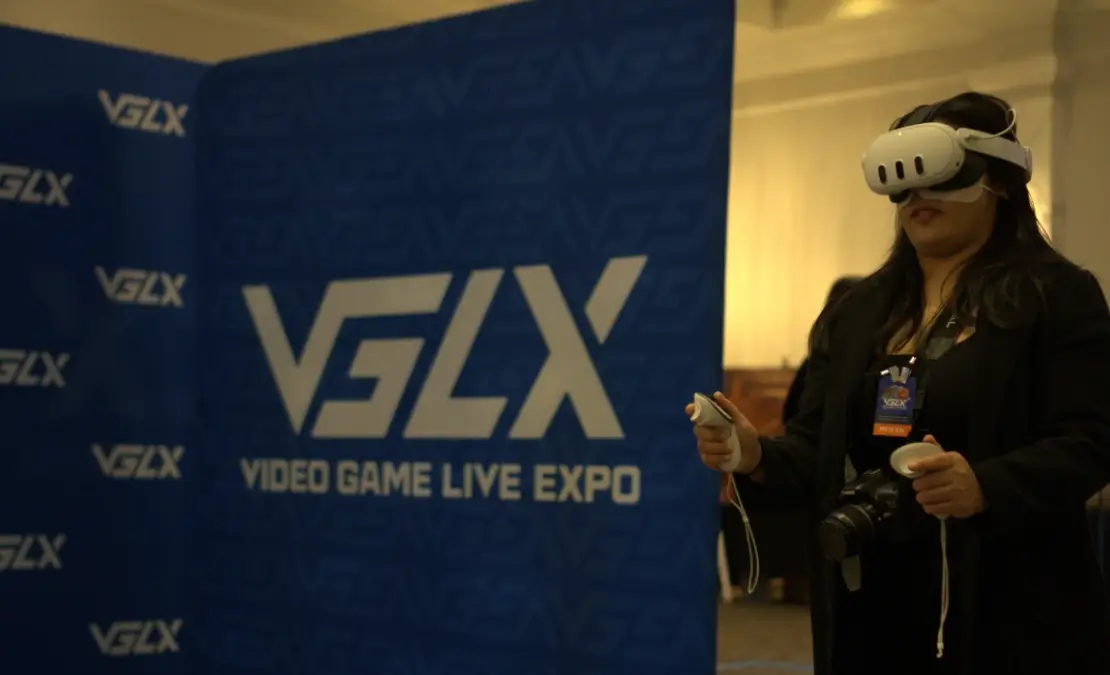

VGLX took place at the International Centre in Mississauga, Ontario, on October 25-26, 2025, delivering exactly what Canadian gaming families needed: an accessible, well-paced convention that balances indie game showcases, TCG vendors, and mainstream hardware exhibits without the overwhelming crowds and marathon wait times that plague larger fan conventions. I attended the second day with my nephew and niece, and within five minutes of entering the main hall, MSI representatives handed them free merchandise from the company’s booth. That immediate generosity set the tone for the entire event.
The convention floor housed approximately 30-40% Trading Card Game exhibitors alongside 30+ indie game studios, hardware vendors including MSI and AMD, artist booths, and dedicated family zones featuring life-sized Pokémon mascots. Unlike Fan Expo Canada, where hour-long queues drain both parents and children before they reach a single booth, VGLX maintained manageable crowd flow throughout the day. My nephew and niece navigated the floor freely, collecting vendor merchandise (including a rare Pokémon card from doescards.ca), experiencing AMD’s freeplay stations featuring the ASUS ROG Ally X, and participating in scheduled kid-friendly giveaways on the main stage. The event prioritized interaction over spectacle, with hosts engaging children directly rather than simply distributing prizes.
The Eh Game Showcase, presented by the Canadian Game Awards, struggled with layout execution despite featuring strong indie developer talent. Navigating the middle aisles proved challenging enough that some developers actively pulled attendees from outer pathways to their tables. However, studios like Down Smash Studios (Rodent Rumble) created intense competitive speedrun challenges, Tribute Games showcased Marvel Cosmic Invasion, and sunset visitor presented 1000xRESIST to engaged audiences. VGLX fills a critical gap in Canada’s gaming event landscape alongside the Canadian Game Awards and Eh Game Expo, providing indie developers with direct consumer access that’s increasingly rare.
For families seeking a gaming convention that respects both adult enthusiasts and children under 12, VGLX delivers exceptional value. If you want accessible hardware demos, generous vendor interactions, and indie game discovery without sacrificing an entire weekend to crowd management, VGLX proves Canada needs more consumer gaming events exactly like this.

Event Overview at Mississauga’s Gaming Gathering
VGLX occupied the International Centre in Mississauga, Ontario, across October 25-26, 2025. This review covers the second day exclusively, so energy levels and crowd density may have differed from opening day. The event attracted families, TCG collectors, indie game enthusiasts, and hardware shoppers through a mix of exhibitor types that created natural traffic flow rather than bottlenecks around single headliner booths.
The main hall entrance positioned MSI’s showcase prominently, featuring high-end gaming PCs, laptops, and the MSI Claw handheld. My nephew and niece received branded merchandise from MSI staff within minutes of arrival, establishing the generous vendor atmosphere that persisted throughout the day. This immediate positive interaction contrasted sharply with larger conventions where children spend hours waiting before experiencing anything memorable.
Approximately 30-40% of floor space belonged to Trading Card Game vendors under the CSC TCG Pavilion, including 1Collectibles1, Boss Cards, Doe’s Cards, Elite Cards Toronto, and KD Collectibles. These vendors demonstrated exceptional generosity with promotional items and sample cards. The representative from doescards.ca handed my nephew a rare Pokémon card unprompted, creating the kind of spontaneous positive moment that defines successful family conventions.
The remaining floor space divided between indie game studios, hardware exhibitors (AMD, MSI), artist booths (30+ creators), and dedicated experience zones including the VGLX VR Zone, AMD Minecraft Zone, and Love and Deepspace Photobooth. This distribution prevented any single category from dominating, though the heavy TCG presence might disappoint attendees seeking primarily video game content.
AMD secured significant floor presence with multiple zones. The primary freeplay area featured high-end gaming PCs running current titles, while a dedicated station showcased the ASUS ROG Ally X handheld for hands-on testing. A separate AMD Minecraft Zone partnered with LG to demonstrate monitors alongside the popular sandbox game, targeting younger attendees with familiar content. I tested the ROG Ally X briefly and found the setup stations well-maintained with minimal wait times, contrasting favorably with hardware demo areas at larger conventions where 30-45 minute queues are standard.
Blacklyte gaming chairs appeared throughout the venue, showcasing Canadian-made gaming furniture alongside international hardware brands. VGLX’s deliberate inclusion of homegrown tech and businesses demonstrated the event’s commitment to supporting the Canadian gaming industry beyond just indie game developers. While I didn’t test the chairs extensively, their premium positioning and prominent floor placement highlighted how VGLX attracts exhibitors targeting enthusiast audiences alongside family-friendly content, while keeping Made in Canada products visible to attendees.

Family Experience Accessible for Kids 12 and Under
VGLX positioned itself toward adult gamers and TCG collectors while deliberately accommodating children, a balance many gaming conventions struggle to achieve. The event succeeded on both fronts through intentional programming choices and vendor awareness.
Life-sized character mascots including Eevee, Snorlax, Lickitung, and Mimikyu roamed the floor for photo opportunities. My niece spotted Snorlax near the artist alley and immediately requested photos, which the mascot handler facilitated without rushed interactions. These mascots created anchor points throughout the venue where younger children naturally gravitated, giving parents predictable meeting spots if groups separated.
The main stage hosted scheduled kid-focused giveaways across both days, but execution elevated them beyond typical prize distributions. Hosts engaged participating children through questions and interactions before awarding items, creating entertainment value even for kids who didn’t win. My nephew participated in one session and remained enthusiastic despite not receiving a prize, citing the host’s energy as memorable. This approach demonstrated VGLX’s understanding that younger attendees value experience over pure acquisition.
Crowd management proved the most significant family-friendly advantage over larger conventions. At Fan Expo Canada, navigating the floor with children requires strategic planning around crowd surges, with single booth experiences often consuming 45-60 minutes when factoring queues. VGLX maintained walkable aisles throughout the afternoon, allowed spontaneous booth visits without lengthy waits, and provided adequate seating areas for rest breaks. My nephew and niece covered the entire floor twice across three hours without requesting to leave due to fatigue, a marked contrast to our typical Fan Expo pattern where energy depletes within 90 minutes.
The event’s scale played to its advantage. Families could experience the majority of VGLX’s offerings in a single day without feeling rushed or missing critical content. This contained scope reduces the overwhelming decision paralysis that affects children at massive multi-genre conventions, where endless options paradoxically decrease satisfaction.
Vendor generosity toward children stood out consistently. Beyond the rare Pokémon card from doescards.ca and MSI merchandise, multiple hobby vendors handed out stickers, promotional cards, and small collectibles to my nephew and niece without purchase requirements. The main stage kids’ giveaways included sample bags of 8-bit beans coffee (School’s Out – Cremée Brûlée roast), which I tested the following morning and found notably good, with smooth caramel notes that justified the premium branding. This treasure hunt atmosphere where children accumulated items throughout the day maintained engagement between major attractions.
Merry’s Cakes provided food vendor options, though I didn’t sample their offerings. The food court felt adequately sized for the crowd without overwhelming the venue with food service that compromises floor space.
Indie Game Showcase with Strong Content, Weak Layout
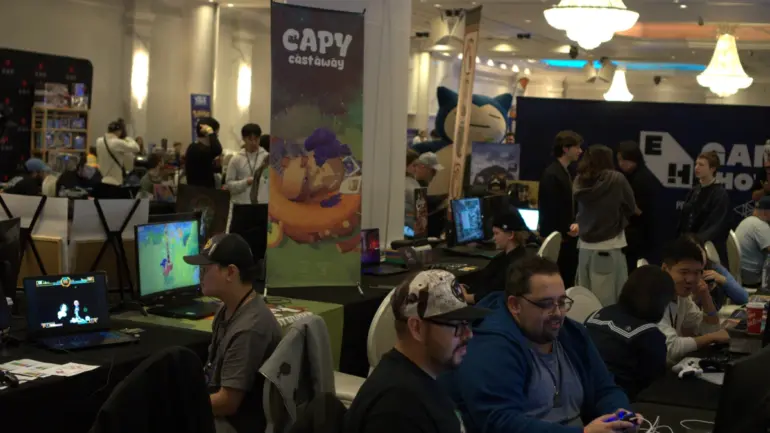
The Eh Game Showcase, presented by the Canadian Game Awards, featured 30+ indie developers demonstrating upcoming and recently released titles. The content quality impressed across genres, but layout execution created navigation friction that undermined developer visibility.
The showcase occupied a dedicated section with table arrangements forming inner and outer aisles. Outer aisle developers benefited from natural traffic flow as attendees entered the section, while middle aisle studios struggled with visibility. Several developers positioned in center tables actively approached attendees walking the outer perimeter, physically redirecting traffic to their demonstrations. This shouldn’t be necessary at a curated indie showcase, where strong layout should naturally distribute attention across all participants.
The congestion affected my willingness to explore thoroughly. After navigating halfway through the inner aisles, the effort required to determine which tables I’d visited versus skipped discouraged comprehensive coverage. Improved signage, aisle markers, or a printed floor map would significantly enhance the showcase’s accessibility. Even outer aisle tables faced identification challenges, as minimal branding from a distance made it difficult to distinguish one studio from another until approaching within a few feet.
Despite layout issues, several studios created memorable demonstrations. Down Smash Studios drew crowds to Rodent Rumble with competitive speedrun challenges, generating intense moments as players attempted to beat posted records. The competitive element transformed passive observation into engaged spectatorship, with small groups gathering to watch skilled players attack leaderboards. I watched two attempts at a particular speedrun stage, both failing within seconds of the target time, which generated friendly trash talk between competitors.
Tribute Games showcased Marvel Cosmic Invasion, their upcoming beat-em-up that channels classic arcade sensibilities with modern production values. The demo station ran consistently throughout my observation period, suggesting strong player interest. sunset visitor presented 1000xRESIST, which garnered critical attention throughout 2024, providing attendees access to a title that won multiple awards including the Independent Games Festival Seumas McNally Grand Prize.
Additional standout showcases included Gaggle Studios’ Goose Goose Duck (the social deduction phenomenon), Bloom Digital Media’s Disney Villains Cursed Café, and Woolly Walrus Games’ Dark Age Dinos. The diversity spanned puzzle games, narrative experiences, multiplayer party games, and action titles, demonstrating Canada’s broad indie development talent beyond the stereotypical “cozy game” category often associated with Canadian studios.
The showcase succeeded in its primary mission (connecting developers with potential players) despite spatial challenges. However, VGLX should prioritize layout improvements for future iterations. Consider eliminating middle aisle configurations entirely in favor of perimeter-only placements, implement clear section markers with developer names visible from 15-20 feet, or provide attendees with printed maps marking each studio’s location. The content deserves better presentation infrastructure.


Hardware and Exhibitor Highlights
MSI’s prominent entrance placement capitalized on first-impression energy. The booth featured multiple high-end gaming PC builds including the Project Zero series, the Stealth 16 AI+ laptop, Vision ZS desktop, and peripherals spanning the MPG 272URX QD-OLED monitor, VIGOR GK30 Combo keyboard/mouse set, ROAM II be lite wifi router, and Maestro 300 Gaming Headset. Dedicated MSI Claw stations provided handheld testing opportunities. Staff engaged attendees proactively, demonstrating product features without aggressive sales tactics. The immediate merchandise distribution to my nephew and niece (within the first five minutes) established goodwill that colored our entire MSI interaction positively.
The Stealth 16 AI+ drew attention for its sleek design and compact form factor, positioning MSI’s latest gaming laptop prominently among the showcase lineup. The Claw stations attracted consistent traffic, though I didn’t test the handheld personally as my nephew occupied one station for approximately 15 minutes playing through a platformer demo. The booth maintained strong presentation throughout the afternoon, with staff rotating between product demonstrations and attendee interactions.
AMD’s multi-zone approach distributed attendee flow effectively. The freeplay area featured eight high-end PC stations running a curated game selection, with minimal waits during my afternoon visit. I observed most stations occupied throughout my time on the floor, but turnover occurred frequently enough that interested players joined within 5-10 minutes rather than facing 30+ minute queues.
The ASUS ROG Ally X demonstration stations partnered with AMD provided hands-on time with the updated handheld. I tested the device for approximately 10 minutes, navigating menus and launching a racing game. The improved ergonomics over the original ROG Ally felt immediately apparent, with better balanced weight distribution and more comfortable grip contours. The screen maintained excellent visibility under convention hall lighting, and performance felt responsive during the brief racing session. Battery life and long-term comfort remain impossible to assess from 10-minute demos, but the initial impression suggested ASUS addressed the original model’s ergonomic compromises effectively.
The AMD Minecraft Zone targeted younger attendees with LG monitor partnerships. My nephew spent approximately 20 minutes in this area, building structures in a creative mode world while I observed. The setup used large-format LG displays that made the experience more engaging than typical handheld or small-screen Minecraft sessions. This zone served its demographic perfectly, occupying younger children with familiar content while parents explored other exhibitors.
The VGLX VR Zone offered virtual reality experiences, though I didn’t test any stations personally. Traffic appeared moderate throughout the afternoon, suggesting VR maintains niche appeal even at gaming-focused events. Final Fantasy XIV Ontario operated a fan booth celebrating the MMORPG, complete with cosplay photo opportunities and community meetups. Monster Hunter Fan Booth provided similar community space for Capcom’s franchise, demonstrating VGLX’s accommodation of dedicated fan communities alongside commercial exhibitors.

Artist Alley and TCG Pavilion
The artist alley featured 30+ independent creators selling prints, stickers, enamel pins, and original artwork spanning video game, anime, and pop culture properties. Quality varied as expected from any artist alley, but standout booths included MetaSlug’s detailed character illustrations, Retro Frame Perfect’s pixel art gaming prints, and Wallabis’s stylized character designs.


My niece purchased a Pokémon-themed enamel pin from one booth (I didn’t note the specific artist) and received a free sticker sheet from another creator as a thank-you for the purchase. This generosity pattern repeated throughout artist alley, with many creators including bonus items with purchases rather than treating transactions purely transactionally. The atmosphere felt community-focused rather than commercially driven, which aligns with artist alley culture at successful conventions.
The CSC TCG Pavilion occupied significant floor space with 20+ vendors specializing in trading cards across Pokémon, Magic: The Gathering, Yu-Gi-Oh, and sports cards. This density might frustrate attendees seeking primarily video game content, but TCG collectors found exceptional variety and competitive pricing. The rare Pokémon card gifted to my nephew from doescards.ca exemplified the pavilion’s welcoming approach to younger collectors, potentially building future customer relationships through generosity rather than immediate sales.
Several vendors offered tournament play and organized events, though I didn’t observe these directly. The combination of vendor booths and competitive play areas created a complete TCG experience beyond pure buying and selling.
Comparative Context for VGLX’s Place in Canadian Gaming Events
Canada lacks the gaming convention density found in the United States, where cities routinely host multiple gaming-focused events annually. Fan Expo Canada serves as the largest multi-genre convention but skews heavily toward comic books, film, and television with gaming as a secondary focus. PAX has never established a Canadian presence despite frequent community requests. This gap leaves indie developers and hardware companies with limited direct-to-consumer opportunities.
VGLX addresses this gap alongside the Canadian Game Awards and Eh Game Expo, creating a small but growing ecosystem of Canadian gaming events. VGLX’s family-friendly positioning distinguishes it from developer-focused conferences while maintaining legitimate gaming content rather than pivoting toward generic “geek culture” that dilutes gaming’s presence.
The event’s scale works in its favor for families. Fan Expo Canada’s massive attendance creates logistical challenges that undermine enjoyment for parents with young children. Hour-long queues for single experiences, overwhelming crowds that make navigation stressful, and sprawling floor plans that exhaust children before they experience half the content all contribute to diminishing returns. VGLX’s contained scope allows families to experience the majority of content in 3-4 hours without feeling rushed, missed out, or physically drained.
This doesn’t position VGLX as a Fan Expo replacement. The events serve different audiences and purposes. However, for families prioritizing gaming-specific content with children under 12, VGLX delivers superior value and experience quality compared to fighting through Fan Expo’s crowds for the gaming section.
The indie game showcase specifically fills a critical need. Canadian developers struggle to find consumer-facing opportunities where players can demo games before release, provide feedback, and build awareness outside digital storefronts. VGLX’s dedicated showcase provides this platform, though the layout issues discussed earlier suggest room for execution improvements. The presence of award-winning titles like 1000xRESIST alongside upcoming projects demonstrates the showcase’s ability to attract legitimate talent rather than serving as a dumping ground for low-quality early access projects.

What Works, What Needs Improvement
VGLX’s core strengths center on accessibility, pacing, and vendor quality. The manageable crowd sizes, reasonable wait times, and generous exhibitor interactions created positive experiences consistently throughout the day. Hardware demos from MSI and AMD provided legitimate hands-on time with current products without marathon queues. TCG vendors offered both variety and customer-friendly approaches that welcomed younger collectors. Artist alley maintained quality standards while keeping the community-focused atmosphere that makes these sections memorable.
The family-focused programming, particularly the mascot appearances and main stage kid giveaways, demonstrated intentional design rather than generic “kids are here too” accommodation. Hosts engaged children directly, creating entertainment value beyond prize distribution. The event’s scale allowed families to experience comprehensive content in a single afternoon without exhaustion, addressing one of larger conventions’ most significant pain points.
The Eh Game Showcase layout requires substantial improvement despite strong developer content. Middle aisle congestion, poor visibility, and navigation confusion undermined the showcase’s effectiveness. Future iterations should eliminate inner aisle configurations, implement clear signage visible from 15+ feet, and provide printed maps marking each developer’s location. These changes would dramatically improve attendee ability to explore the showcase comprehensively rather than giving up halfway through due to wayfinding frustration.
Additional improvement opportunities include better food vendor variety (though the current options proved adequate), expanded seating areas for rest breaks, and clearer event schedules posted throughout the venue. The main stage hosted scheduled programming, but I discovered this primarily through ambient awareness rather than posted schedules. Improved communication about timed events would help attendees plan their visits around specific programming.

Canada Needs More Events Like VGLX
VGLX 2025 delivered a well-executed, family-friendly gaming convention that successfully balanced indie game showcases, TCG collecting, hardware demos, and community experiences without overwhelming crowds or exhausting logistics. The event’s manageable scale allowed families with children under 12 to experience comprehensive content in 3-4 hours while maintaining energy and enthusiasm. Vendor generosity, particularly from MSI and TCG exhibitors, created positive interactions that built goodwill throughout the day.
The Eh Game Showcase featured strong Canadian indie developer talent but struggled with layout execution that hampered navigation and discoverability. These issues prove solvable through straightforward spatial improvements, and the content quality justifies attending despite current friction. Hardware demonstrations from MSI and AMD provided legitimate hands-on time with current products, including the ASUS ROG Ally X and high-end gaming PCs, without the marathon wait times that plague larger conventions.
For families seeking accessible gaming content with children, VGLX offers superior value compared to fighting through Fan Expo Canada’s crowds for equivalent gaming experiences. The event doesn’t replace larger multi-genre conventions for hardcore enthusiasts seeking celebrity appearances, exclusive collectibles, and extensive anime/comics content. However, for attendees prioritizing gaming-specific content, indie game discovery, and manageable crowd experiences, VGLX delivers exactly what Canadian gaming families need.
Canada’s gaming event landscape remains underdeveloped compared to the United States, where multiple cities host dedicated gaming conventions annually. VGLX, alongside the Canadian Game Awards and Eh Game Expo, helps fill this gap by providing indie developers with direct consumer access and giving families gaming-focused events scaled appropriately for young children. The country needs more events following this model rather than fewer.
If VGLX returns in 2026 with improved indie showcase layouts and maintains its current family-friendly approach, vendor quality, and accessible scale, it deserves to grow into a must-attend Canadian gaming event. The foundation exists. Execution refinements will determine whether VGLX becomes an annual tradition or remains a pleasant one-off experience.