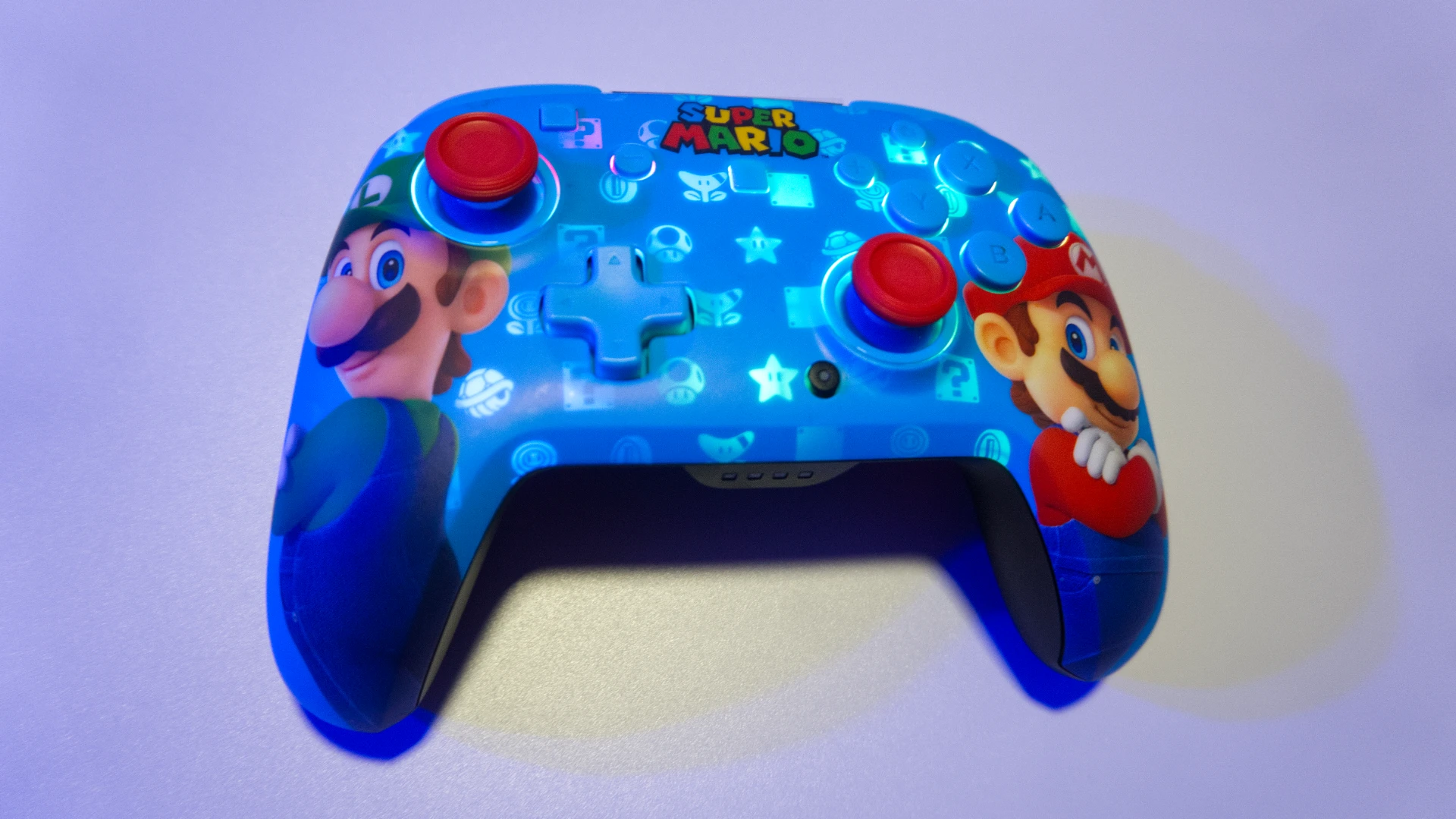

If rainbow lighting on your preferred plumber’s face sounds ridiculous to you, here’s the thing: it isn’t. The Turtle Beach Rematch Wireless Controller for Nintendo Switch 2 in the Mario & Luigi design is, according to Turtle Beach, the first officially licensed Nintendo controller to ship with RGB lighting built in. That’s not a small claim. Nintendo’s ecosystem has been famously reserved about flashy hardware aesthetics, and here comes Turtle Beach walking in wearing a light-up Mario jacket and asking what took everyone so long.
Released on March 30, 2026, the controller retails for $64.99 and sits between the budget tier and Nintendo’s own Switch 2 Pro Controller at $84.99. It carries the same core feature set as Turtle Beach’s earlier Rematch Wireless lineup, but the Mario & Luigi design wraps it in vivid Super Mario Bros. artwork that pulses, glows, and cycles through four distinct RGB modes. Whether that lighting is a dealmaker or just eye candy depends on how you game. But even without it, the Rematch earns its place in the Switch 2 accessory lineup through solid fundamentals.
Editor’s Take
The Turtle Beach Rematch Wireless Controller for Nintendo Switch 2 (Mario & Luigi) is a confident, collectible pad that impresses visually and holds its own technically, though the lack of rumble and a headphone jack keeps it from matching the Switch 2 Pro Controller feature-for-feature.
Pros
- First officially licensed Nintendo controller with RGB lighting
- Drift-resistant TMR thumbsticks feel precise and responsive
- Crisp, tactile D-pad that communicates every input clearly
- Lightweight build suits extended sessions without wrist fatigue
- Up to 40 hours of battery per charge (RGB off)
Cons
- No rumble support at any price or configuration
- No 3.5mm headphone jack
- No amiibo NFC scanner
- Cannot wake Nintendo Switch 2 from sleep mode
- Battery life drops sharply to roughly 12 hours with RGB enabled
At a Glance
| Spec | Details |
|---|---|
| Connectivity | 2.4 GHz wireless (USB-C receiver) |
| Thumbsticks | TMR (Tunneling Magnetoresistance), anti-drift |
| Triggers | Standard analog triggers |
| Battery Life | Up to 40 hours (RGB off) / ~12 hours (RGB on) |
| Wireless Range | Up to 30 feet |
| RGB | 4 dynamic lighting modes |
| Back Buttons | 2x mappable quick-action buttons |
| Motion Controls | Yes |
| Headphone Jack | No |
| Compatibility | Nintendo Switch 2, Nintendo Switch, Switch OLED, Switch Lite |
| Price | $64.99 |
| Verdict | A collectible, feature-solid wireless pad that stumbles only if rumble is non-negotiable. |
Configuration: One Design, One Price
The Turtle Beach Rematch Wireless Controller for Nintendo Switch 2 sells for a flat $64.99 across retail channels including Best Buy, Amazon, and Walmart. Turtle Beach offers the Rematch in multiple designs at the same price point, including the “Invincible Mario” and “Rosalina” variants, but the Mario & Luigi edition stands apart as the RGB-enabled version that spotlights both iconic brothers across the controller face and grips.
There are no upgrade tiers here. You get a single configuration: wireless 2.4 GHz connectivity via USB-C receiver, USB-C charging cable included, TMR thumbsticks, motion controls, and four selectable RGB modes. The $64.99 price sits $20 under the Nintendo Switch 2 Pro Controller ($84.99) and in direct competition with the 8BitDo Pro 3, which typically runs $55–$70 USD depending on retailer and regional pricing.
Canadian buyers should watch for availability at Best Buy Canada, Amazon.ca, and Memory Express, where the Rematch lineup has distributed previously.
Design: Every Pixel, All the Colors
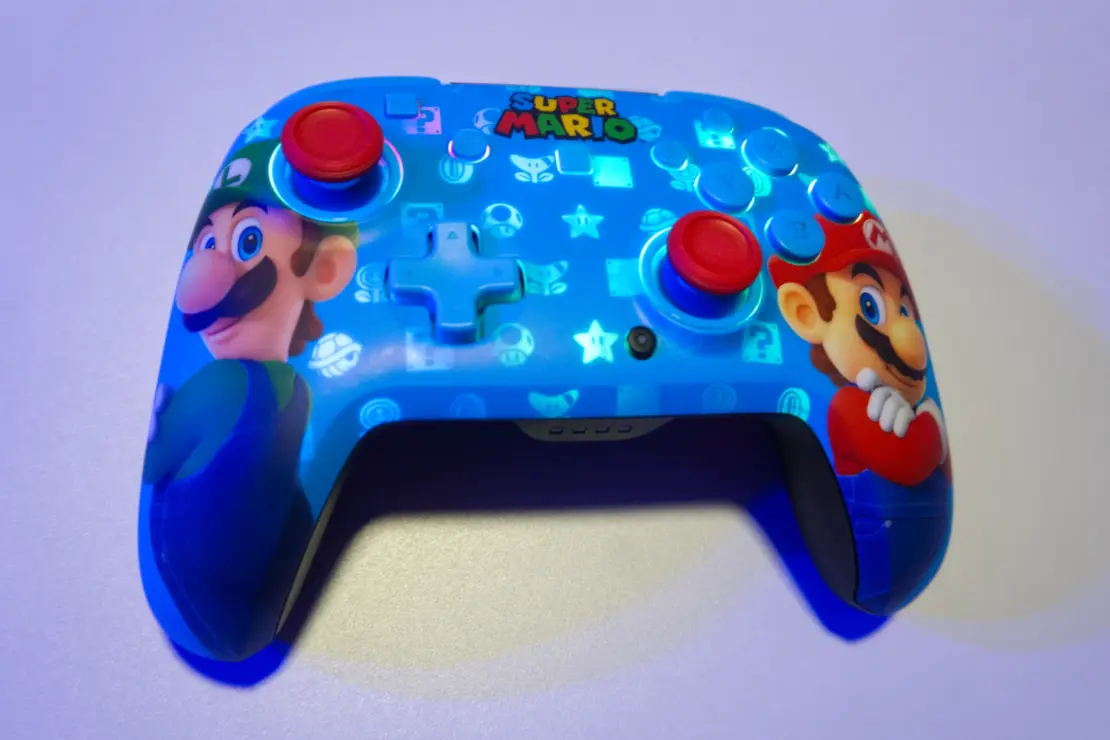
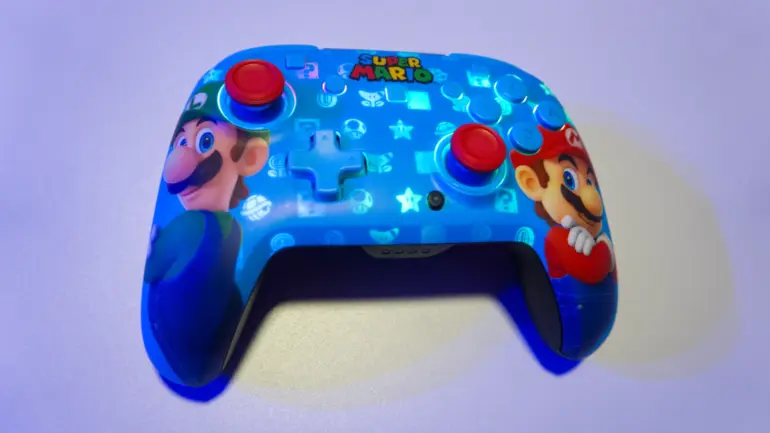
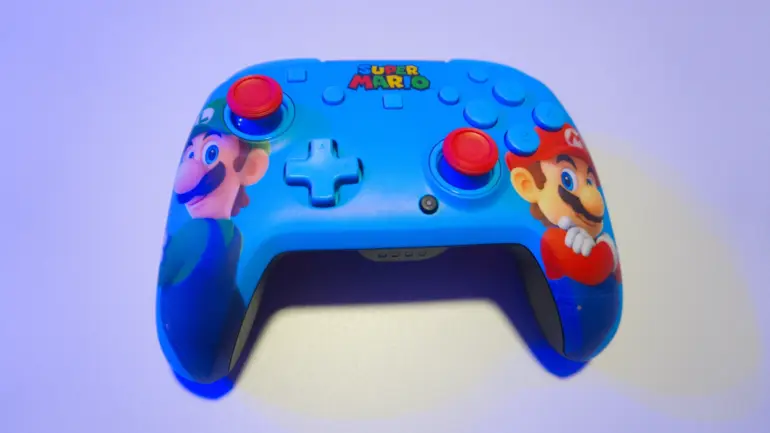
The Mario & Luigi design is the main reason someone picks this controller over its Rematch siblings. Turtle Beach covers the faceplate and grips with bold Super Mario Bros. artwork, placing Mario front and center on the face plate while Luigi graces the grips. The translucent grip panels serve a functional purpose beyond aesthetics: they diffuse the RGB lighting outward, giving the controller a warm, colored glow that shifts with whichever lighting mode you’ve selected.
Those four RGB modes range from static solid colors to cycling rainbow patterns and pulse effects that react to gameplay. According to Turtle Beach, this makes the Rematch Wireless the first officially licensed Nintendo controller with RGB lighting built into its hardware. Nintendo’s own Switch 2 Pro Controller ships with no lighting whatsoever, so this is genuinely new territory for the ecosystem.
Physically, the controller sits slightly larger on its rear than the Switch 2 Pro Controller and runs flatter on the front face. That translates to a fuller palm grip that I found notably comfortable during longer play sessions. The build material feels firm without being heavy, and there’s no flex to the chassis when you grip it firmly during a tense round of anything.
At an unlisted weight (Turtle Beach doesn’t publish an exact figure), the Rematch feels noticeably lighter than Nintendo’s Pro Controller, owing to its USB-C rechargeable battery design and the absence of rumble hardware. Some players find that reassuring. Others, used to the heft of a rumble-equipped pad, will register it as “cheap,” even if the construction itself doesn’t warrant the label.
Port and connectivity notes: no 3.5mm headphone jack, no amiibo NFC scanner, and the controller cannot wake the Nintendo Switch 2 from sleep. If any of those three matter to you, they matter a lot.
Full Specifications
| Specification | Details |
|---|---|
| Connectivity | 2.4 GHz wireless via USB-C receiver |
| Compatibility | Nintendo Switch 2, Nintendo Switch, Switch OLED, Switch Lite |
| Thumbsticks | TMR (Tunneling Magnetoresistance) anti-drift sensors |
| Triggers | Standard analog triggers |
| D-Pad | Digital 8-way D-pad |
| Back Buttons | 2x mappable quick-action rear buttons |
| Motion Controls | Yes, 6-axis |
| C Button | Included (GameChat access on original Switch only; not functional on Switch 2) |
| RGB Lighting | 4 dynamic modes; illuminates Mario & Luigi artwork |
| Battery Life | Up to 40 hours (RGB off) / ~12 hours (RGB on) |
| Charging | USB-C cable included |
| Wireless Range | Up to 30 feet |
| Rumble | No |
| Headphone Jack | No |
| Amiibo / NFC | No |
| Console Wake | No |
| Price | $64.99 MSRP |
| Release Date | March 30, 2026 |
Feel and Performance: Where It Actually Delivers
The Rematch’s core controls give you a lot to like, particularly if you’ve spent time with flimsier third-party alternatives. The TMR thumbsticks sit at the top of what you’d expect at this price point. Tunneling Magnetoresistance technology replaces the standard potentiometer sensors prone to drift over time, and the sticks feel precise without being overly stiff. Input registration never felt ambiguous during extended play sessions tested across multiple game genres.
The D-pad deserves specific attention. It sits noticeably elevated from the controller face and produces a clear, audible click through each of its four cardinal directions. That tactile distinctness matters more than people give it credit for. You never lose track of your input heading, especially in fighting games where diagonal ambiguity costs lives (and rounds). The D-pad on the Switch 2 Pro Controller is competent, but the Rematch’s version communicates more clearly through feel alone.
Face buttons feel stiffer than those on the Pro Controller, which plays to personal preference. If you like buttons that push back firmly and leave no doubt you’ve pressed them, these will suit you. There’s no mushiness to speak of.
The trigger shape deserves a mention, too. Rather than tapering off like the Pro Controller’s triggers, these curl upward at the tip. Your fingertip naturally stays anchored. Under pressure, in fast-paced scenarios, that shape keeps you from sliding off the edge of the trigger inadvertently.
The two rear quick-action buttons are large, clacky, and easy to find without looking down. They feel less discreet than the smaller rear buttons on the Pro Controller, but they’re far easier to confirm by feel. That’s a trade-off worth making if you actually use back buttons in practice.

The RGB in Practice
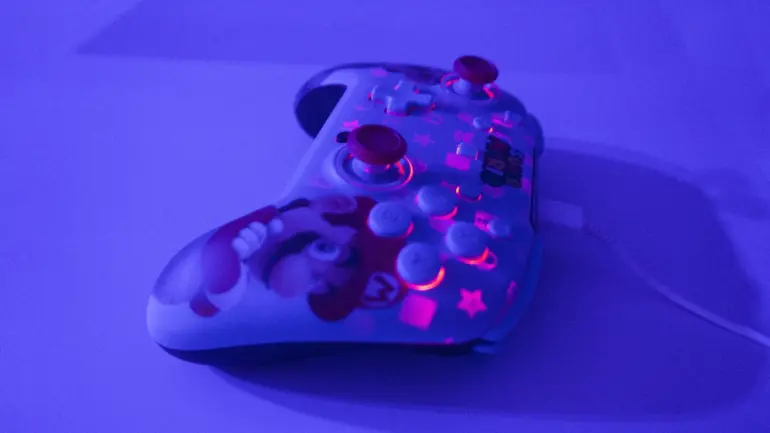
The lighting is genuinely impressive for a Nintendo-licensed product. The four modes offer enough variety that you’re not stuck with one look: a steady pulse, a cycle through the full RGB spectrum, a solid static glow, and a reactive mode tie into how the controller feels in low-light settings. The Mario & Luigi artwork gains new depth when the RGB backlights the translucent grip panels, and the effect reads as premium rather than tacky in person.
The cost is real, though. Turtle Beach rates the battery at up to 40 hours per charge with RGB disabled. Switch the lighting on, and that figure falls to approximately 12 hours. Twelve hours is plenty for most gaming sessions, but it’s a notable drop. If you tend to leave your controller on standby between sessions with the lights running, plan to charge it every couple of days.
What’s Missing: The Rumble Question
No rumble. Full stop. The Rematch Wireless carries no vibration hardware at any configuration or price. For some players, this is barely a consideration. For others, particularly those coming from immersive titles where rumble informs gameplay feedback, it registers as a meaningful omission.
The absence of a 3.5mm jack similarly narrows the audience. If you game with a headset connected directly to the controller, whether for audio or chat purposes, you’ll need to route audio elsewhere. The Switch 2 Pro Controller includes a 4-pole stereo 3.5mm jack. The Rematch doesn’t.
On the C button: the Rematch includes one, and it sits prominently in the center of the controller. However, based on Turtle Beach’s own product documentation, the GameChat C button functionality works on the original Nintendo Switch family only. It does not function on the Nintendo Switch 2. If your primary reason for buying a C-button pad is Switch 2 GameChat, this controller does not serve that purpose.


How the Turtle Beach Rematch Compares
| Feature | Turtle Beach Rematch (Mario & Luigi) | Nintendo Switch 2 Pro Controller | 8BitDo Pro 3 |
|---|---|---|---|
| Price | $64.99 | $84.99 | ~$55–$70 |
| Thumbsticks | TMR (anti-drift) | Standard | TMR (anti-drift) |
| Triggers | Standard analog | Standard analog | Hall Effect (switchable) |
| Rumble | No | HD Rumble 2 | Yes |
| Headphone Jack | No | 3.5mm (4-pole) | No |
| Amiibo / NFC | No | Yes | No |
| RGB Lighting | Yes (4 modes) | No | No |
| C Button (Switch 2) | No (Switch 1 only) | Yes | No |
| Battery Life | 40 hrs (RGB off) / 12 hrs (RGB on) | ~40 hrs (estimated) | ~20 hrs |
| Back Buttons | 2x mappable | 2x (GL/GR remappable) | 2x paddles + 2x bumpers |
| Console Wake | No | Yes | No |
| Nintendo License | Yes | Yes (first party) | No |
| Best For | Collectible RGB design, casual-to-mid play | Full-feature Switch 2 experience | Feature-packed competitive alternative |
Verdict: A Glow-Up With Genuine Substance
The Turtle Beach Rematch Wireless Controller for Nintendo Switch 2 in the Mario & Luigi design is a good controller wearing a great outfit. The RGB makes it genuinely distinct in Nintendo’s accessory landscape, and Turtle Beach backs that headline with TMR thumbsticks, a snappy D-pad, comfortable ergonomics, and a 40-hour battery that easily survives the week without a charge, as long as you keep the lights off.
The trade-offs are real and consistent with the broader Rematch lineup. No rumble. No headphone jack. No amiibo. The C button doesn’t function on Switch 2. These aren’t bugs, they’re product decisions that keep the price at $64.99, and you need to make peace with them before buying.
If you’re shopping purely on features per dollar, the 8BitDo Pro 3 competes aggressively in the same price range and adds Hall Effect triggers, rumble, and more back button customization. If you want the complete Nintendo experience with amiibo and HD Rumble 2 support, the Switch 2 Pro Controller at $84.99 is the honest recommendation.
But if you want the Mario & Luigi design, the RGB lighting, and an all-around solid pad that won’t let you down during a long session, the Rematch delivers exactly what it promises. Sometimes the right controller is the one that makes you smile when you pick it up.
Canadian buyers can check Best Buy Canada and Amazon.ca for current stock and regional pricing.
Frequently Asked Questions
Does the Turtle Beach Rematch Wireless Controller work with Nintendo Switch 2?
Yes. The Turtle Beach Rematch Wireless Controller is fully compatible with the Nintendo Switch 2, as well as the original Nintendo Switch, Switch OLED, and Switch Lite. Note that the C button’s GameChat functionality is limited to the original Switch family and does not work on Switch 2.
Does the Turtle Beach Rematch Mario & Luigi controller have rumble?
No. The Turtle Beach Rematch Wireless lacks rumble/vibration support entirely. If rumble feedback matters to you, the Nintendo Switch 2 Pro Controller at $84.99 or the 8BitDo Pro 3 are better options in the same price range.
How long does the battery last on the Turtle Beach Rematch Wireless?
Turtle Beach rates the controller at up to 40 hours per charge with RGB lighting disabled. With RGB enabled, battery life drops to approximately 12 hours. The controller charges via an included USB-C cable.
Is the Turtle Beach Rematch the first RGB Nintendo controller?
According to Turtle Beach, the Rematch Wireless lineup for Nintendo Switch 2 represents the first officially licensed Nintendo controller to feature built-in RGB lighting. Nintendo’s own Switch 2 Pro Controller ships without any lighting effects.
Where can I buy the Turtle Beach Rematch Mario & Luigi controller in Canada?
As of April 2026, the Turtle Beach Rematch Wireless lineup is available through major Canadian retailers including Best Buy Canada and Amazon.ca. Check Memory Express and Canada Computers for regional availability and competitive pricing.
Should I buy the Turtle Beach Rematch or the 8BitDo Pro 3?
It depends on your priorities. The 8BitDo Pro 3 (~$55–$70) adds Hall Effect triggers, rumble, and additional back button customization at a competitive price. The Turtle Beach Rematch ($64.99) offers the Mario & Luigi design, official Nintendo licensing, and RGB lighting. If rumble and triggers matter most, go with the Pro 3. If design and aesthetics are part of the decision, the Rematch holds its own.