
At a Glance
| Detail | Info |
|---|---|
| Developer | Capcom |
| Genre | Survival Horror / Action-Adventure |
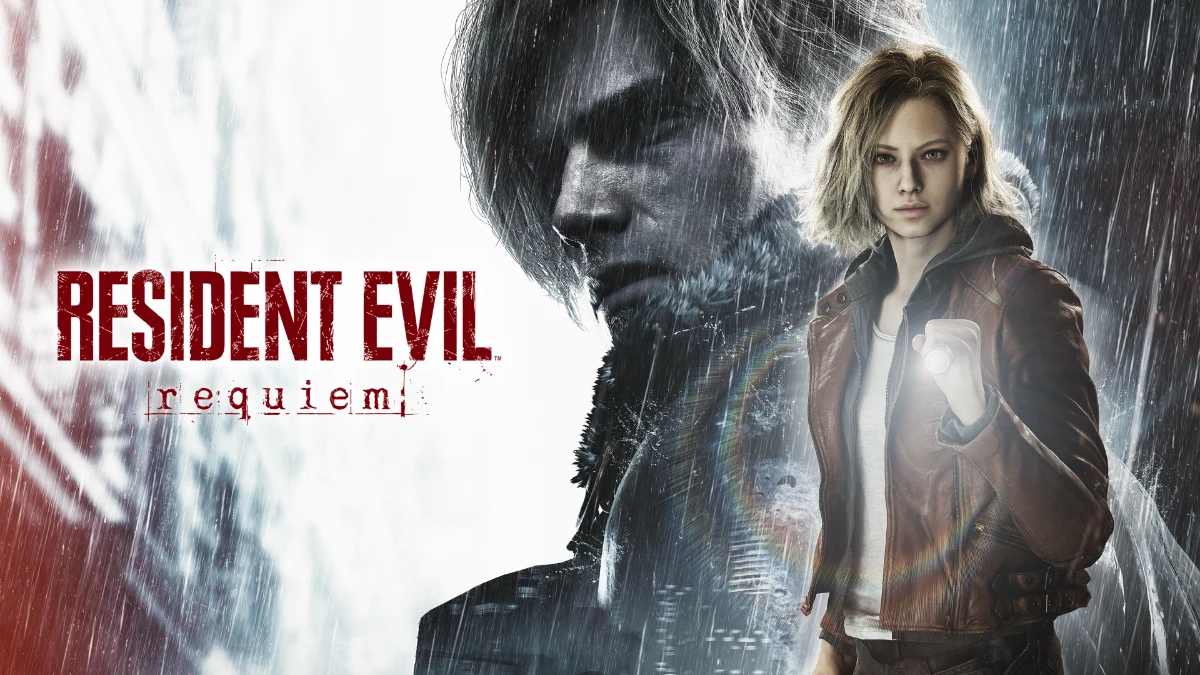
| Protagonists | Grace Ashcroft, Leon S. Kennedy |
| Perspective | First-person (Grace), Third-person (Leon) |
| Setting | Raccoon City, Rhodes Hill Care Center |
Pros and Cons
Pros:
- Dual-protagonist structure balances horror and action without sacrificing either
- Memory-retaining zombie variant reinvents routine enemy encounters
- Grace Ashcroft is one of the series’ most compelling new leads
- Capcom’s pacing between storylines is close to impeccable
- Post-game structure is built for repeat playthroughs
Cons:
- Requires deep series investment to appreciate its full conversation
- Structural beats arrive on a familiar schedule
- Not an accessible entry point for newcomers
A Series Finally in Harmony
Two people share the worst day of their professional lives and risk everything for someone they barely know. That act, unfeigned and earnest in a way only Resident Evil can sustain without irony, is the heartbeat the game’s hordes of undead are missing. It is also a game about roundhouse kicks, physics-defying motorcycle chases, and a narrative that demands years of crisscrossed franchise history to fully understand. Both observations are accurate. Neither cancels the other out.
Resident Evil Requiem blends survival horror and kinetic action with a precision that has eluded this series for most of its modern stretch. It stops just short of tipping into self-parody before pulling back to remind you that real, sentimental human beings are at the center of this chaos. Goofy, schlocky, and excessive in the best ways, it functions simultaneously as a masterclass in refinement and a tour de force of everything thirty years of accumulated lessons can produce. This is Resident Evil at its finest.
Worlds Built for Dread and Spectacle
Requiem’s geography is labyrinthian by design. A hotel where Grace once watched her mother die. The sterile, institutional corridors of the Rhodes Hill Care Center. Raccoon City itself, dormant for decades, now reactivated as the principal stage. Each environment holds secrets that unfold through careful exploration, guiding the player through spaces that feel dense without becoming mazes for their own sake.
Capcom’s art direction favors claustrophobic legibility: a palette of institutional whites and biological decay that makes every intrusive color carry intent. The care center in particular draws comparison to the Raccoon City Police Department from Resident Evil 2 Remake, a building that rewards memory, punishes carelessness, and turns architecture into another instrument of pressure. The two locations share a grammar; the care center pushes further into biological dread, trading Baroque grandeur for fluorescent-lit wrongness.
Grace Ashcroft and Leon S. Kennedy: The Right People for the Wrong Day
Grace Ashcroft is the daughter of a woman murdered for reasons that are significant and, for most of the game, deliberately opaque. Her FBI work draws her to a fresh murder at the same hotel where her mother died, and that convergence propels her into Raccoon City facing something far outside her job description. In first-person perspective, her vulnerability is structural. The shakiness in her hands during tense sequences registers as the controlled panic of someone who knows her survival depends on not giving into it. The result is tension that Resident Evil 7 understood in isolation but Requiem sharpens by placing it in direct conversation with its tonal opposite.
Leon S. Kennedy arrives with his usual combination of competence and deadpan wit intact, but Requiem adds a wrinkle: he is ill, racing against something he has not yet diagnosed. The physical stakes lend fragility to a character the series has often rendered invincible by temperament. His trademark one-liners function as emotional exhaust valves after sequences of genuine dread. His third-person sections then trade on the kinetic vocabulary Resident Evil 4 established two decades ago: fluid repositioning, punchy enemy staggers, and escalating set pieces calibrated to reward aggression.
The decision to give each protagonist a separate perspective is not purely aesthetic. It communicates character. Grace cannot afford the extravagance Leon traffics in, and the camera registers that truth every second she is on screen.
Plotting a Course Through Familiar Territory
Requiem weaves Grace and Leon’s timelines together with real editorial discipline. Her sections establish the dread and the emotional stakes: a desperate march toward a girl who could have been a different version of herself. His sections provide counterweight, replacing claustrophobic tension with bombastic momentum before the horror reasserts itself. Capcom positions the two strands not just as narrative complements but as tonal correctives for each other.
Grace’s story never tips into the comical heroism that pushed some of the franchise’s more action-heavy entries into self-parody. Leon’s sequences never extend long enough for their energy to curdle into noise. The pacing is close to impeccable, though players who have been through this loop before will recognize when the next set piece is loading. The structure is familiar. Requiem honors the series tradition of scavenger hunts, locked-door logic, and the slow assembly of an environment’s secrets without hiding behind that tradition. It is familiar, sometimes to a fault, but always exhilarating.
The Virus Remembers
Requiem’s most significant mechanical and narrative contribution is a specific modification to its viral strain: those who succumb retain their memories. The soldiers died with a mission and still feel compelled to finish it. The doctors carry their scalpel instincts into death. The custodial staff respond to environmental disturbances with the same reflexive annoyance the living version of that person would have shown, including switching off any lights you have just switched on.
This single change accomplishes several things at once. It restores moral weight to combat. A bullet is not only a resource expenditure but potentially an act of mercy, a release for something that was once human and, on some level, knows it. It also diversifies encounter design organically, because enemy behavior follows an internal logic rooted in who these people were in life. A chef moves differently than a police chief. A surgeon’s threat radius is different from a soldier’s. The result is a bestiary that registers as genuinely animate in a way the series has rarely managed.
Two Registers, One Game
At its core, Requiem is two games functioning as one, and their contrast defines the experience. Grace’s first-person sections prioritize resource conservation, environmental reading, and controlled movement. The chainsaw, when it finally becomes available in her hands, functions as the physical release of accumulated tension. Leon’s third-person chapters push forward with aggressive confidence, absorbing and redistributing punishment across escalating enemy encounters.
Capcom manages the tonal shift between them without the stitches showing. Moving between perspectives produces rhythm rather than dissonance. The crafting system threads through both halves and creates continuity: mixing three green herbs still produces the familiar full recovery, and the reliable outcomes encourage experimentation with less conventional combinations that can shift encounters from pure survival into something approaching strategy. The system does not reinvent Resident Evil’s resource loop. It refines it.

Armaments and Arsenal
Grace’s toolkit favors precision and economy. A hatchet, a pistol, the patient application of limited ammunition against isolated threats. Her engagement with an undead chef maneuvering a kitchen knife the size of a machete is a geometry problem: angle, distance, noise, window. Leon’s loadout expands into spectacle. The Requiem pistol, laughably oversized and mechanically extraordinary, is the game’s most efficient symbol of its own tonal range: a weapon that could only exist in a Resident Evil game, named for something that also means rest.
Weapon design reflects character throughout. Grace’s armament enforces restraint by necessity. Leon’s rewards excess by design. Neither approach eclipses the other because neither protagonist’s section eclipses the game’s runtime.
Stealth, Puzzles, and the Geometry of Dread
Requiem’s puzzle design sits comfortably within series tradition: sparkling gemstones, locked receptacles, environmental deduction that rewards attention over intuition. The solutions are earned without being opaque, and they function primarily as pacing tools, creating space to assess before the next escalation. Some solutions lean on series shorthand rather than fresh design invention, but familiarity in this instance reads more as genre fluency than creative shortfall.
Stealth integrates naturally into Grace’s sections. Inching toward an undead chef while managing sight lines and sound is a categorically different experience from any direct engagement, and the game deploys these sequences at intervals that keep them feeling purposeful. The giant woman who relentlessly pursues Grace through the care center distills the Nemesis formula from Resident Evil 3 and Resident Evil Village’s Lady Dimitrescu into something that feels less like a callback than an evolution: a threat that is readable in its logic but relentless in its execution.


Leon’s set pieces provide the counterpoint. Motorcycle chases that need no apology. Boss encounters that are grammatically familiar and still manage to surprise within their established vocabulary. Mortar-firing zombies that push tactical adaptation into new configurations.
Post-Game Is the Real Game
Requiem does not release the player at credits. Its post-game structure, populated with unlockables and calibrated for route optimization, signals Capcom’s expectation that completion is the beginning of engagement rather than its conclusion. That confidence is well-placed. The dual-protagonist structure generates natural optimization questions across both halves, and the memory-retaining zombie variant means that returning to each encounter rewards the accumulated knowledge of enemy behavior and intent built over the first playthrough. The series has always understood that the initial run is the introduction. Requiem reinforces that social contract explicitly.
Raccoon City as Mirror
Raccoon City’s return decades after its nuclear fallout could function as pure nostalgia currency. It does not. The familiar geography serves the narrative: it anchors Grace’s investigation physically, adds biographical weight to Leon’s presence, and gives the player a landscape partially understood at the moment of return. Familiar antagonists that Leon believed finished reappear not as fan service alone but as biographical pressure, reminders of where this man has been and what he carries. For Grace, those same callbacks are prompts, tracings of where her story can go.
Requiem is in active, confident conversation with thirty years of Resident Evil identity throughout its runtime: the horror, the action, the characters, the baroque lore, all of it. That conversation is the game’s strength and, for new players, its most significant barrier. Requiem does not function as a welcoming entry point. It functions as a reward for attendance.
Verdict
Resident Evil Requiem earns its status as the series’ finest entry through precision rather than scale. The dual-protagonist structure is not a formal experiment; it is the architecture around which every other system is organized. Grace Ashcroft’s first-person dread and Leon Kennedy’s third-person swagger are not tonal variations for variety’s sake: they are mechanical and emotional arguments for what Resident Evil becomes when both of its identities coexist without compromise.
The memory-retaining viral twist gives every encounter moral texture the franchise has rarely attempted at this consistency. The crafting holds its familiar shape while opening new routes for the willing. The fan service earns its placement. The familiar beats arrive on schedule and still land. For anyone who has spent time with this series and wants to understand what thirty years of discipline looks like when it crystallizes, Requiem is that answer.
FAQ
Do I need to have played previous Resident Evil games to enjoy Requiem?
Requiem is playable as a standalone entry, but its full emotional and narrative impact depends on familiarity with prior games. Returning locations, antagonists, and story threads carry weight that newcomers will register as spectacle rather than significance. Resident Evil 4 Remake or Resident Evil 7 are stronger entry points before committing to Requiem.
What perspective does Requiem use: first-person or third-person?
Both. Grace Ashcroft’s sections play in first-person, which amplifies her isolation and vulnerability. Leon S. Kennedy’s sections use third-person, matching the action-forward energy his character has maintained since Resident Evil 4.
What makes the zombies in Requiem different from earlier entries?
The viral strain in Requiem allows the infected to retain their memories. Soldiers continue pursuing missions. Medical staff apply their professional skills against survivors. Custodial workers respond to environmental interference. Each zombie type carries a behavioral identity grounded in who they were before infection, which changes how encounters are approached and what dispatching them means.
How long is Resident Evil Requiem?
Runtime varies by playstyle and difficulty setting. The post-game structure and replay optimisation design indicate the first playthrough is the introduction, not the finished experience.
Is there post-game content?
Yes. Requiem includes unlockables and rewards that persist after completion, with the dual-protagonist structure and enemy design both supporting route optimization across subsequent playthroughs.
Is Resident Evil Requiem a good starting point for the series?
No. The game rewards franchise history at nearly every turn. New players will find a competent and exciting action-horror experience, but the full weight of its callbacks, character returns, and thematic stakes requires prior investment to land as intended.