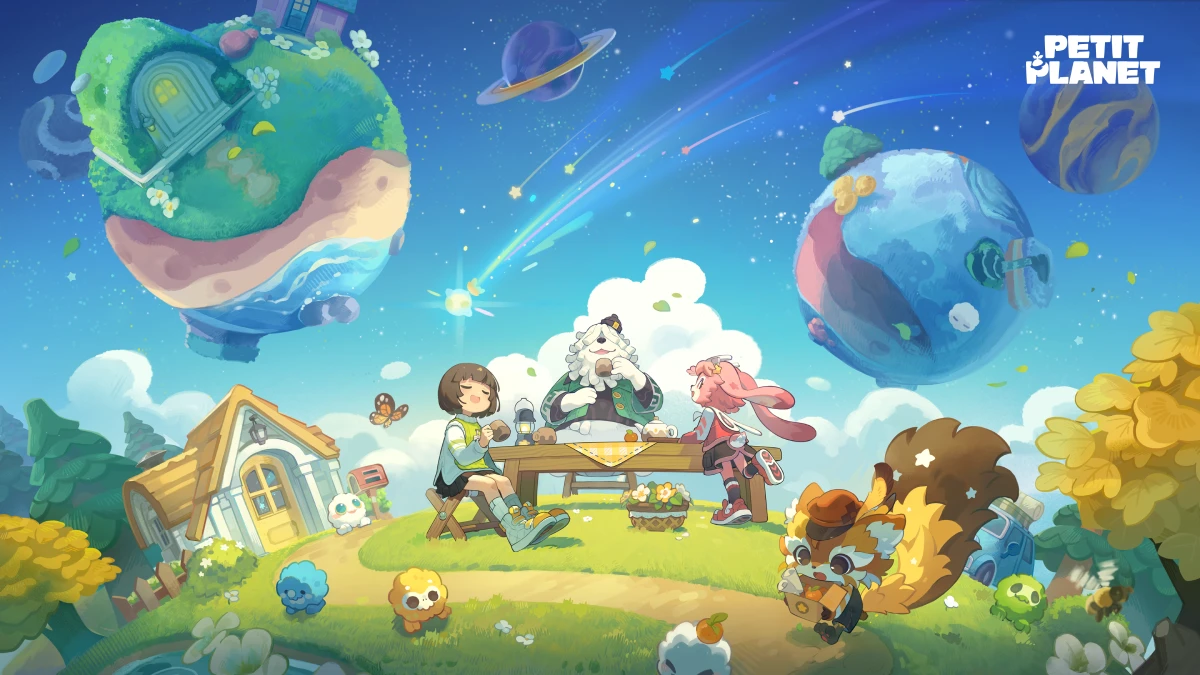

HoYoverse's official announcement on September 25, 2025 introduced Petit Planet — a “cosmic life simulation” with the slogan “Weave Your Dreams Beneath the Stars.” The studio opened closed beta sign-ups for the “Coziness Test” at planet.hoyoverse.com and published the first trailer. The release describes core systems: planet nurturing, fuzzy Neighbors, a vitality mechanic named Luca, daily life activities (planting, fishing, beachcombing, mining, cooking, crafting), Starsea Voyages to Islets, and a social hub called the Galactic Bazaar. The game is confirmed for PC and mobile, with additional platforms in development.
This article uses the press release as the primary source and pairs those facts with experienced analysis of live-service product strategy to explain how a life-simulation fits HoYoverse’s portfolio and what the studio will need to deliver to make it succeed.
What Petit Planet brings
HoYoverse opens the Petit Planet announcement with the slogan “Weave Your Dreams Beneath the Stars,” and defines the title as a “cosmic life simulation.” According to the studio, players will be entrusted with nurturing a personal planet and linking it into a broader galaxy. The announcement highlights a mechanic named “Luca,” described as the planet's vitality, which will shape each world's landscapes as relationships with in‑game companions — called “Fuzzy Neighbors” — deepen.
The release lists concrete activities players can expect: planting, fishing, beachcombing, mining, cooking and crafting. It also describes Starsea Voyages — vehicle‑based trips to Islets where players may discover creatures and hidden recipes — and a social hub called the Galactic Bazaar intended for festivals and player interactions. HoYoverse presents the game in 3D cartoony, stylized visuals and confirms PC and mobile as target platforms, with additional platforms under development.
Finally, the studio opened registration for a Closed Beta named the “Coziness Test” at planet.hoyoverse.com; applicants will submit a questionnaire and a selection of respondents will be invited to participate in the test. All details in this section are drawn from HoYoverse's official announcement and the linked trailer.
Why a life sim fits HoYoverse's live‑service strengths
HoYoverse built its reputation on large-scale live services with strong art direction and recurring content cycles. A life-simulation is a natural adjacent genre for five practical reasons:
- Content cadence alignment — Life sims thrive on frequent, low-risk content drops (seasonal furniture, cosmetics, limited-time events). That matches HoYoverse's expertise producing high-quality art assets and seasonal campaigns.
- Creator and community appeal — The press release highlights decoration, outfits, and social hubs; those systems are fertile ground for UGC promotion and creator ecosystems (streams, showcases, tutorials) which HoYoverse can accelerate through official events.
- Cross-promotion potential — With multiple live titles under HoYoverse’s umbrella (for example, Genshin Impact and Zenless Zone Zero), cosmetic crossovers or account-linked incentives are straightforward ways to transfer engagement between properties.
- Monetization fit — The announced features emphasize customization and social spaces rather than competitive balance, indicating a cosmetics-forward economy is likely to be the primary revenue driver — a monetization approach HoYoverse already knows well.
- Retention through low-friction loops — The listed daily activities (planting, crafting, fishing) support habitual return without the intensity of combat loops, broadening audience reach.
These are analytical observations based on the features HoYoverse listed and established live‑service product patterns; they are grounded in the studio’s public announcement and industry practice.
Design and community priorities HoYoverse will need to solve
The systems HoYoverse announced — social hubs, deep customization, and cross‑planet interactions — imply a set of operational priorities the studio will need to address to run Petit Planet as a robust live service. A primary focus will be moderation and safety tooling for spaces such as the Galactic Bazaar: open social hubs require reporting mechanisms, content filtering, and moderation workflows to scale community activity while protecting players.
Polished creation and placement tools are also essential. When designers provide intuitive decorating workflows, creators produce more sharable content, which boosts organic discovery and community engagement. Alongside creation tools, ensuring cross‑platform parity and seamless account linking will be important so that events, economies, and social features function consistently across mobile and PC.


Finally, a transparent live roadmap and clear non‑paywalled progression pathways will help creators and community teams plan seasonal events and collaborations. These priorities flow directly from the announced features and reflect common operational challenges faced by community‑first live services.
What to watch during the Coziness Test
HoYoverse says the Coziness Test will select participants from questionnaire respondents; that early test window offers the clearest opportunity to validate the announced systems. Reporters, creators, and community managers should focus on four practical areas.
First, test how deep and stable the decorating and creation tools are: can players build expressive layouts, save reliably, and share designs easily? Second, evaluate moderation, event tooling, and matchmaking in the Galactic Bazaar—do community events scale without friction, and are reporting and enforcement workable for moderators? Third, observe Luca (the vitality system) to see whether it meaningfully affects planet visuals and player expression rather than serving purely cosmetic change. Finally, monitor technical performance and cross‑play parity: stable mobile performance and consistent features across platforms are early indicators of readiness and retention potential.