
Conversations with Canadian indie developers at VGLX 2025 last weekend kept circling back to one topic: architectural claustrophobia. Over quick chats between demo sessions, three separate teams mentioned studying the Spencer Mansion from Resident Evil, analyzing how Capcom used Victorian architecture to trap players in escalating paranoia. The pattern revealed something fundamental about horror game design. Great horror mansions don’t just look scary. They weaponize spatial awareness against you.
I tested 30+ indie games across the Eh Game Showcase, observing how modern developers adapt classic haunted architecture principles. Teams working on atmospheric horror titles discussed how endless trains borrow psychological tricks from mansion layouts, while space station corridors function as modernized Gothic hallways. These conversations highlighted how foundational horror mansions remain, decades after the Spencer Mansion first taught players that safe rooms existed as temporary illusions rather than genuine refuge.
Architecture as Antagonist
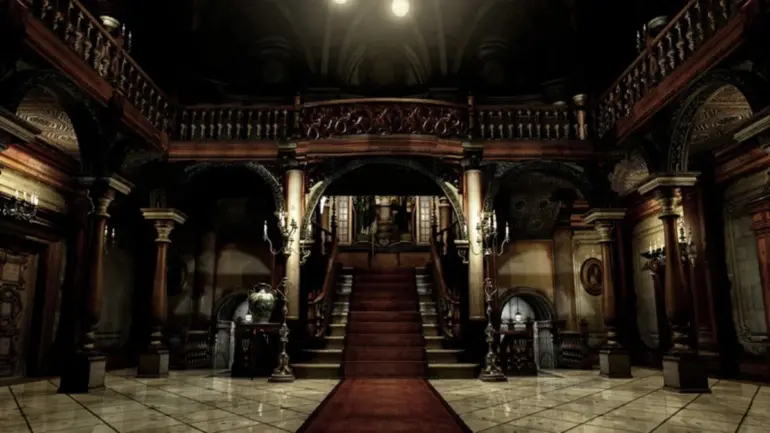
The Spencer Mansion weaponizes familiarity. Shinji Mikami built Resident Evil’s estate around recognizable Victorian layout conventions including symmetrical wings, central staircases, and servant corridors connecting rooms. Players enter expecting mansion logic to apply: dining rooms connect to kitchens, libraries adjoin studies, bedrooms cluster in upper floors. The mansion honors these expectations initially, establishing spatial confidence that it systematically demolishes.
What makes the Spencer Mansion disturbing isn’t random layout chaos. It’s deliberate architectural betrayal. The east wing mirrors the west wing until it doesn’t, with subtle asymmetries that disorient without announcing themselves. Doors that should lead to servant stairs instead open to laboratories. The conservatory connects to underground tunnels rather than gardens. Each violation of architectural expectation compounds player uncertainty about spatial relationships.
This approach influenced decades of horror level design. The Baker residence in Resident Evil 7 updates the technique for first-person perspective, using Louisiana plantation architecture to establish normalcy before revealing industrial modifications. Players recognize the farmhouse layout, which makes discovering the processing area beneath the garage viscerally wrong. The architecture lies through familiarity, making environmental betrayal feel personal rather than arbitrary.
The Psychology of Safe Rooms
Safe rooms in horror mansions function as psychological manipulation rather than mechanical necessity. The Spencer Mansion’s save rooms feature distinctive music cues, item boxes, and typewriters that signal genuine safety. These spaces exist as sanctuaries where enemies never spawn and threats cease. The relief players experience in safe rooms amplifies dread elsewhere through contrast. You remember safety’s texture, which makes danger feel sharper.
Luigi’s Mansion subverts this convention entirely. Professor E. Gadd’s lab serves as the single safe room in King Boo’s mansion, but reaching it requires backtracking through previously cleared areas where new ghosts spawn. The mansion refuses to honor conquest, treating cleared rooms as temporary states rather than permanent victories. This design choice transforms exploration into paranoid reconnaissance where safety exists only in the Poltergust 3000’s vacuum range.
The indie developers I spoke with at VGLX understood safe room psychology deeply. Teams working on atmospheric horror described decontamination chambers as earned relief points where players process emotional weight from previous sections. Their level layouts force players through dangerous corridors between these chambers, creating rhythm through tension and release. The architecture becomes a pacing mechanism controlling player stress through spatial design.
Dead Space’s Ishimura demonstrates how safe rooms function in zero-gravity environments. Save stations provide brief respite, but the ship’s modular design means previously safe corridors transform into necromorph spawning grounds after story beats. The architecture itself becomes unreliable, training players to distrust environmental stability. This design philosophy influenced modern horror games including Prey and Alien: Isolation, where safe rooms exist as temporary conditions rather than permanent fixtures.
Environmental Storytelling Through Decay
Horror mansions communicate narrative through architectural degradation. The Spencer Mansion’s west wing shows careful Victorian maintenance while the east wing reveals industrial modifications and biological contamination. Players reconstruct the Umbrella Corporation’s experiments by reading environmental transitions from residential elegance to laboratory functionality. The architecture tells parallel stories through materials, lighting, and structural integrity.
Hill House from The Haunting of Hill House board game adaptation demonstrates how asymmetrical room layouts create narrative uncertainty. Rooms connect through impossible geometry that reflects the house’s malevolent sentience. Players draw room tiles randomly, building the mansion procedurally while exploring it. This design choice makes spatial relationships unpredictable, transforming navigation itself into psychological horror. The house’s architecture actively resists comprehension.
Luigi’s Mansion uses architectural decay differently. Each room reflects the ghost haunting it through themed deterioration. The nursery shows playful destruction, the conservatory features overgrown vegetation, and the studio displays artistic chaos. The mansion’s architecture becomes a gallery showcasing each ghost’s personality through environmental modification. Players reconstruct ghost backstories by reading how each spirit transformed their assigned space.
Layers of Fear takes environmental storytelling further by making architecture actively shift during gameplay. Hallways extend, rooms rearrange, and doors lead to impossible spaces. The mansion reflects the protagonist’s deteriorating mental state through fluid architecture that refuses to stabilize. This design approach influenced Control’s Oldest House, where brutalist architecture morphs according to narrative beats, making environmental consistency a luxury rather than default.
Verticality and Vulnerability
Horror mansions exploit vertical space to create vulnerability. The Spencer Mansion’s grand staircase becomes a tactical nightmare where players must choose between upper balcony exposure or lower hall confinement. Enemies attack from multiple elevations simultaneously, forcing constant spatial awareness. The architecture transforms navigation into combat calculation where every floor transition carries risk.
Crimson Peak’s mansion design demonstrates how verticality enhances Gothic atmosphere. The crumbling Victorian estate features a central atrium where weather penetrates through the damaged roof, covering everything in red clay snow. The vertical architecture allows players to see multiple floors simultaneously, creating paranoia about unseen threats above and below. The mansion’s height amplifies isolation by making escape feel impossible.
The indie horror games at VGLX applied verticality creatively within budget constraints. Train-based horror games create vertical spaces through stacked compartments and luggage racks where enemies hide. The limited vertical space amplifies claustrophobia because threats exist within arm’s reach above you. Developers explained how trains provide natural verticality without requiring complex multi-floor level design.
Silent Hill’s Otherworld transformations use verticality to disorient players. Staircases collapse into pits, floors become ceilings, and elevation loses meaning. The architecture rebels against spatial logic, making vertical navigation unreliable. This design influenced horror games including Layers of Fear and Observer, where verticality becomes fluid rather than fixed.
Lighting and Architectural Revelation
Horror mansions control information through lighting design that reveals architecture gradually. The Spencer Mansion uses pre-rendered backgrounds with dynamic lighting, showing players partial spaces while keeping threats in shadow. Lightning flashes through windows briefly illuminate corridors, giving glimpses of architectural extent without revealing contents. This technique creates constant low-level anxiety about unseen space.
Amnesia: The Dark Descent weaponizes lighting through sanity mechanics. Players must balance light sources against mental stability, making architectural exploration a resource management challenge. Dark rooms preserve sanity but hide threats, while lit spaces reveal danger while degrading mental health. The architecture becomes a psychological trap where safety and knowledge exist as mutually exclusive states.
The developers at VGLX discussed lighting as a gameplay mechanic rather than aesthetic choice. Space station horror games use emergency lighting that flickers intermittently, revealing threats in brief flashes. Players must memorize architectural layouts during light cycles to navigate safely during darkness. The lighting transforms architecture into memory challenge.
Resident Evil 7’s Baker mansion updates classic lighting techniques for VR. Flashlight beams create narrow vision cones that force players to turn physically, making architecture feel oppressive through limited perception. The mansion’s rooms exist beyond flashlight range, creating psychological pressure about unseen space. This design influenced VR horror games including The Walking Dead: Saints & Sinners, where lighting determines architectural awareness.
The Loop: Backtracking as Revelation
Horror mansions use backtracking to transform familiar spaces into new threats. The Spencer Mansion forces players through previously cleared areas where new enemies spawn or environmental hazards activate. Rooms players memorized become dangerous again through altered circumstances. This design choice makes architectural mastery temporary, preventing spatial confidence from undermining horror.
Metroidvania-style horror games embrace backtracking as core progression. Castlevania: Symphony of the Night’s inverted castle transforms architectural familiarity into disorientation by flipping the entire map. Players navigate memorized spaces in reverse, where ceiling decorations become floor hazards. The architecture itself inverts, making spatial relationships alien despite geographical familiarity.
Prey’s Talos I station demonstrates how interconnected architecture enhances backtracking. The station’s modular design means multiple routes connect areas, but each path carries distinct threats. Players choose between exterior spacewalks with oxygen management or interior corridors with Typhon encounters. The architecture becomes a strategic map where backtracking routes matter as much as destinations.
The indie developers at VGLX emphasized backtracking’s importance for small teams. Reusing architectural spaces with altered circumstances provides content efficiency while maintaining horror tension. Train-based horror games loop through the same cars with different encounters, transforming architectural repetition into narrative device. The environment becomes temporally unstable rather than spatially extensive.
Sound Design and Spatial Audio
Horror mansions use architecture to amplify sound design. The Spencer Mansion’s hard surfaces create acoustic environments where footsteps echo through hallways, communicating enemy positions through audio cues. Players learn to read architectural acoustics, distinguishing zombie shuffles in adjacent rooms from distant corridor threats. The mansion’s materials become information channels.
P.T.’s looping hallway demonstrates how architectural simplicity enhances audio horror. The single L-shaped corridor repeats infinitely with subtle variations, forcing players to detect changes through sound rather than visual cues. Baby cries echo from impossible locations, footsteps follow behind you, and radio static intensifies near story triggers. The minimal architecture makes audio the primary information source.
Dolby Atmos integration in modern horror games uses architectural geometry to create three-dimensional soundscapes. The Evil Within 2’s mansion sequences position threats through ceiling speakers, making verticality audible. Players hear enemies moving through upper floors or basement spaces, transforming architecture into acoustic map. This technology influenced horror game design by making spatial audio a navigation tool.
The developers showcasing horror games at VGLX discussed audio design limitations for indie budgets. Space station horror games use minimalist ambient soundscapes where silence itself becomes threatening. Ventilation hums provide baseline noise, making any variation immediately noticeable. The architecture amplifies limited audio resources through careful spatial positioning.
Color Theory and Architectural Mood
Horror mansions manipulate color palettes to establish atmospheric dread. The Spencer Mansion uses warm wood tones in residential areas that transition to cold metal blues in laboratory sections. The color shift communicates environmental transitions before players consciously register architectural changes. The palette guides emotional responses through subconscious color associations.
Layers of Fear’s shifting architecture uses color to signal reality instability. Paintings bleed colors into surrounding walls, wallpaper patterns swirl and distort, and lighting temperatures fluctuate between scenes. The mansion’s color palette refuses stability, making visual consistency impossible. This design approach communicates psychological horror through chromatic chaos.
Silent Hill’s fog and rust color schemes create oppressive atmosphere through limited visibility. The grey fog reduces color information to narrow ranges, making environmental details emerge gradually. The Otherworld’s rust and blood palette shifts create visceral disgust through color alone. The town’s architecture becomes defined by chromatic degradation.
Luigi’s Mansion counters horror color conventions through vibrant cartoonish palettes. The mansion features bright wallpapers, colorful ghosts, and exaggerated lighting that subverts typical horror aesthetics. This design choice makes the mansion feel playful rather than threatening, targeting younger audiences while maintaining exploration mechanics. The color palette defines tonal identity.
Scale and Intimidation
Horror mansions use architectural scale to create player vulnerability. Resident Evil’s Spencer Mansion features grand entrance halls with soaring ceilings that dwarf player characters. The scale communicates powerlessness through spatial relationships where human-sized threats occupy inhuman architectural spaces. The mansion’s proportions establish hierarchy through size.
Bloodborne’s Cainhurst Castle demonstrates how Gothic excess amplifies horror through architectural grandeur. Massive ballrooms, towering chapels, and expansive libraries make players feel insignificant within aristocratic decay. The castle’s scale suggests historical significance that dwarfs individual survival concerns. The architecture communicates narrative weight through proportion.
The indie developers at VGLX discussed scale challenges for small teams. Creating massive architectural spaces requires asset resources most indie studios lack. Train-based horror games solve this by using cars as naturally constrained spaces that feel claustrophobic rather than limited. The narrow corridors make scale restrictions serve horror atmosphere.


Dishonored’s Dunwall Tower uses scale variation to create pacing rhythm. Intimate servant corridors contrast with ceremonial throne rooms, creating breathing room between tense infiltration sequences. The architecture’s scale fluctuations control player emotional state through spatial expansion and compression. The building becomes a pacing mechanism.

LEGO Architecture: Horror Mansions at Home
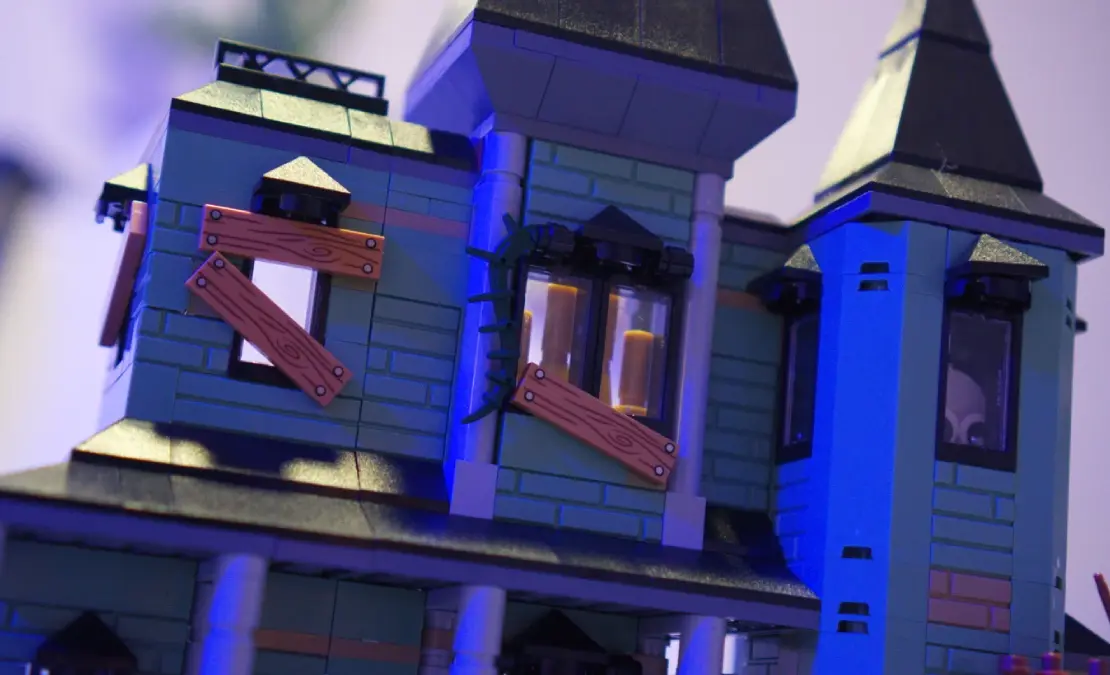
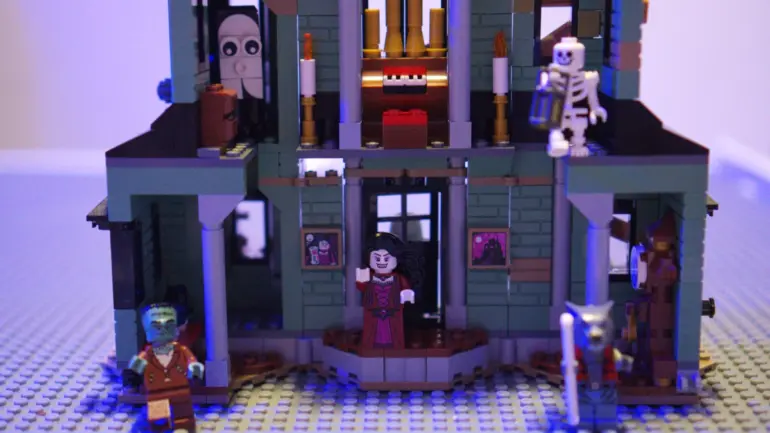
Understanding horror mansion design principles extends beyond gaming. LEGO’s Creator 3-in-1 Haunted Mansion set applies architectural storytelling through modular construction, letting builders explore the spatial relationships that make horror mansions effective. The set’s 2-story design includes opening front gates, graveyard elements, and a scary tree that establish Gothic atmosphere through recognizable architectural elements.
The set’s hidden ghost mechanic, revealed by turning a wheel, demonstrates environmental storytelling through interactive architecture. This design mirrors gaming’s reveal mechanics where architectural exploration uncovers hidden threats. The opening back wall provides extra play value by making internal spatial relationships visible, similar to how horror games use cutaways to show architectural extent.
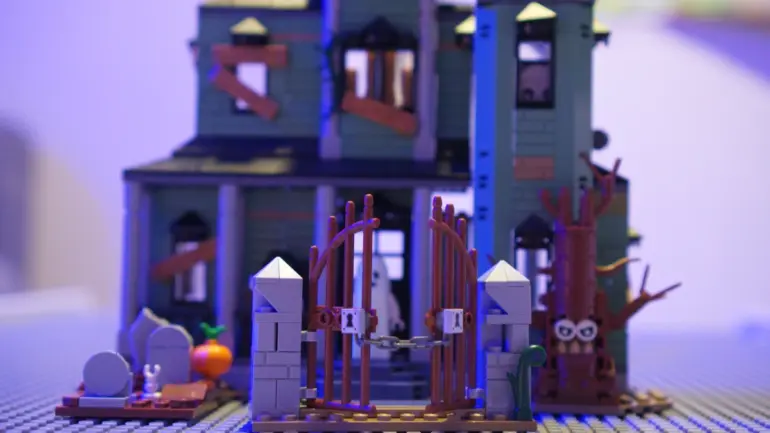
Five included minifigures (werewolf, vampire, ghost with glow-in-the-dark cape, Frankenstein’s monster, and skeleton) each carry accessories that suggest narrative possibilities. The character variety reflects horror mansion design principles where diverse threats occupy distinct architectural spaces. The werewolf might haunt the graveyard while the ghost occupies upper floor chambers, creating spatial territory division.
The 3-in-1 design transforms the haunted house into a toy train set or haunted ship, demonstrating how horror architecture principles apply across settings. Train cars create claustrophobic corridors similar to mansion hallways, while ship decks provide vertical spaces comparable to multi-story mansions. The modular architecture teaches how spatial constraint generates horror atmosphere regardless of specific setting.
Building the mansion piece by piece reinforces understanding of architectural relationships that game developers spend months perfecting. The graveyard’s placement outside the front gate establishes approach anxiety, the organ room suggests Gothic excess, and the hidden ghost mechanism demonstrates how interactive architecture creates discovery moments. Physical construction makes level design principles tangible.
Procedural Generation and Architectural Randomness
Modern horror games experiment with procedurally generated mansions that randomize architectural layouts. Phasmophobia’s investigation maps include suburban houses and abandoned mansions where room placement varies between sessions. This design approach prevents spatial memorization, keeping architectural uncertainty alive across multiple playthroughs. The mansion becomes algorithmically hostile.
Dead by Daylight’s maps use procedural generation within fixed templates. The main mansion structure remains consistent, but window positions, pallet spawns, and basement locations randomize. This hybrid approach maintains architectural identity while introducing tactical variation. Players recognize the mansion but can’t rely on memorized safe routes.
The indie developers at VGLX discussed procedural generation as an accessibility tool for small teams. Hand-crafting every architectural detail requires resources that compete with other development needs. Office-based roguelike games use procedural layouts to generate unique workspace configurations each run, creating replayability through architectural variation rather than scripted events.
Binding of Isaac’s room-based procedural generation demonstrates how modular architecture creates endless variation. Each room functions as self-contained challenge space, but room sequences remain unpredictable. The architecture becomes a deck of cards shuffled between runs, maintaining mechanical consistency while varying spatial relationships.
The Future of Horror Mansion Design
VR horror games reimagine mansion architecture for room-scale movement. Resident Evil 4 VR’s village and castle sequences adapt third-person level design for first-person spatial awareness. Players physically duck behind architectural cover, peek around doorframes, and reach into environmental spaces. The architecture becomes tactile through motion controllers that make spatial interaction physical.
Ray tracing technology transforms lighting’s role in architectural horror. Metro Exodus Enhanced Edition’s abandoned buildings use real-time lighting that responds to player flashlight positioning, creating dynamic shadows that reveal architectural details gradually. The technology makes lighting a discovery tool rather than static atmospheric element.
Machine learning experiments suggest procedurally generated mansions could adapt to player behavior. AI systems analyze which architectural configurations create the most anxiety, then generate customized layouts targeting individual psychological triggers. The mansion becomes personalized horror rather than universal experience.
The Canadian indie developers I spoke with at VGLX remain focused on foundational principles rather than technological trends. They emphasized that architectural horror succeeds through spatial relationships and pacing rhythm regardless of rendering techniques. Train-based horror and space station games prove horror mansions work as design philosophy rather than specific aesthetic.
Lessons from Iconic Mansions
The Spencer Mansion taught game developers that architectural betrayal creates lasting unease. Familiar spaces that violate spatial expectations generate deeper horror than random chaos. This principle influenced decades of level design across horror games, adventure games, and immersive sims.
Luigi’s Mansion demonstrated how architectural theming creates memorable spaces. Each room’s distinct personality through environmental design makes the mansion feel like a character rather than static setting. This approach influenced games including Prey, Control, and Dishonored, where architecture communicates narrative through spatial storytelling.
Silent Hill’s reality-shifting architecture proved that spatial reliability itself could become horror mechanic. When players can’t trust architectural consistency, navigation transforms into psychological challenge. This design philosophy influenced experimental horror games that prioritize disorientation over jump scares.
The indie games at VGLX continue these traditions while adapting them for smaller scopes. Canadian developers understand that horror mansion design succeeds through careful spatial manipulation rather than asset quantity. A single well-designed train car or space station corridor can generate the same architectural dread as sprawling Victorian estates.