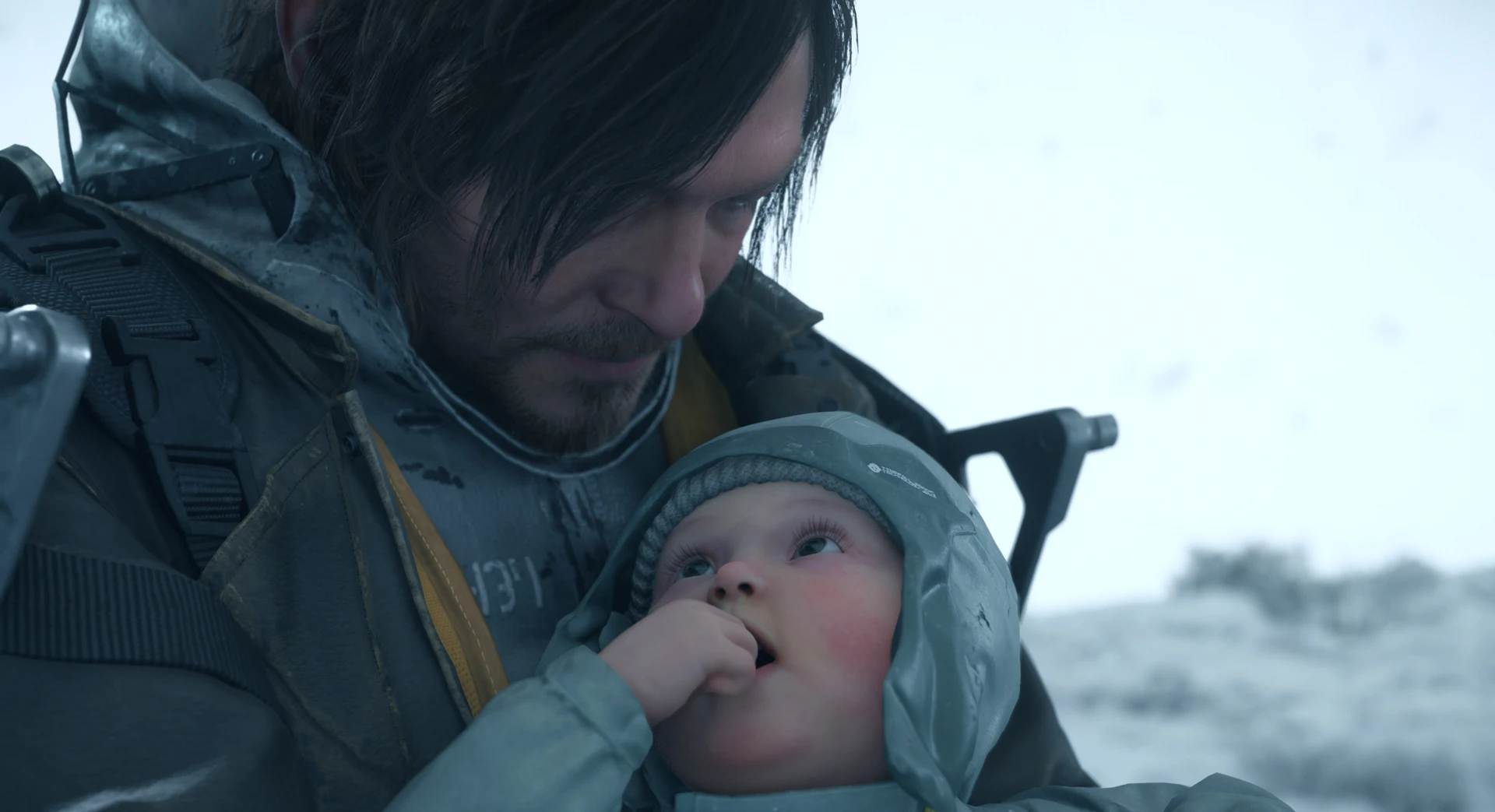

When Hideo Kojima first unveiled Death Stranding back in 2019, the gaming world was split down the middle. Some called it a walking simulator dressed up as art, while others hailed it as a revolutionary experience that dared to be different in an industry obsessed with violence and instant gratification. I fell somewhere in the middle—captivated by its ambition but occasionally frustrated by its stubbornness.
Fast forward to 2025, and Death Stranding 2: On The Beach feels like Kojima heard every criticism, every complaint, every moment of frustration players had with the original—and then systematically addressed them while doubling down on everything that made the first game special. This isn’t just a sequel; it’s a masterclass in how to evolve a concept without losing its soul.
Quick Facts:
- Platform: PlayStation 5 (Review Platform)
- Developer: Kojima Productions
- Setting: Australia (connecting to the Chiral Network)
- New Features: Day-night cycle, APAS upgrade system, enhanced vehicles
- Base of Operations: DHV Magellan ship
Australia Awaits: A Continental Challenge
Where the original Death Stranding tasked Sam with reconnecting a fractured America, On The Beach shifts the action to Australia—and what a shift it is. The Australian continent presents challenges that make the rocky terrain of the Pacific Northwest look like a gentle stroll through Central Park. We’re talking about a landmass where nature itself seems determined to kill you at every turn.
But here’s the brilliant thing: Kojima Productions didn’t just swap out the backdrop and call it a day. Australia isn’t just America with different accents and more dangerous wildlife. The entire philosophy of traversal, delivery, and connection has been reimagined for a continent where distances are vast, weather patterns are brutal, and the very ground beneath your feet can shift from solid rock to treacherous bog in the span of a few kilometers.
Narrative Maturity: Beyond Kojima’s Usual Quirks
Let’s talk about the elephant in the room: Kojima’s storytelling has always been… let’s call it “an acquired taste.” The man loves his philosophical monologues, his obtuse metaphors, and his tendency to explain themes through characters literally spelling them out in cutscenes. Death Stranding was no exception, often feeling like a fascinating doctoral thesis disguised as a video game.
On The Beach represents a significant evolution in Kojima’s narrative approach. The story still tackles weighty themes—connection, isolation, environmental collapse, the nature of human cooperation—but it does so with a lightness of touch that feels genuinely mature. Instead of characters pontificating about the nature of human connection for twenty-minute stretches, the game shows you through gameplay moments, environmental storytelling, and character interactions that feel refreshingly natural.
Character Work That Actually Works
Sam Porter Bridges returns, but he’s not the same reluctant hero we met in 2019. This is a Sam who’s learned to embrace connection rather than fear it, and Norman Reedus delivers a performance that’s both more confident and more vulnerable than his previous outing. The supporting cast—many returning from the original—feels like a genuine ensemble rather than a collection of exposition delivery systems.
But perhaps most importantly, the game trusts its audience. Where the original sometimes felt like Kojima explaining his homework to make sure everyone understood the assignment, On The Beach lets themes emerge organically through player experience. It’s storytelling that respects your intelligence while still delivering those signature Kojima moments that somehow make perfect sense within the game’s internal logic.
The Dollman Dynamic: Companionship Done Right
One of the smartest decisions Kojima Productions made was introducing Dollman as Sam’s traveling companion. Now, before you panic about losing that meditative solitude that made the original special—don’t. Dollman isn’t some chatty NPC constantly breaking the atmosphere with quips and observations. Instead, he’s more like having a wise mentor who knows when to speak and when to let the silence do the talking.
The genius of this dynamic becomes apparent during those long treks across the Australian outback. Where the original sometimes felt lonely to the point of isolation, Dollman provides just enough human connection to make the journey feel purposeful rather than empty. He’ll offer navigational advice when you’re lost, share insights about the world’s lore when you encounter something new, or simply make quiet observations that add depth to the experience.
A Mobile Base That Changes Everything
But the real game-changer is the DHV Magellan, the massive ship that serves as your floating base of operations. This isn’t just a menu screen with a pretty backdrop—it’s a living, breathing hub that evolves throughout your journey. As you progress through the story and connect more of Australia to the Chiral Network, the Magellan becomes populated with crew members, each with their own stories, quirks, and purposes.
The ship transforms the entire rhythm of the game. Instead of the hub-and-spoke structure of the original, where you’d venture out from static locations and return to safety, the Magellan creates a sense of expedition and discovery. You’re not just connecting isolated outposts—you’re part of a genuine mission to bring life and connection to a struggling continent.
A Living, Breathing World: The DHV Magellan and Beyond
The world of Death Stranding 2: On The Beach feels much more alive than its predecessor, which works for both the narrative and the gameplay. Throughout his journey, Sam will report to and depart from the DHV Magellan—a massive ship that serves as the base of operations for Fragile’s new delivery service, “Drawbridge.” Players can utilize the Magellan for storage, fabrication, and fast-travel across Australia, but it also provides Sam with multiple opportunities to interact with the various crew members who join throughout the game.
This mobile base concept transforms the entire flow of the game. Rather than feeling like you’re constantly venturing out from static bunkers into hostile wilderness, the Magellan creates a sense of expedition and exploration. The ship itself becomes a character in the story, a floating community that grows and evolves as you progress through Australia.
Not only that, but as Sam slowly connects Australia to the Chiral Network, NPC Porters can be found traversing the world, offering players Lost Cargo or helpful tools and weapons. Combined with the all-important Meta Game where players share structures and slowly bring the world to life cooperatively, it creates such a stark contrast in atmosphere—Death Stranding’s world felt isolated and alone, but here, you gradually start to see the threads of life reconnecting and rebuilding civilization.
Refined Storytelling and Pacing
But what really surprised me about Death Stranding 2: On The Beach was how well its story is delivered. It certainly became something of a running joke with Hideo Kojima games that you press a button and watch a 20-minute cutscene. Death Stranding definitely suffered from cutscene bloat between gameplay sections, which made its story feel unbalanced and sometimes exhausting.
This time around, the narrative is much more digestible—story cutscenes are tight, focused, and happen after every main objective, which are also paced much better. The game respects your time while still delivering Kojima’s signature cinematic storytelling. Cutscenes feel purposeful rather than indulgent, and the improved pacing makes the emotional beats land with much greater impact.
This represents a significant maturation in Kojima’s directorial approach. He’s maintained his unique voice and thematic complexity while learning to edit himself more effectively. The result is a game that feels both distinctly Kojima-esque and remarkably accessible to players who might have been put off by the original’s pacing issues.
Where Gameplay Gets Genius: The APAS Revolution
Here’s where Death Stranding 2 goes from “interesting sequel” to “absolute game-changer.” The APAS (Autonomous Porter Assist System) upgrade tree fundamentally transforms how you approach every aspect of the game, turning what was once a fairly rigid experience into something that genuinely adapts to your personal play style.
Want to be a stealth master who ghosts through MULE camps without being detected? There are APAS upgrades for silent footsteps, extended scanner range, and even camouflage systems that make you harder to spot. Prefer to go in guns blazing? You can spec into combat enhancements, improved weapon handling, and tactical advantages that make firefights feel like a proper action game.
But the real brilliance lies in how these upgrades interact with the game’s core delivery mechanics. You’re not just making Sam more powerful—you’re fundamentally changing how the game plays. Upgrades that increase your cargo capacity and stability transform you into a long-haul specialist capable of massive, cross-continental deliveries. Others focus on speed and agility, turning you into a rapid-response courier who can navigate treacherous terrain with supernatural grace.
The Tutorial That Actually Teaches
Remember how the original Death Stranding basically threw you into the deep end and hoped you’d figure out its complex systems through trial and error? On The Beach takes the opposite approach, integrating tutorial elements so seamlessly into the gameplay that you barely notice you’re learning.
The game doesn’t just tell you to plan a route—it shows you why route planning matters by presenting you with real choices that have meaningful consequences. Take the mountain path for safety but add hours to your delivery time? Or risk the valley route where BTs have been spotted but cut your travel time in half? These aren’t arbitrary difficulty settings—they’re genuine strategic decisions that make you think like an actual porter.
Movement and Vehicle Improvements
Everything about Death Stranding 2: On The Beach’s delivery-based gameplay feels tighter and more player-friendly. For starters, movement feels much smoother and more responsive than the original. It certainly helps that the Australian landscape is somewhat more forgiving in terms of massive hills and unstable terrain, but it’s not without its own unique challenges.
The second, and possibly most crucial improvement, is just how much better vehicles handle in this game. It was a bit of a running joke that Death Stranding gave you a cool motorcycle at the start, only to place you in an environment that made riding nearly impossible. In Death Stranding 2: On The Beach, from almost the start of the game, players are given a speedy delivery bike, and I cannot begin to tell you how much better it handles on rocky terrain and how maneuverable it feels.

The APAS Upgrade System: Customization That Matters
But vehicles aren’t the only tools helping you on your journeys. Much like the first game, taking on orders for various preppers increases your delivery rating with them, and with every increase, rewards players with new or upgraded equipment to aid in deliveries.
Death Stranding 2: On The Beach takes this progression system much further by introducing APAS Upgrades, which essentially act as a Perk Tree for players to select upgrades that assist them based on their preferred play style. Players can give themselves a suite of advantages, ranging from silent footsteps to increased scanner range to increased structures shared through the Chiral network.
Not only does this system give players increased flexibility in how they approach deliveries, but it also provides added incentive to carry out more missions, since increasing your Porter ranking with Preppers affords you additional “bandwidth” to apply more upgrades simultaneously. It’s a elegant solution that makes every delivery feel meaningful beyond just story progression.
Australia’s Wrath: When Nature Becomes the Enemy
If you thought the Pacific Northwest was challenging, Australia’s environment will humble you in ways you didn’t know were possible. The day-night cycle isn’t just atmospheric window dressing—it’s a fundamental gameplay mechanic that forces you to think like an actual expedition leader planning for survival.
Nighttime transforms the entire game. Visibility drops to almost nothing, making navigation treacherous even with the odradek’s flashlight function. But using that light makes you a beacon for every hostile force in the area—MULEs, terrorists, and things far worse. The risk-reward calculation becomes genuinely nerve-wracking: do you push through in darkness and risk disaster, or make camp and lose precious time?
Cargo Complexity That Actually Matters
But it’s the cargo system where On The Beach truly shines. Forget the relatively simple “fragile/timed” deliveries of the original. We’re talking about packages with genuinely complex requirements that transform every delivery into a logistical puzzle.
Temperature-sensitive medical supplies that require refrigerated transport during the scorching Australian day. Delicate scientific equipment that can’t handle the vibrations of rough terrain. Live biological samples that need to be delivered within specific timeframes or they’ll deteriorate. Each delivery type demands different approaches, different routes, different equipment loadouts.
The Australian continent itself seems designed to make your life miserable in the most spectacular ways possible. Sudden bushfires can cut off entire regions, forcing massive detours. Flash floods turn gentle streams into raging torrents that can sweep away vehicles and cargo alike. Sandstorms reduce visibility to zero while battering Sam with debris that can damage both him and his precious cargo.

And then there are the BTs—or rather, the new generations of BTs that have adapted to Australia’s unique environment. Beach-dwelling variants that emerge from the ocean. Desert BTs that burrow through sand dunes. Swamp creatures that lurk in the continent’s wetlands. Each type requires different strategies, different weapons, different approaches to avoid or engage them.
Enhanced Combat and Stealth Integration
On top of environmental hazards are the MULEs as well as Armed Survivalists who have established camps across Australia and attempt to kill anyone who comes near their territory. However, something that I really appreciate about Death Stranding 2: On The Beach is how much more it encourages players to engage with both combat and stealth mechanics rather than simply avoiding conflict.
So many missions have Sam directly confront these camps, and while players retain the ability to try and avoid them entirely, it’s often more rewarding—and usually more optimal—to engage with these encounters tactically.
Players are given many more weapons, tools, and tactical enhancements quite early in the progression, enabling them to fight or sneak their way through camps. Getting through these encounters became a strategic consideration that made deliveries dramatically more engaging and varied.
More often than not, Death Stranding 2: On The Beach reminded me of playing Metal Gear Solid V: The Phantom Pain as I used holo-grenades that simulated BTs to scare opponents while sniping them with tranquilizer darts from 100 meters away. The tactical toolset feels robust and satisfying to master.
Technical Wizardry: When Hardware Meets Artistry
Death Stranding 2 isn’t just a technical showcase—it’s a love letter to what the PlayStation 5 can achieve when developers truly understand their hardware. The instant loading isn’t just impressive; it’s transformative. Fast travel between continents happens so quickly that it feels like magic, while transitioning from gameplay to cutscenes and back again flows so seamlessly that you forget there are loading screens at all.
But the real star is how the DualSense controller becomes an extension of Sam’s nervous system. Walking across different surfaces—sand, rock, metal, grass—each has its own distinct haptic signature that you can feel in your hands. When Sam shifts his weight to compensate for heavy cargo, the controller subtly mimics that shifting balance through haptic feedback that’s so nuanced it borders on telepathic.
Audio Design That Transcends
The spatial audio design deserves special mention. Using Sony’s 3D audio technology, the game creates an soundscape so precise that you can navigate by sound alone in complete darkness. Distant BT wails echo from their actual positions in 3D space. Timefall rain creates different audio signatures depending on what surface it’s hitting. Even the subtle mechanical sounds of Sam’s equipment tell stories—the creak of straining straps, the electronic hum of charging batteries, the satisfying click of cargo containers locking into place.
Woodkid’s dynamic soundtrack deserves particular praise for how it integrates with gameplay rather than simply playing over it. Musical themes shift and evolve based on your actions, your location, even your emotional state within the narrative. It’s ambient scoring done so well that you barely notice it’s happening until you realize you’ve been completely absorbed in the experience for hours.
The voice acting, led by Norman Reedus’s increasingly confident performance as Sam, feels natural and unforced. Even the typically overwrought Kojima dialogue feels more grounded this time around, delivered by actors who clearly understand the emotional weight behind the philosophical concepts.
Audiovisual Masterpiece
The added processing power of the PlayStation 5 significantly enhances Death Stranding 2: On The Beach’s audiovisual presentation. Beyond its sheer scope compared to the first game, the game’s depiction of Australia showcases so many distinct biomes, incredibly detailed landscapes, and an remarkable level of visual fidelity in character models that the entire world feels believable and lived-in.
This visual excellence is enhanced by an absolutely incredible voice cast who bring each character to life in unique and compelling ways—but none more so than Troy Baker, who steals every scene he appears in with nuanced, emotionally resonant performances.
Even more so than the first game, Death Stranding 2: On The Beach punctuates crucial scenes with an unbelievable procedural soundtrack developed by Woodkid, while also featuring recorded songs by Daichi Miura, Low Roar, and numerous other artists. The musical integration feels organic and enhances rather than interrupts the gameplay flow.
Also, I absolutely want to kiss whoever thought of letting players create custom playlists and listen to the soundtrack while making deliveries. This feature transforms long journeys into meditative, almost therapeutic experiences.
The Verdict: Kojima’s Quiet Revolution
Death Stranding 2: On The Beach represents something rare in modern gaming—a sequel that doesn’t just iterate on its predecessor’s formula, but fundamentally reimagines what that formula could become. This isn’t Kojima showing off or proving a point; it’s Kojima delivering on the promise that the original game hinted at but never quite achieved.
For all its philosophical depth and narrative complexity, On The Beach succeeds because it remembers that games are supposed to be, well, fun. The meditative quality of traversal remains, but it’s no longer tedious. The challenge of planning and logistics is still there, but it feels empowering rather than frustrating. The cooperative elements that made the original special are enhanced rather than overshadowed.
This is a game that respects your time while demanding your attention, that challenges your patience while rewarding your persistence. It’s Kojima at his most mature—still weird, still uncompromising, but finally accessible to the broader audience that his unique vision deserves.
If the original Death Stranding was Kojima’s bold experiment in what games could be, On The Beach is his proof that the experiment worked. This isn’t just one of the best games of 2025—it’s a masterpiece that redefines what we should expect from interactive entertainment.