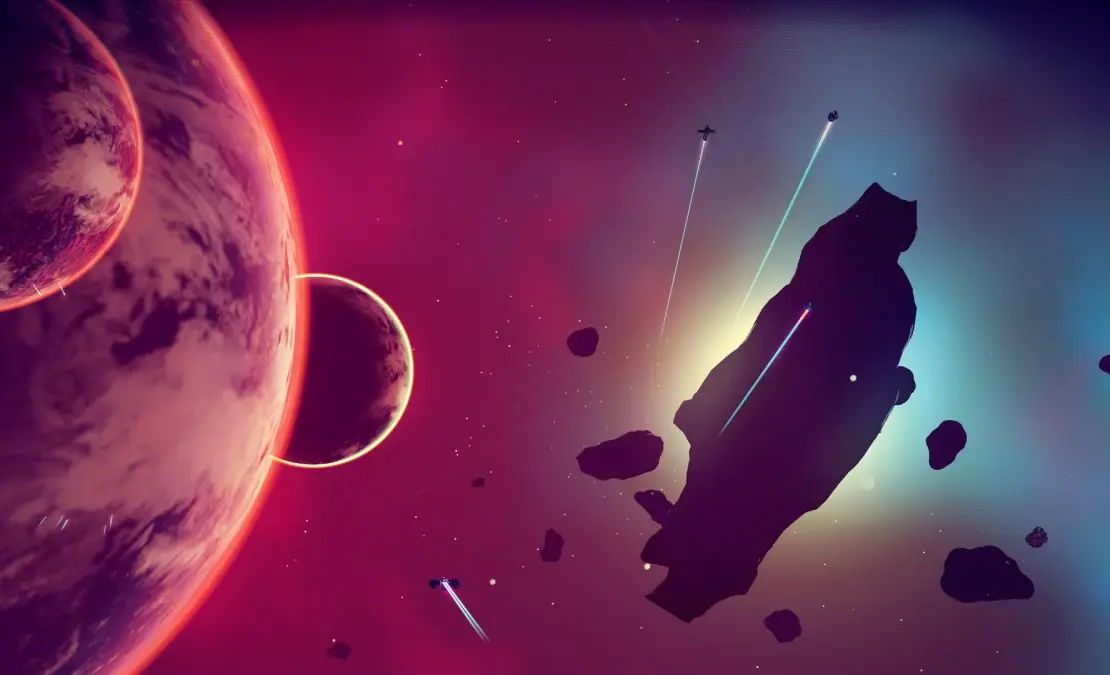

Celebrating STEM Day 2025: From Minecraft’s blocky landscapes to No Man’s Sky’s alien planets, the mathematics and algorithms powering procedurally generated games.
November 8 marks STEM Day, recognizing the science, technology, engineering, and mathematics shaping our world. Video games offer one of the most accessible entry points for STEM concepts, with procedural generation demonstrating how mathematical algorithms create virtually infinite content from compact code.
Instead of artists hand-crafting every rock and tree, developers write algorithms that generate unique worlds, caves, and terrain on demand. This technology powers some of gaming’s most expansive experiences, from Minecraft’s endless landscapes to No Man’s Sky’s 18 quintillion planets. The process teaches fundamental STEM principles including pattern recognition, algorithmic thinking, and data compression.
The core concept relies on mathematical patterns and seed numbers. Once you understand how seeds, noise functions, and modern AI shape these digital universes, the magic becomes science perfect for exploring during STEM Day and beyond.
Seed Numbers: The DNA of Digital Worlds
Every procedurally generated world starts with a seed, a single number that initializes the algorithm. Think of it as genetic code for a digital universe. When you share your Minecraft seed with friends, you give them the exact instructions to recreate your world down to every mountain, cave, and village.
Here’s how it works. The algorithm takes the seed number and feeds it through a series of mathematical operations. These operations produce pseudo-random results that appear chaotic but follow strict patterns. The same seed always produces identical results, making worlds reproducible and shareable.
Developers layer multiple seed-based systems together. Terrain generation might use one algorithm while tree placement uses another. Cave systems get their own pass, followed by ore distribution and structure spawning. Each system reads from the seed but produces different features, creating complex environments from simple numeric input.
The deterministic nature matters for multiplayer games. When two players explore the same coordinates in Minecraft, they see identical terrain because their clients run the same algorithms with the same seed. No server needs to store detailed world data. The seed and player modifications are enough.

Perlin Noise: Nature’s Mathematical Fingerprint
Natural landscapes avoid pure randomness. Mountains form gradual slopes instead of chaotic spikes. Coastlines curve smoothly rather than jagging at right angles. Game developers simulate these organic patterns using Perlin noise, a gradient noise function invented by Ken Perlin in 1983 for the film Tron.
Perlin noise generates smooth, continuous variation across space. Instead of each point existing independently, nearby points influence each other through interpolation. The result looks natural because it mimics how geological and biological processes create gradual change punctuated by occasional dramatic features.
Minecraft uses modified Perlin noise (specifically Simplex noise, Perlin’s improved algorithm) for terrain height, temperature, and humidity maps. The game samples these noise functions at different scales. Large-scale noise creates continents and oceans. Medium-scale noise forms individual mountains and valleys. Small-scale noise adds surface detail like hills and depressions.
Layering noise at multiple frequencies creates fractal-like complexity. Developers call this approach octaves, borrowing terminology from music. Each octave adds finer detail at half the amplitude and double the frequency of the previous layer. Three or four octaves produce convincing terrain that balances large geographical features with local variation.
Cave systems demonstrate advanced noise applications. Instead of generating two-dimensional height maps, cave algorithms use three-dimensional noise to determine solid versus empty space at every coordinate. Where the noise value exceeds a threshold, the game carves out stone to create tunnels and chambers. Adjusting thresholds and noise parameters produces anything from tight cave networks to massive underground caverns.
Algorithms That Build Believable Worlds
Procedural generation extends beyond terrain. Games use specialized algorithms for vegetation, structures, and environmental details. Each system follows rules that maintain consistency while introducing variety.
Tree placement algorithms check terrain height, biome type, and spacing. Forests appear in appropriate climates with natural-looking density variation. Individual trees might spawn using L-systems, a mathematical method that simulates branching growth patterns. The same L-system parameters produce recognizable species while ensuring no two trees look identical.
Structure generation follows template-based approaches. Minecraft villages assemble buildings from pre-designed modules, arranging them according to terrain and available space. The game ensures roads connect buildings logically and that wells spawn near village centers. Each village feels unique despite using the same component library.
Dungeon generation often employs graph-based algorithms. The system first generates an abstract layout, connecting rooms through corridors while maintaining desired difficulty curves. Then it instantiates the abstract graph using actual game spaces, adjusting dimensions and adding monsters, loot, and traps according to the area’s challenge rating.
Modern AI Takes Generation Further
Machine learning expands procedural capabilities beyond mathematical formulas. AI models trained on human-created content can generate quests, dialogue, and game assets that feel hand-crafted while maintaining infinite variety.
Generative AI creates texture variations, character models, and environmental props. Instead of artists producing hundreds of rock models, they create a training set and let neural networks generate thousands of believable variations. The AI learns patterns in geometry, texture placement, and style, producing assets that match the game’s aesthetic without direct human intervention for each piece.
Narrative generation uses language models to create quest text, NPC dialogue, and flavor text. Developers define parameters like tone, character personality, and story context. The AI fills in specific wording while maintaining consistency with established lore. This approach scales narrative content without requiring writers to script every conversation branch.
Quest generation combines multiple systems. The game identifies available locations, determines appropriate difficulty, selects enemy types and quantities, then generates narrative context explaining why players should care. Some implementations use AI to adjust quest parameters based on player behavior, creating dynamic content that responds to individual playstyles.
The challenge lies in quality control. Purely AI-generated content occasionally produces nonsensical or inappropriate results. Most implementations use hybrid approaches where AI generates content that human designers review and approve, or where AI fills templates with variable elements while structure remains hand-crafted.

Building Your Own Procedural Experience
Understanding procedural generation becomes intuitive through hands-on experimentation. The LEGO Creator 3-in-1 Space Robot demonstrates generation principles in physical form. The 281-piece set offers three distinct builds (space robot, space dog, space rocket) from identical components, mirroring how procedural algorithms create variety from limited rulesets.


The space robot stands over five inches tall with a rotating body, posable head, and jetpack. The alternative builds, a four-legged space dog and vertical space rocket, use the same 281 bricks in completely different configurations. This parallels procedural systems that generate forests, caves, and mountains from shared algorithms applied with different parameters.
Try this procedural challenge. Without looking, grab a random handful of LEGO bricks (your seed). Set a 10-minute timer (your algorithm’s constraints). Build something using only those pieces. The random parts provide input data while your creativity acts as the generation algorithm, producing unique results from the same component pool each attempt uses.
The Space Robot’s three official builds represent optimized outputs, similar to how game developers tune procedural algorithms through testing. Your random builds might produce unexpected combinations, some successful and others awkward, demonstrating why procedural systems require careful parameter adjustment to maintain quality.
Kids aged eight and up can rebuild the robot into the space dog or rocket repeatedly, experiencing how the same resources generate distinct experiences. This hands-on version of procedural generation costs $29.99 CAD and teaches computational thinking through creative play.

The Mathematics of Infinite Variety
Procedural generation achieves scale impossible through manual content creation. No Man’s Sky generates planets using a 64-bit seed, producing 18,446,744,073,709,551,616 possible worlds. Visiting each planet for one second would take 585 billion years. The game’s file size remains under 10 GB because it stores algorithms rather than assets.
This compression comes with trade-offs. Procedurally generated content rarely matches the carefully crafted experiences of hand-designed levels. Developers balance scale against quality, using hybrid approaches that combine procedural foundations with manual polish.
Minecraft demonstrates effective hybridization. While terrain generates procedurally, structures like villages and strongholds use pre-designed templates. The game’s most memorable moments often occur in places where procedural randomness creates unexpected terrain formations near hand-crafted structures, producing emergent complexity neither system achieves alone.
The future points toward collaborative AI and procedural systems. Instead of choosing between infinite procedural content and finite hand-crafted quality, developers increasingly use AI to recognize patterns in designer work, then generate similar content that maintains quality standards while scaling production.
What Comes Next
Procedural generation continues evolving. Real-time generation allows worlds to extend infinitely in any direction, limited only by numeric precision rather than pre-computed data. Cloud-based generation could enable persistent shared worlds where multiple players explore the same procedurally generated content, with server-side algorithms ensuring consistency.
Advanced noise functions beyond Perlin and Simplex continue emerging. Wavelet noise, Worley noise, and domain warping techniques create specialized patterns for specific needs like crystalline structures, organic growth patterns, or erosion simulation.
The convergence of procedural techniques and AI training data creates hybrid approaches where machines learn patterns from human-created content, then generate infinite variations maintaining those patterns. This bridges the gap between procedural scale and human creativity, potentially delivering both endless content and consistent quality.
For players, procedural generation means adventure never exhausts its possibilities. Each new seed spawns a universe worth exploring, proof that mathematics and creativity combine to build worlds limited only by imagination and processing power.