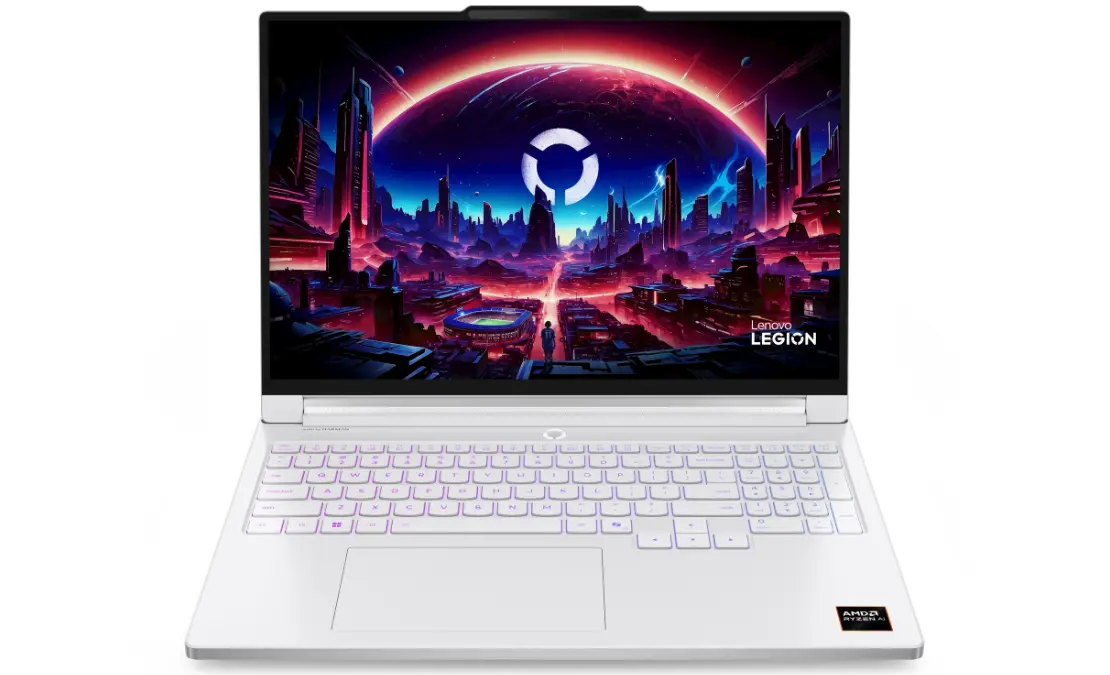

Lenovo arrives at CES 2026 with its most ambitious gaming portfolio yet, headlined by a rollable laptop concept that expands from 16 to 24 inches. The company also announced the Legion Go with native SteamOS support (starting at $1,199), refreshed Legion 7a and Legion 5 laptops powered by AMD Ryzen AI 400 processors and NVIDIA GeForce RTX 50 Series GPUs, and budget-friendly LOQ models for students and entry-level gamers. The lineup spans from the $1,149 LOQ 15AHP11 to the $1,999 Legion 7a, with availability beginning in April 2026. If you’re shopping for a gaming laptop or handheld this year, Lenovo’s CES announcements cover nearly every price point and use case.
The Bottom Line
Lenovo’s CES 2026 gaming lineup delivers RTX 50 Series graphics across the board, native SteamOS on the Legion Go handheld, and a rollable display concept that pushes portable gaming toward desktop-class screen sizes.
Key Announcements:
- Legion Pro Rollable Concept (16″ to 24″ expandable display)
- Legion Go with SteamOS ($1,199, June 2026)
- Legion 7a with Ryzen AI 400 and RTX 50 ($1,999, April 2026)
- Legion 5i/5a with RTX 50 ($1,299 to $1,549, April 2026)
- LOQ 15AHP11/15IPH11 entry-level gaming ($1,149+, April 2026)
Legion Pro Rollable Concept: A 24-Inch Display That Fits in a Laptop Bag
The Legion Pro Rollable Concept represents Lenovo’s most experimental gaming hardware to date. The laptop features a Lenovo PureSight OLED display that physically expands from 16 inches to 21.5 inches to 24 inches using a dual-motor, tension-based mechanism. Lenovo designed the concept specifically for esports professionals who train on large displays but need portability for international competitions.
Three Display Modes for Different Training Scenarios
The rollable display operates in three distinct configurations:
- Focus Mode (16″): The default compact size for precision mechanics training and reflex improvement
- Tactical Mode (21.5″): Mid-expansion for peripheral awareness drills, rotation practice, and team coordination
- Arena Mode (24″): Full expansion that replicates competition display sizes for complete training immersion
Lenovo engineers built a dedicated tensioning system that maintains consistent tautness across the OLED panel throughout the rolling cycle. Low-friction materials protect the panel from abrasion during expansion and contraction, while the dual-motor design minimizes vibration and noise during transitions.
Top-Tier Hardware Under the Hood
The proof of concept builds on the Legion Pro 7i platform, featuring Intel Core Ultra processors and an NVIDIA GeForce RTX 5090 Laptop GPU. The RTX 5090 represents NVIDIA’s flagship mobile graphics, powered by the Blackwell architecture with DLSS 4 support for AI-enhanced frame generation. Lenovo’s AI Engine+ with LA Core (LA1 + LA3) provides real-time scenario detection, Smart FPS optimization, and AI-powered CPU and GPU tuning for competitive play.
The Legion Pro Rollable remains a proof of concept without announced pricing or availability. Lenovo positions it as a technology demonstration rather than a confirmed product, though the company has moved similar concepts to production in previous years.
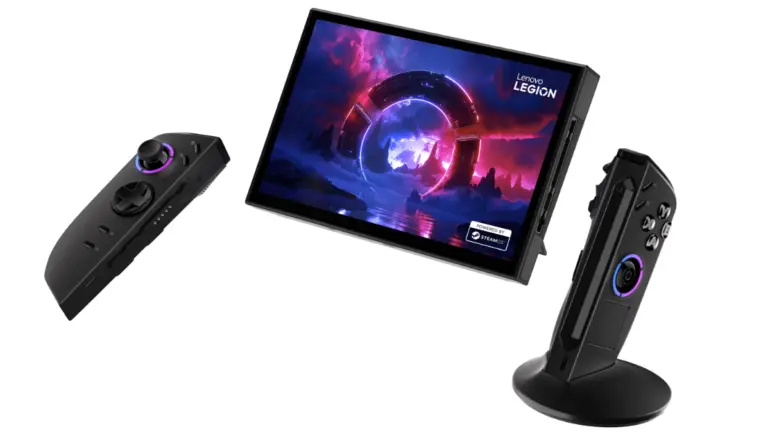
Legion Go, Powered by SteamOS: Lenovo’s Most Powerful Handheld Goes Open Source
The Legion Go, Powered by SteamOS (8.8″, 2) marks Lenovo’s first handheld to ship natively with Valve’s Linux-based gaming operating system. Starting at $1,199 with expected availability in June 2026, the device combines the Legion Go’s hardware capabilities with SteamOS’s console-like gaming experience.
Hardware Specifications
| Component | Specification |
|---|---|
| Display | 8.8″ WUXGA (1920×1200) OLED, 144Hz, 500 nits, DCI-P3 |
| Processor | Up to AMD Ryzen Z2 Extreme |
| Memory | Up to 32GB LPDDR5X (8000MHz) |
| Storage | Up to 2TB PCIe Gen 4 SSD + 2TB microSD expansion |
| Battery | 74WHr |
| Weight | 2.2 lbs (920g) with controllers |
| Connectivity | Wi-Fi 6E, Bluetooth 5.3 |
| Starting Price | $1,199 |
| Availability | June 2026 |
The AMD Ryzen Z2 Extreme processor delivers the compute power, while the 8.8-inch PureSight OLED display provides 144Hz refresh rates and DCI-P3 color coverage. Storage options extend to 2TB via the internal PCIe Gen 4 SSD, with microSD expansion supporting an additional 2TB for a potential 4TB total capacity.
SteamOS Advantages Over Windows
SteamOS offers several benefits for handheld gaming. The operating system provides quick suspend and resume functionality, eliminating Windows boot times and sleep issues that affect competing handhelds. Steam Library access, cloud saves, Steam Chat, and Game Recording integrate directly into the OS without requiring separate app launches. Valve optimized SteamOS specifically for gamepad controls, creating a console-like experience that Windows handhelds struggle to replicate.
The controller design includes Hall effect joysticks, assignable grip buttons, adjustable trigger switches, and a right-side trackpad. Two USB Type-C ports with USB 4.0, DisplayPort 1.4, and Power Delivery 3.0 support docked gameplay on external displays.
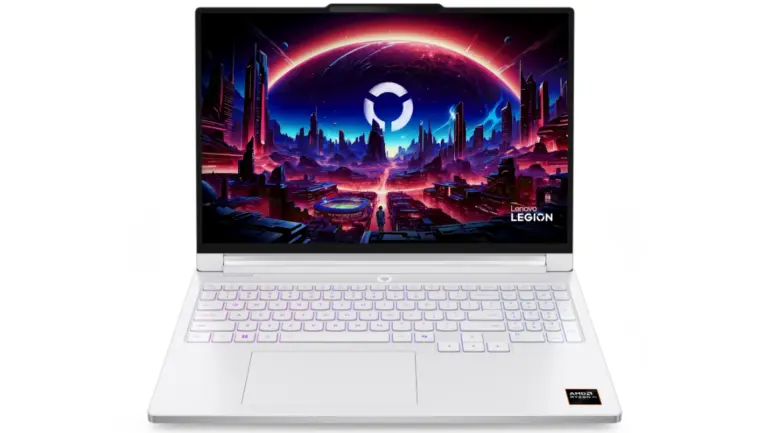
Legion 7a: AMD Ryzen AI 400 Meets RTX 50 Series in a Lighter Chassis
The Legion 7a (16″, 11) targets gamers, streamers, and creators who need multitasking performance across demanding workloads. Starting at $1,999 with April 2026 availability, the laptop combines AMD’s newest Ryzen AI 400 processors with NVIDIA GeForce RTX 50 Series graphics in a chassis that runs 10% lighter and up to 5% thinner than its predecessor.
Specifications and Performance
| Component | Specification |
|---|---|
| Display | 16″ WQXGA (2560×1600) OLED, 240Hz VRR, 0.08ms, 500 nits |
| Processor | Up to AMD Ryzen AI 9 HX 470 |
| Graphics | Up to NVIDIA GeForce RTX 5060 (8GB GDDR7, 115W) |
| Memory | Up to 64GB LPDDR5X (8533 MT/s) |
| Storage | Up to 2TB (2x 1TB) PCIe Gen 4 SSD |
| Battery | 84WHr |
| Weight | Under 4.07 lbs (1.85kg) |
| Connectivity | Wi-Fi 7, Bluetooth 5.4, USB4, HDMI 2.1 |
| Starting Price | $1,999 |
| Availability | April 2026 |
The 16-inch PureSight OLED display delivers 240Hz variable refresh rates with 0.08ms response times, 100% DCI-P3 color coverage, and VESA TrueBlack 1000 certification. NVIDIA G-SYNC support eliminates screen tearing during high-frame-rate gameplay.
Lenovo’s AI Engine+ with LA1 and LA4 cores manages power distribution, thermal optimization, and performance tuning in real time. The Legion Coldfront: Hyper cooling system handles heat dissipation under sustained loads. A quad-speaker Harman audio system with Nahimic and Scenic Spatial Audio rounds out the multimedia experience.
Connectivity and Build
Port selection includes two USB Type-C ports with USB4 (40Gbps), DisplayPort 2.1, and Power Delivery up to 140W. You also get two USB Type-A ports, an SD 4.0 card reader, HDMI 2.1 output, and a 3.5mm audio jack. The 5MP webcam supports Windows Hello via IR, with an E-Shutter button for physical privacy.
The Legion 7a ships in Glacier White and Nebula color options.
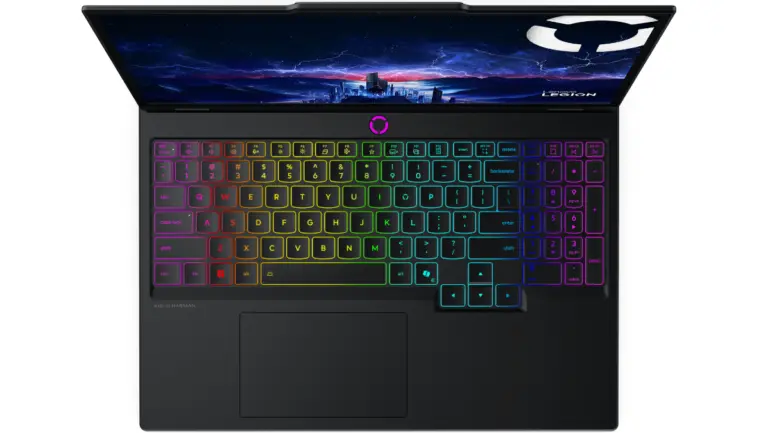
Legion 5i and Legion 5a: RTX 50 Series for the Mainstream
The Legion 5 series brings RTX 50 Series graphics to more accessible price points, with both Intel and AMD processor options. Lighter and thinner than previous generations, the 15-inch laptops handle gaming, streaming, content creation, and productivity workloads.
Legion 5i (15″, 11) with Intel Core Ultra
| Component | Specification |
|---|---|
| Display | 15.3″ WQXGA (2560×1600) OLED, 165Hz, 1ms, 500 nits |
| Processor | Up to Intel Core Ultra 9 386H |
| Graphics | Up to NVIDIA GeForce RTX 5060 (8GB GDDR7, 115W) |
| Memory | 32GB DDR5 (5600 MT/s) |
| Storage | Up to 2TB (2x 1TB) PCIe Gen 4 SSD |
| Battery | 80WHr |
| Connectivity | Thunderbolt 4, Wi-Fi 7, Bluetooth 5.4 |
| Starting Price | $1,549 |
| Availability | April 2026 |
The Intel variant includes Thunderbolt 4 connectivity alongside USB 3.2 Gen 2 (10Gbps) ports. Lenovo’s LA1 and LA3 AI cores power the AI Engine+ optimization, while the Harman speaker system with Nahimic Audio provides sound output.
Legion 5a (15″, 11) with AMD Ryzen AI 400 or Ryzen 200
Lenovo offers the Legion 5a in two processor configurations:
AMD Ryzen AI 400 Version ($1,499):
- Up to AMD Ryzen AI 9 465 processor
- LA1 + LA3 AI cores
- Windows 11 Copilot+ PC certification
AMD Ryzen 200 Version ($1,299):
- AMD Ryzen 7 250 processor
- LA1 AI core
- Lower price entry point
Both versions share the same 15.3-inch WQXGA OLED display with 165Hz refresh rates, 1ms response time, and VESA TrueBlack 600 certification. The RTX 5060 GPU, 32GB DDR5 memory, and up to 2TB storage remain consistent across configurations.

All Legion 5 series laptops feature 24-zone RGB keyboards with swappable keycaps, 5MP webcams with E-Shutter privacy buttons, and Wi-Fi 7 connectivity. The Eclipse Black chassis weighs 4.1 pounds (1.88kg).
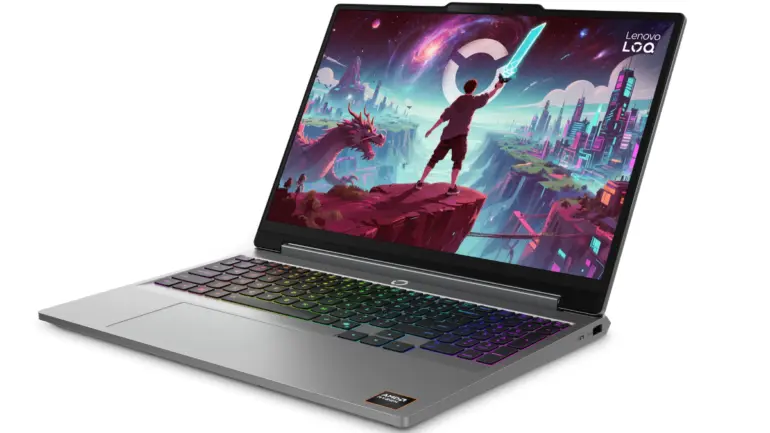
LOQ 15AHP11 and LOQ 15IPH11: Entry-Level Gaming Gets RTX 50 Series
The Lenovo LOQ series targets students and budget-conscious gamers who need capable hardware for both coursework and gaming. Starting at $1,149, the LOQ 15AHP11 brings RTX 50 Series graphics to Lenovo’s most affordable gaming tier.
LOQ Specifications Comparison
| Feature | LOQ 15AHP11 (AMD) | LOQ 15IPH11 (Intel) |
|---|---|---|
| Processor | AMD Ryzen 7 250 | Up to Intel Core Ultra 7 356H |
| Graphics | NVIDIA GeForce RTX 50 Series | NVIDIA GeForce RTX 50 Series |
| Display | Up to 15.3″ WQXGA IPS, 180Hz | Up to 15.3″ WQXGA IPS, 180Hz |
| Memory | 32GB DDR5 (5600 MT/s) | 32GB DDR5 (5600 MT/s) |
| Storage | Up to 2TB PCIe Gen 4 SSD | Up to 2TB PCIe Gen 4 SSD |
| Battery | 60WHr | 60WHr |
| Weight | Starting at 4.36 lbs (2.1kg) | Starting at 4.36 lbs (2.1kg) |
| Connectivity | Wi-Fi 6, Bluetooth 5.3 | Wi-Fi 6, Bluetooth 5.3 |
| Starting Price | $1,149 | Select markets only |
| Availability | April 2026 | TBD |
Both LOQ models feature IPS LCD displays (compared to OLED on Legion models), 100% sRGB coverage, 400-nit brightness, and X-Rite Delta-E calibration under 1. The Hyperchamber Cooling system optimizes airflow over key components while minimizing fan noise. TrueStrike keyboards with 1.6mm travel and optional 24-zone RGB backlighting provide comfortable typing and gaming input.
The LOQ 15IPH11 adds Thunderbolt 4 connectivity to the Intel configuration, while the AMD-based LOQ 15AHP11 uses USB Type-C with DisplayPort 1.4 and 140W Power Delivery.
AI Frame Gaming Display: Concept Monitor with Built-In Game Assistance
Lenovo also revealed the AI Frame Gaming Display proof of concept, a monitor with integrated AI features designed to assist gamers during play. The concept showcases several AI-powered functionalities:
- AI Scene Detection: Identifies the game type and intelligently zooms key areas (maps, UI elements) into a corner overlay, particularly useful for FPS and MOBA titles
- Cursor Tracking: Follows cursor position and displays magnified views in real time
- AI Game Assistance: Recognizes boss encounters and difficult sections across multiple games, providing contextual guidance in a secondary window
- Adaptive AI Lighting: Ambient lighting that responds to in-game events like taking damage or scoring kills
The AI Frame Gaming Display remains a proof of concept without confirmed specifications, pricing, or availability.
Pricing and Availability Summary
| Product | Starting Price | Availability |
|---|---|---|
| Legion Go, Powered by SteamOS (8.8″, 2) | $1,199 | June 2026 |
| Legion 7a (16″, 11) | $1,999 | April 2026 |
| Legion 5i (15″, 11) | $1,549 | April 2026 |
| Legion 5a (15″, 11) with Ryzen AI 400 | $1,499 | April 2026 |
| Legion 5a (15″, 11) with Ryzen 200 | $1,299 | April 2026 |
| LOQ 15AHP11 | $1,149 | April 2026 |
| LOQ 15IPH11 | Select markets | TBD |
| Legion Pro Rollable Concept | N/A | Proof of concept |
| AI Frame Gaming Display | N/A | Proof of concept |
How the 2026 Legion Lineup Compares to Competitors
Lenovo’s CES 2026 announcements position the company competitively across multiple price segments. The Legion Go with SteamOS directly challenges Valve’s Steam Deck OLED, offering more powerful hardware (Ryzen Z2 Extreme vs. custom AMD APU) with a larger 8.8-inch display and native SteamOS support. The $1,199 starting price runs higher than the Steam Deck OLED’s $549 entry point, but the Legion Go provides desktop-class storage options and more memory.

In the laptop space, the Legion 7a ($1,999) competes with the ASUS ROG Zephyrus G16 and MSI Stealth 16 AI Studio. The RTX 5060 GPU configuration may trail competitors offering RTX 5070 or higher options at similar price points, though final performance comparisons await independent testing.
The Legion 5 series at $1,299 to $1,549 targets the mainstream gaming market against options like the HP Omen 16 and Acer Predator Helios Neo 16. The OLED displays provide a visual advantage over IPS alternatives at these prices, while the weight reduction (4.1 pounds) improves portability compared to previous generations.
The LOQ series at $1,149 undercuts many RTX 50 Series alternatives, though the IPS display and Wi-Fi 6 (versus Wi-Fi 7 on Legion models) reflect cost optimizations.
Who Should Consider Lenovo’s 2026 Gaming Lineup
The Legion Go with SteamOS suits you if: You want the most powerful SteamOS handheld available, prefer Linux over Windows for portable gaming, need extensive storage (up to 4TB total), or plan to dock the device for desktop gameplay.
The Legion 7a fits your needs if: You require top-tier Ryzen AI 400 performance, want a 240Hz OLED display, need a Windows 11 Copilot+ PC for productivity alongside gaming, or value a lighter chassis without sacrificing features.
The Legion 5i/5a works best if: You want RTX 50 Series graphics at more accessible prices, prefer a 15-inch form factor, need OLED display quality without paying flagship prices, or want Intel Thunderbolt 4 connectivity (Legion 5i).
The LOQ series makes sense if: You’re a student balancing coursework and gaming, want RTX 50 Series performance under $1,200, can accept IPS over OLED displays, or prioritize value over premium features.
Frequently Asked Questions
When can I buy the new Lenovo Legion laptops?
The Legion 7a, Legion 5i, Legion 5a, and LOQ 15AHP11 launch in April 2026. The Legion Go with SteamOS arrives later in June 2026. The LOQ 15IPH11 availability varies by market.
Does the Legion Go with SteamOS support Windows?
Lenovo ships the Legion Go (8.8″, 2) with SteamOS natively installed. While SteamOS runs on Linux, which limits some Windows-exclusive games, you may be able to install Windows separately. Lenovo hasn’t confirmed official Windows support for this model.
What’s the difference between the Legion 5i and Legion 5a?
The Legion 5i uses Intel Core Ultra Series 3 processors with Thunderbolt 4 connectivity, while the Legion 5a runs AMD Ryzen AI 400 or Ryzen 200 processors with USB4 ports. Display, GPU, memory, and storage specifications remain identical between both models.
Will the Legion Pro Rollable concept become a real product?
Lenovo classifies the Legion Pro Rollable as a proof of concept without announced pricing or availability. The company has previously moved concepts to production (like the original Legion Go), but rollable display technology presents manufacturing and durability challenges that may delay or prevent commercial release.
Is the RTX 5060 good enough for gaming in 2026?
The GeForce RTX 5060 in the new Legion laptops delivers 115W TDP, 8GB GDDR7 memory, and 572 AI TOPS for DLSS 4 frame generation. Performance should handle 1600p gaming at high settings in most titles, though RTX 5070 and higher options provide more headroom for demanding games and higher refresh rates.
Should I wait for reviews before buying?
Manufacturer specifications provide baseline expectations, but real-world performance, thermal behavior, battery life, and build quality require independent testing. Waiting for reviews from outlets that conduct hands-on benchmarking gives you clearer purchase guidance, particularly for first-generation products like the SteamOS Legion Go.